Ingredients
Equipment
Method
Cook the rice
- Combine long-grain white rice (dry), water, and salt in a medium saucepan, then bring to a boil. Reduce heat, cover, and simmer for 18 minutes until the water is absorbed.
- Fluff the rice with a fork and set aside while you cook the salmon and vegetables. Keep it covered to maintain warmth.
Prep salmon and veggies
- Preheat the air fryer to 400°F for 3 minutes. This ensures the basket is hot before the salmon goes in.
- Mix olive oil, garlic powder, smoked paprika, onion powder, salt, black pepper, soy sauce, and lemon juice in a small bowl to form the salmon marinade. Stir until evenly combined.
- Pat salmon fillets dry and brush generously with the marinade on all sides. Make sure each fillet is coated but not dripping.
- Toss broccoli florets, zucchini, and cherry tomatoes with olive oil, salt, and black pepper until evenly coated. Spread them out so they cook evenly.
Air fry salmon
- Place salmon fillets in the air fryer basket skin-side down. Air fry at 400°F for 10–12 minutes, until the salmon flakes easily with a fork.
- Check doneness by confirming the salmon reaches an internal temperature of 145°F. Remove promptly so it stays tender and does not overcook.
Air fry vegetables
- In a separate air fryer session (or second basket), cook broccoli florets, zucchini, and cherry tomatoes at 390°F for 8–10 minutes. Shake halfway through for more even browning.
- Continue until the vegetables are tender and lightly charred at the edges. Transfer to a serving dish as soon as they finish.
Serve
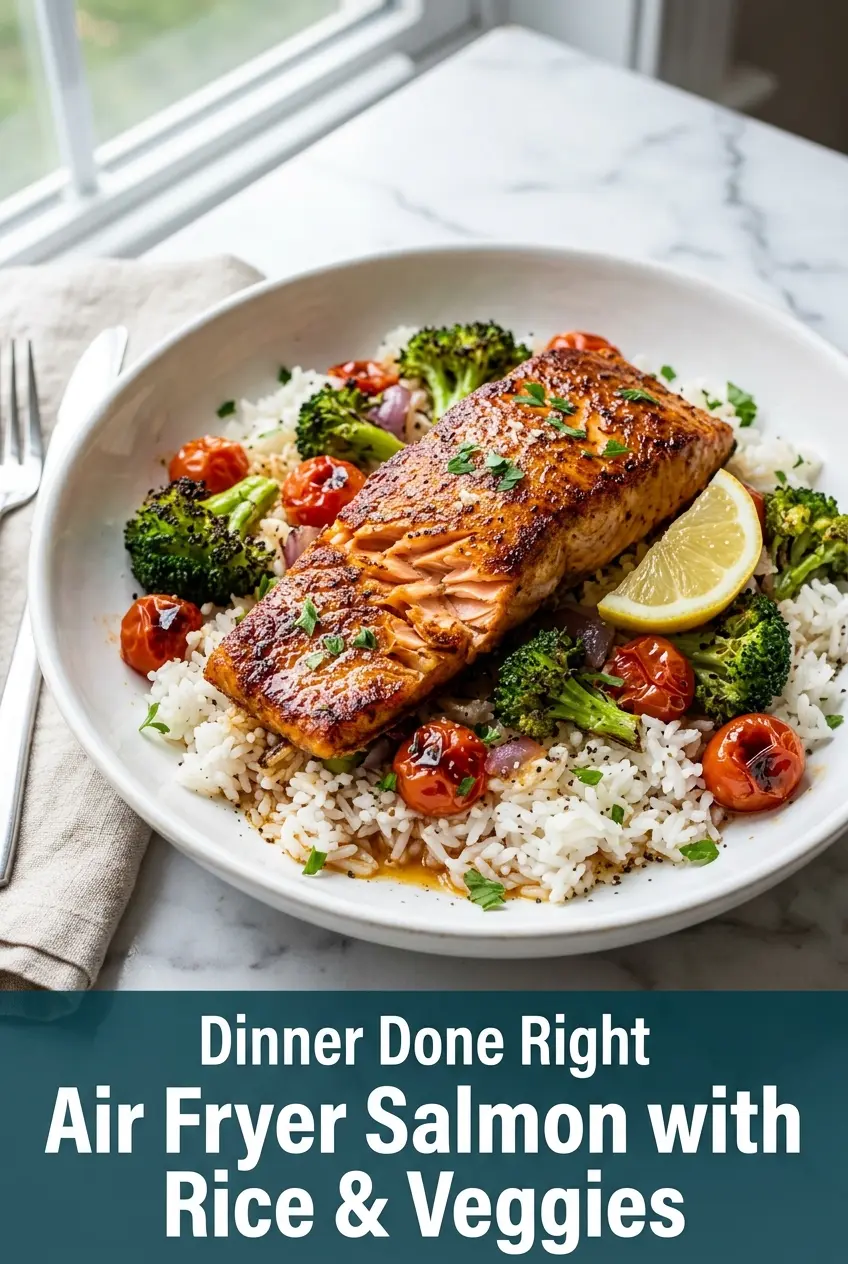
- Serve salmon and vegetables over a generous scoop of fluffy rice. Add lemon wedges and parsley for brightness and color.
Notes
Pro tip: don’t skip drying the salmon—better contact helps the marinade cling and keeps the surface from steaming. Store leftovers in the fridge up to 3 days in airtight containers; reheat gently in the air fryer at 300°F until warmed through. Freezing: salmon can be frozen, but the rice and vegetables will be best kept refrigerated rather than frozen. For a lower-sodium option, use low-sodium soy sauce and reduce added salt slightly.