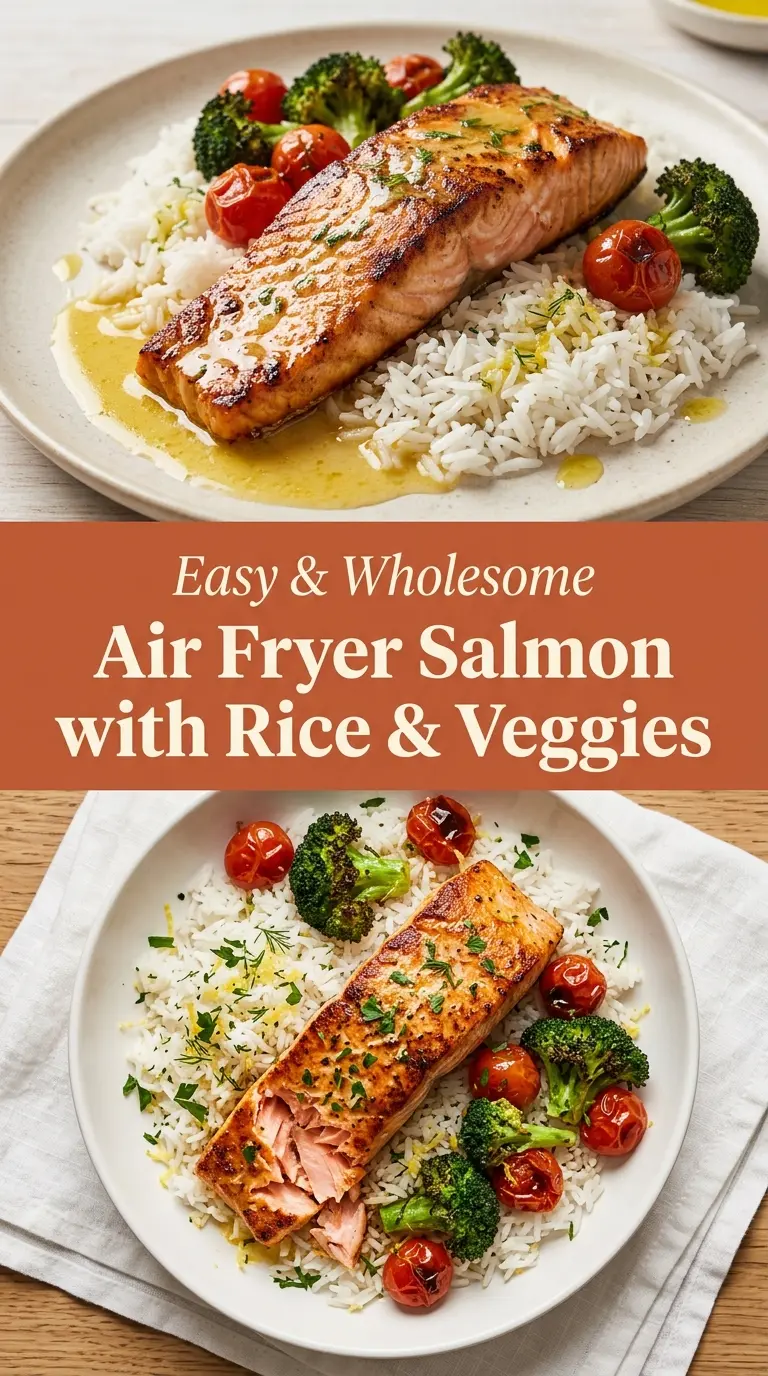
Flaky salmon, tender-charred vegetables, and a pile of fluffy rice make this the kind of dinner that feels complete without turning into a project. The salmon gets a fast marinade with garlic, smoked paprika, soy sauce, and lemon, so it comes out savory with just enough brightness to keep every bite interesting. Nothing here needs a long ingredient list or a complicated sauce to taste like a real meal.
The trick is cooking each part for what it actually needs. Salmon wants hot, direct air so the outside firms up before the center dries out, while the vegetables need their own space to roast instead of steaming into softness. The rice does the quiet work underneath it all, soaking up the juices and turning the plate into something that eats like more than the sum of its parts.
Below, I’ve added the details that matter most: how to keep the salmon from overcooking, which vegetables hold up best in the air fryer, and the small timing adjustments that make the whole dinner land at the same time.
The salmon stayed moist and the paprika-lemon coating browned just enough without burning. I loved that the veggies picked up those caramelized edges in the air fryer, and dinner was on the table in about 20 minutes once the rice was done.
Save this air fryer salmon bowl for the nights when you want flaky fish, charred veggies, and rice on one plate with almost no cleanup.
The Part That Stops the Salmon From Drying Out
Air fryer salmon dries out when the heat has nowhere to go except straight through the fish. That happens fast, especially with thinner fillets. The fix is twofold: start with dry salmon so the marinade clings, then stop cooking as soon as the flesh turns opaque and flakes at the thickest point. A little carryover heat finishes the job after it leaves the basket.
The other mistake is crowding the basket. Salmon needs space around each fillet so the surface can set instead of steaming. If the pieces are touching, the outside stays soft longer and the timing gets unpredictable. This recipe works because the marinade is thin enough to flavor the fish without weighing it down, and the air fryer does the rest.
What Each Ingredient Is Actually Doing in This Dish
- Salmon fillets — Use center-cut fillets if you can. They cook more evenly than skinny tail pieces, which helps the whole batch finish at the same time. Skin-on salmon is fine and actually helps the fillets hold together in the basket.
- Smoked paprika — This gives the salmon a deeper, almost grilled flavor that plain paprika won’t match. If you only have regular paprika, use it, but add a pinch of extra garlic powder to keep the seasoning from tasting flat.
- Soy sauce and lemon juice — These are doing more than seasoning. Soy sauce adds salt and a little savory depth, while lemon juice brightens the fish so it doesn’t taste heavy. If you need a gluten-free option, tamari works without changing the method.
- Broccoli, zucchini, and cherry tomatoes — This mix gives you different textures in the same basket: broccoli chars at the edges, zucchini softens, and tomatoes burst into something juicy. If you swap vegetables, keep the pieces similar in size so nothing is burnt while something else is still hard in the middle.
- Rice — Long-grain white rice stays fluffy and neutral, which is exactly what you want under seasoned salmon and vegetables. Jasmine rice also works well. Short-grain rice gets stickier and changes the whole feel of the bowl.
The Timing That Gets Everything on the Plate Warm at Once
Cooking the Rice First
The rice needs to start before anything else because it takes the longest and it holds heat well once it’s fluffed. Cook it until the grains are tender and the water is absorbed, then leave the lid on while you handle the air fryer. If the rice sits covered, it stays hot without turning gummy.
Seasoning the Salmon
Pat the fillets dry before brushing on the marinade. If the surface is wet, the seasoning slides right off and the fish steams instead of browning. Coat the salmon generously, but don’t drown it; a thin layer is enough because the soy sauce and lemon do the heavy lifting.
Air Frying the Fish and Vegetables
Place the salmon skin-side down and give it space. It’s done when the flesh looks opaque at the edges and still just barely translucent in the thickest center before it flakes. For the vegetables, shake the basket halfway through so the broccoli and zucchini pick up color on more than one side. If you leave them untouched, the bottoms soften before the edges char.
Assembling the Bowl
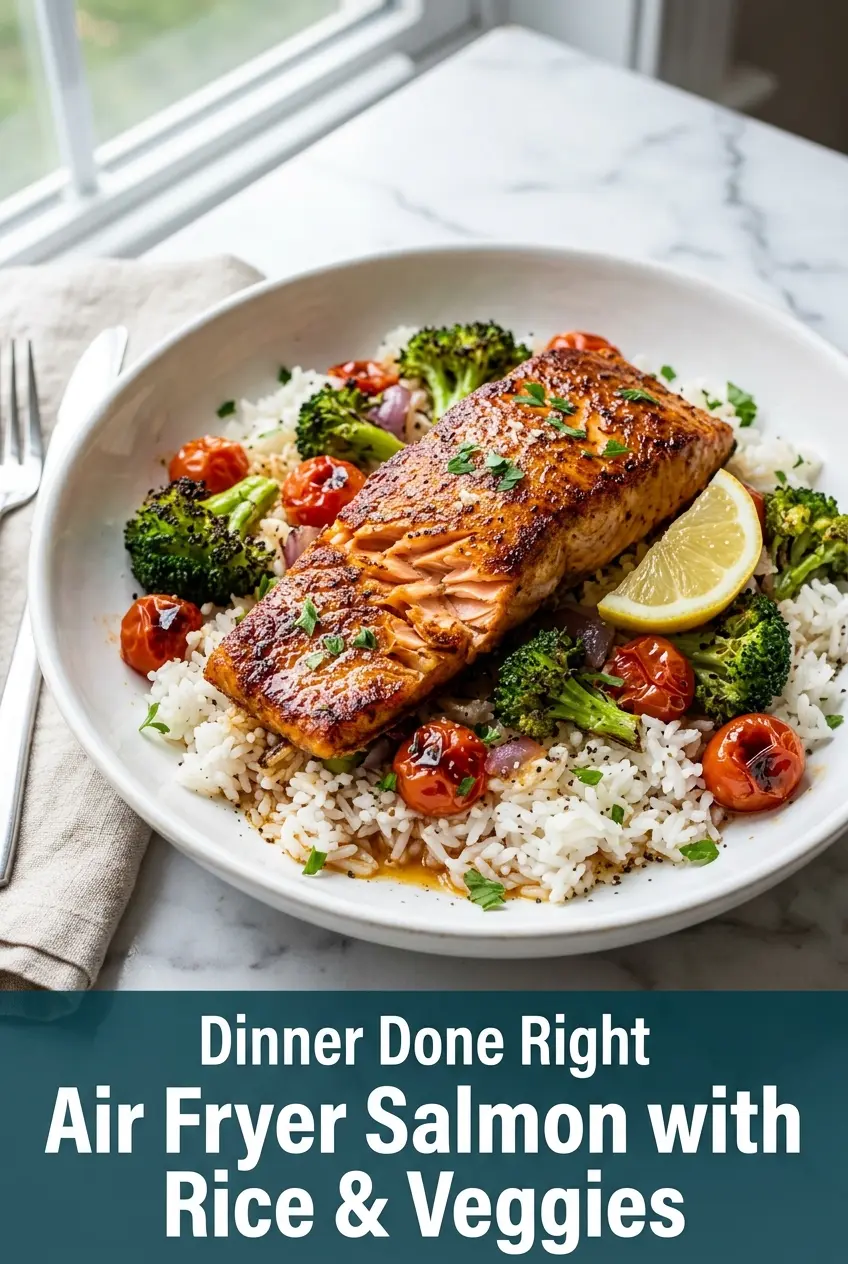
Spoon the rice into bowls first, then pile the vegetables beside or over it so their juices soak in a little. Set the salmon on top last to keep the fillets intact. A squeeze of lemon at the end wakes everything up, especially if your rice is plain.
Three Ways to Adjust This Bowl Without Losing What Makes It Work
Make it gluten-free
Swap the soy sauce for tamari or coconut aminos. Tamari keeps the same savory edge, while coconut aminos taste a little sweeter and softer. Either one works, but tamari is the closest match if you want the seasoning to stay balanced.
Use different vegetables
Green beans, asparagus, bell peppers, and cauliflower all work here. Just keep in mind that dense vegetables like cauliflower need a few extra minutes, while asparagus and bell peppers cook faster than broccoli. Cut everything to a similar size so the basket finishes evenly.
Skip the rice for a lower-carb version
Serve the salmon and vegetables over cauliflower rice or shredded cabbage instead of white rice. Cauliflower rice gives you the same bowl format with a lighter base, but it needs to be cooked separately and drained well so it doesn’t turn watery under the salmon.
Storage and Reheating
- Refrigerator: Store leftovers in separate containers for up to 3 days. The salmon stays best when it isn’t packed directly on top of the rice, which can make the fish mushy.
- Freezer: The cooked salmon can be frozen for up to 2 months, but the vegetables will soften after thawing. Rice freezes well if it’s cooled completely first and packed airtight.
- Reheating: Warm the rice and vegetables gently in the microwave with a splash of water, then reheat the salmon at low power or in a 300°F oven just until warmed through. High heat dries the fish out fast, so stop as soon as it’s no longer cold in the center.
Answers to the Questions Worth Asking
Air Fryer Salmon with Rice & Veggies
Ingredients
Equipment
Method
- Combine long-grain white rice (dry), water, and salt in a medium saucepan, then bring to a boil. Reduce heat, cover, and simmer for 18 minutes until the water is absorbed.
- Fluff the rice with a fork and set aside while you cook the salmon and vegetables. Keep it covered to maintain warmth.
- Preheat the air fryer to 400°F for 3 minutes. This ensures the basket is hot before the salmon goes in.
- Mix olive oil, garlic powder, smoked paprika, onion powder, salt, black pepper, soy sauce, and lemon juice in a small bowl to form the salmon marinade. Stir until evenly combined.
- Pat salmon fillets dry and brush generously with the marinade on all sides. Make sure each fillet is coated but not dripping.
- Toss broccoli florets, zucchini, and cherry tomatoes with olive oil, salt, and black pepper until evenly coated. Spread them out so they cook evenly.
- Place salmon fillets in the air fryer basket skin-side down. Air fry at 400°F for 10–12 minutes, until the salmon flakes easily with a fork.
- Check doneness by confirming the salmon reaches an internal temperature of 145°F. Remove promptly so it stays tender and does not overcook.
- In a separate air fryer session (or second basket), cook broccoli florets, zucchini, and cherry tomatoes at 390°F for 8–10 minutes. Shake halfway through for more even browning.
- Continue until the vegetables are tender and lightly charred at the edges. Transfer to a serving dish as soon as they finish.
- Serve salmon and vegetables over a generous scoop of fluffy rice. Add lemon wedges and parsley for brightness and color.