On the baking sheet, the bread cubes should feel crisp at the edges without taking on any color. That dry, sturdy texture is what lets them soak up broth later without collapsing into a soft, heavy layer. I take a minute to check a few cubes from the middle of the pan, since they can dry more slowly than the ones around the edges.
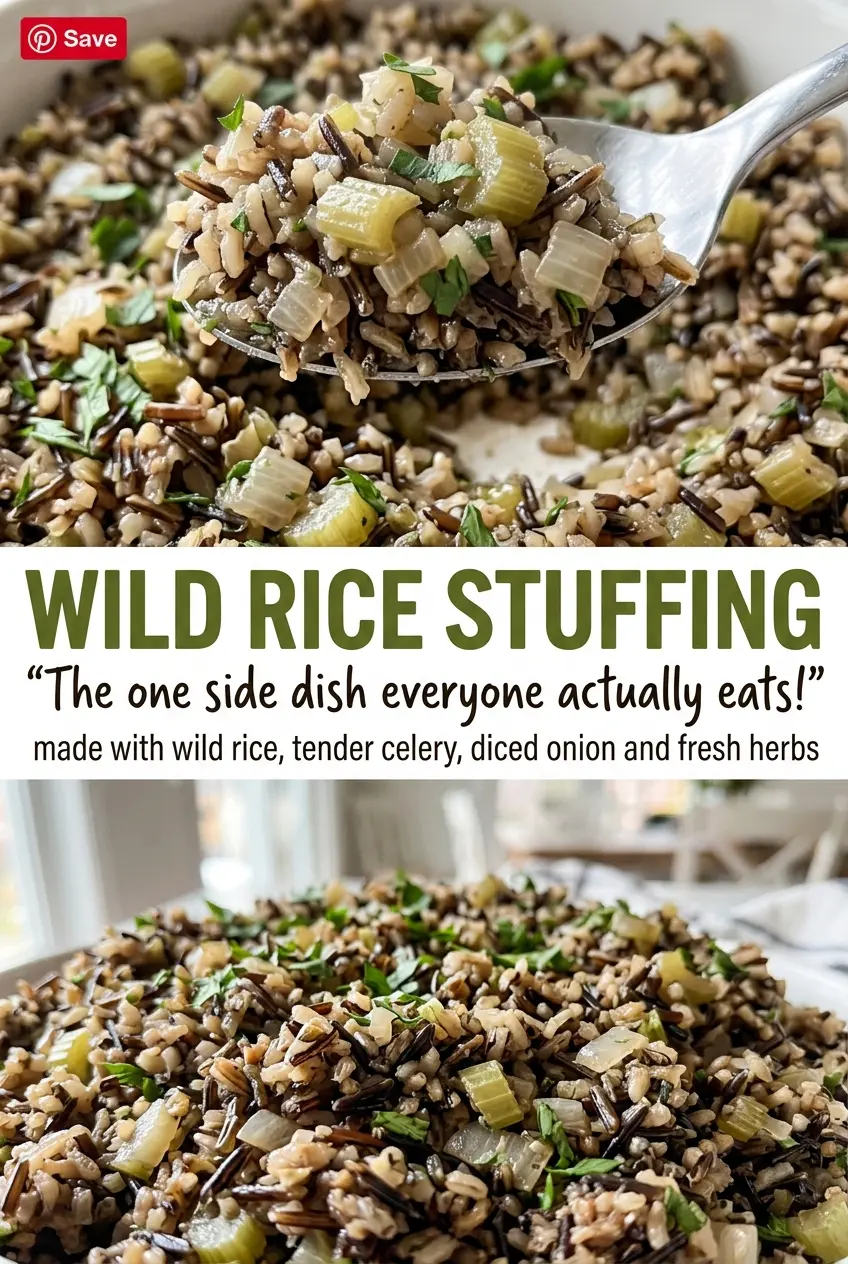
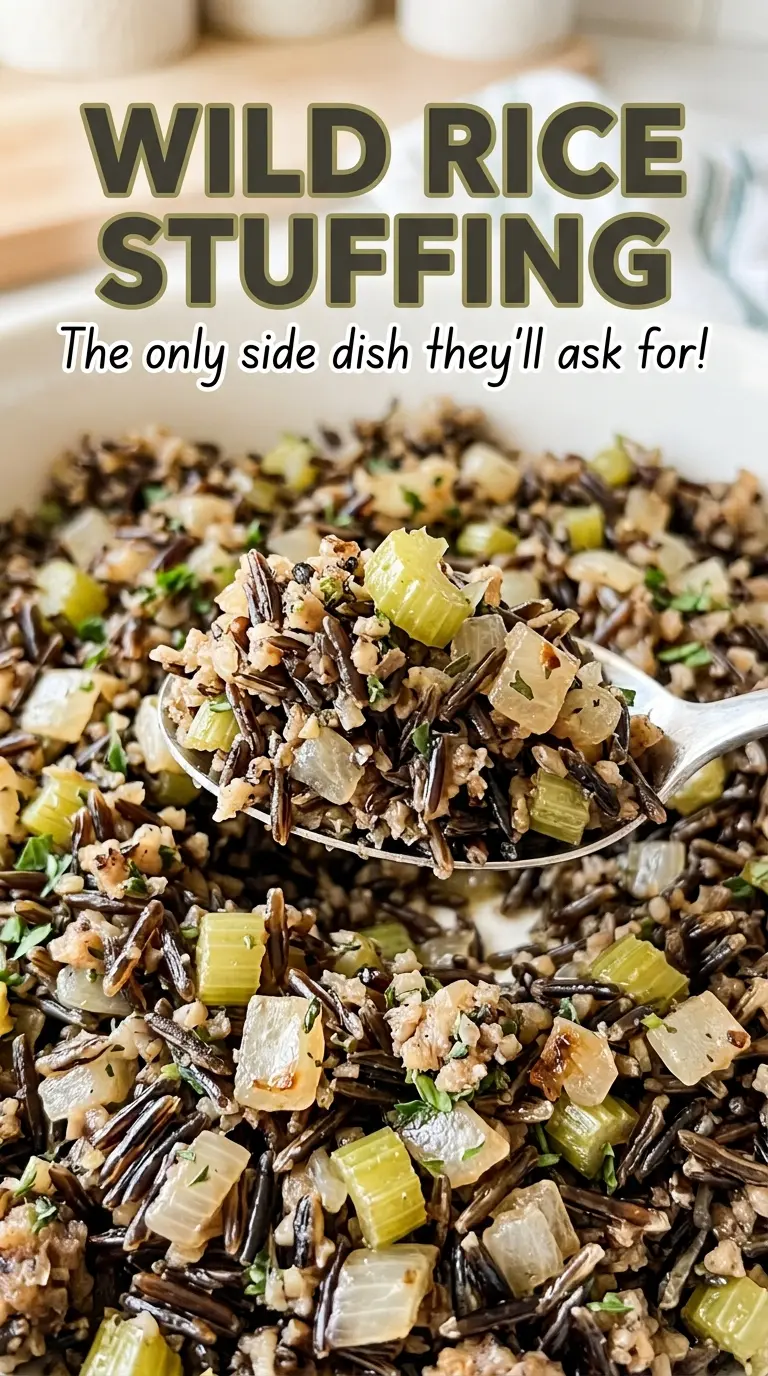
For this Wild Rice Stuffing, the bread, wild rice, and vegetables each bring a different texture. The rice gives the dish a pleasantly chewy bite, while mushrooms and celery make the base savory and tender. Dried cranberries and pecans add little sweet and crunchy contrasts without taking over.
Once everything is folded together and baked, the top turns golden while the center stays moist and cohesive. It’s the kind of stuffing that holds its shape on the serving spoon, with distinct pieces of bread and wild rice in every bite.
Kitchen Note
Give the baked stuffing its full 10-minute rest before serving. The center settles during that pause, so it scoops neatly instead of falling apart while it’s piping hot.
Save this Wild Rice Stuffing for its chewy rice, tender mushrooms, and golden, crisp-topped finish.
Why Dry Bread Makes the Difference Between Stuffing and a Soggy Bake
Bread that’s still soft inside has less room to absorb the broth and egg mixture. It can turn gummy in the oven before the center has time to set, especially once it’s folded together with cooked rice and vegetables. Drying the cubes first gives them a head start: they take on the liquid gradually and keep enough structure to hold their shape.
There’s a useful difference between dry and toasted here. The cubes should be crisp, but they shouldn’t be browned; browned bread has already developed a firmer crust and a more pronounced toasted flavor. For this stuffing, the goal is an even, neutral base that can absorb the seasoned broth and carry the sage, thyme, and mushroom mixture. Stir the cubes once as they bake, and judge a few from the center of the pan rather than relying only on the outside pieces. That small check helps you catch any soft spots before they go into the bowl.
The Bread and Wild Rice Set the Texture; the Rest Builds Around Them
- Sturdy white bread or sourdough — Both are listed options, and a sturdy loaf holds up better than delicate sandwich bread. Choose whichever is fresher and easier to find; there’s no need for an expensive artisan loaf. Cut the cubes evenly so they dry at about the same rate.
- Wild rice — Its firm, distinct grains give the stuffing a chewy contrast that ordinary soft bread can’t provide. Rinsing it before cooking removes surface debris. Wild rice takes longer to cook than quick-cooking rice, so don’t swap in a different rice and expect the same timing or texture.
- Low-sodium chicken broth — Broth moistens the dried bread and carries seasoning through the dish. A low-sodium version gives you better control over saltiness, especially as the liquid reduces while the rice cooks. Use broth you enjoy drinking; a premium brand isn’t required.
- Cremini mushrooms — Their savory, earthy flavor gives the vegetable base depth. Chopping them into small pieces helps them mix evenly with the bread and rice. Fresh mushrooms matter more than a particular brand; avoid adding them to the bowl while they’re still releasing liquid.
- Onion and celery — These soften into the buttery base and add gentle sweetness and a little bite. Dice them to a similar size so they cook evenly. There isn’t a listed substitute for their particular balance in this dish.
- Unsalted butter — Butter coats the vegetables and adds richness to the stuffing. Unsalted butter lets the measured kosher salt do its job without making the result harder to season consistently. Divide it as specified: some for the baking dish and the rest for cooking the vegetables.
- Dried sage and thyme — These herbs give the stuffing its familiar savory character and pair especially well with mushrooms. Dried herbs are the right fit here because they stir directly into the cooked vegetables and distribute throughout the mixture.
- Dried cranberries and pecans — Cranberries bring tart-sweet bites, while pecans add crunch. Both should be folded in before the egg-and-broth mixture, so they’re spread throughout rather than gathered in one spot. The pecans are easy to leave out for a nut-free version.
- Eggs — Whisked with broth, they help the stuffing hold together as it bakes. Whisk until the yolks and whites are combined, then toss the liquid through the bread mixture so no area stays dry while another gets saturated.
Build the Stuffing in Stages So the Bread Stays Distinct
Dry the bread without browning it
Heat the oven to 300°F and spread the bread cubes in a single layer on a large rimmed baking sheet. Bake for 25–35 minutes, stirring once, until the cubes feel dry and crisp but haven’t browned. If some pieces still feel soft, give them more time within that range and check again before moving on. Keeping the cubes in a single layer helps them dry rather than steam against one another.
Cook the wild rice until tender
Rinse the wild rice, then combine it with 4 cups of broth in a 3-quart saucepan. Bring it to a boil, cover, and simmer over low heat for 45–60 minutes. It’s ready when the grains are tender and some have split; don’t stop just because the outside looks dark. Drain away any excess broth so it doesn’t make the bread mixture wetter than intended.
Cook the vegetables until their moisture is gone
Raise the oven temperature to 350°F and grease a 9×13-inch baking dish with 1 tablespoon of butter. Melt the remaining butter in a 12-inch skillet over medium heat, then add the diced onion, celery, and chopped cremini mushrooms. Cook for 8–10 minutes, stirring occasionally, until the vegetables are tender and the mushrooms have released and cooked off their liquid. If liquid is still pooling in the skillet, keep cooking rather than transferring it to the bowl.
Moisten, cover, and bake
Stir the sage, thyme, salt, and pepper into the vegetables, then transfer them to a large bowl. Fold in the dried bread, cooked wild rice, cranberries, and pecans. Whisk the eggs with the remaining 2 cups of broth, pour the mixture over the bowl, and toss until evenly moistened before transferring everything to the prepared dish. Cover tightly with foil and bake for 30 minutes, then uncover and bake for another 20–25 minutes, until the top is golden and the center reaches 160°F.
Three Small Changes That Give This Stuffing a Different Feel
Choose sourdough for a tangier edge
Use sturdy sourdough instead of sturdy white bread. Its mild tang gives the stuffing a more pronounced savory note, while the loaf still dries into cubes that can absorb the broth.
Leave out the pecans for a nut-free dish
Omit the chopped pecans and keep the other ingredients as they are. You’ll lose the nutty crunch, but the wild rice still gives each serving a pleasantly chewy texture.
Skip the cranberries for a more savory balance
Leave out the dried cranberries if you prefer your stuffing without sweet-tart bites. The sage, thyme, mushrooms, and pecans keep the overall character firmly savory.
Storage and Reheating
- Refrigerator: Refrigerate leftovers in a covered container for up to 3–4 days. The bread softens as it sits, though the flavor stays savory.
- Freezer: It freezes well after baking. Cool it, portion it into airtight freezer-safe containers, and freeze for up to 2–3 months; thaw overnight in the refrigerator for more even reheating.
- Reheating: Cover a portion and warm it in a 350°F oven until hot throughout, then uncover briefly if you want to refresh the top. Reheat leftovers to 165°F, and avoid leaving the dish uncovered for the entire reheating time or the bread can dry out.
Questions I Get Asked About Wild Rice Stuffing
Wild Rice Stuffing
Ingredients
Equipment
Method
- Heat the oven to 300°F.
- Spread the bread cubes on a large rimmed baking sheet and bake for 25–35 minutes, stirring once, until dry and crisp but not browned.
- Combine the wild rice and 4 cups broth in a 3-quart saucepan and bring to a boil.
- Cover and simmer over low heat for 45–60 minutes, until tender and some grains have split.
- Drain any excess broth from the wild rice.
- Heat the oven to 350°F.
- Grease a 9x13-inch baking dish with 1 tablespoon butter.
- Melt the remaining 6 tablespoons butter in a 12-inch skillet over medium heat.
- Add the onion, celery, and mushrooms and cook for 8–10 minutes, stirring occasionally, until the vegetables are tender and the mushrooms have released and cooked off their liquid.
- Stir the sage, thyme, salt, and pepper into the vegetables.
- Transfer the vegetables to a large bowl.
- Fold in the dried bread, cooked wild rice, cranberries, and pecans.
- Whisk the eggs with the remaining 2 cups broth.
- Pour the egg mixture over the bread mixture and toss until evenly moistened.
- Transfer the mixture to the prepared baking dish and cover tightly with foil.
- Bake for 30 minutes.
- Remove the foil and bake for another 20–25 minutes, until the top is golden and the center reaches 160°F.
- Let the stuffing rest for 10 minutes before serving.