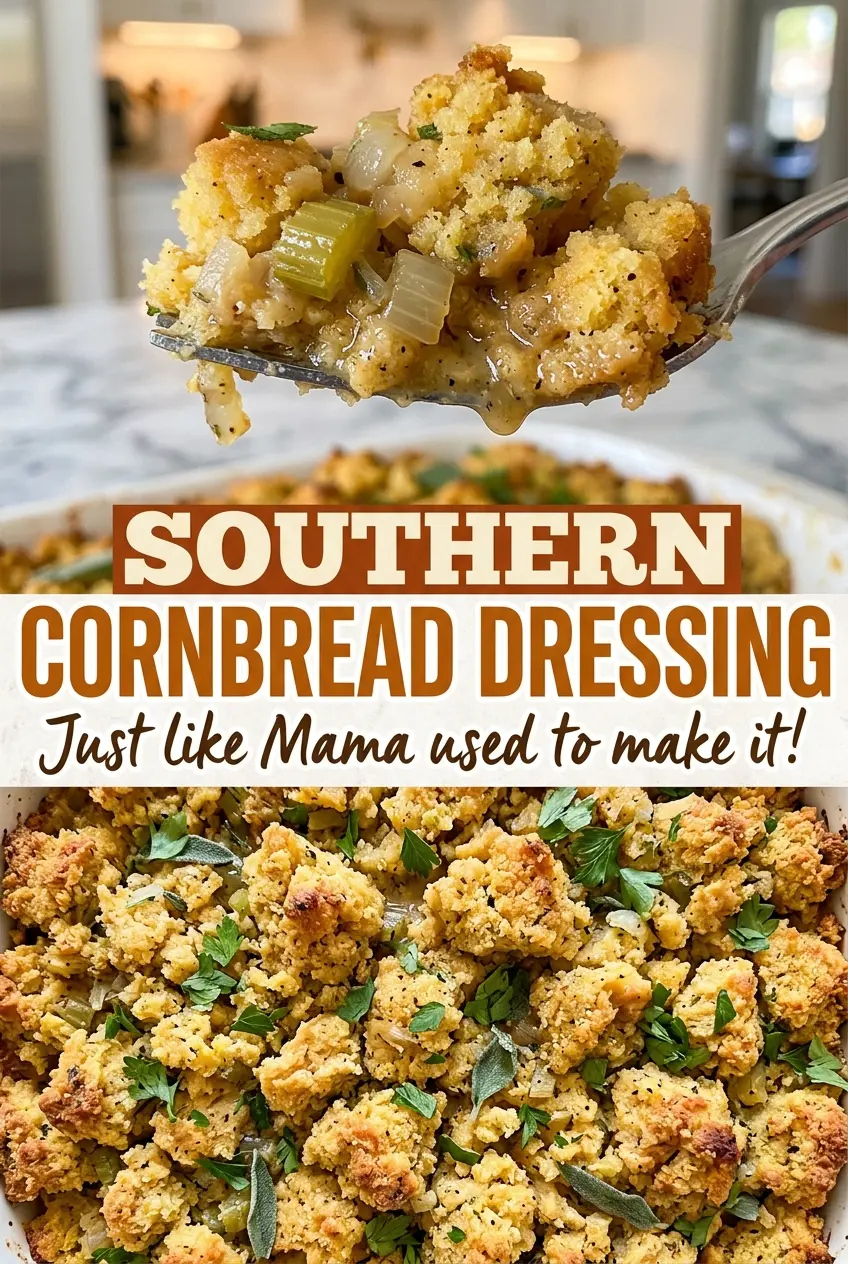
The onion and celery soften in butter, and their sharp smell gives way to something rounder and savory. That’s when the dried sage goes into the skillet, and the kitchen starts to smell like Southern cornbread dressing should. This version starts with a pan of homemade cornbread, then brings it together with soft white bread, vegetables, eggs, and chicken broth.
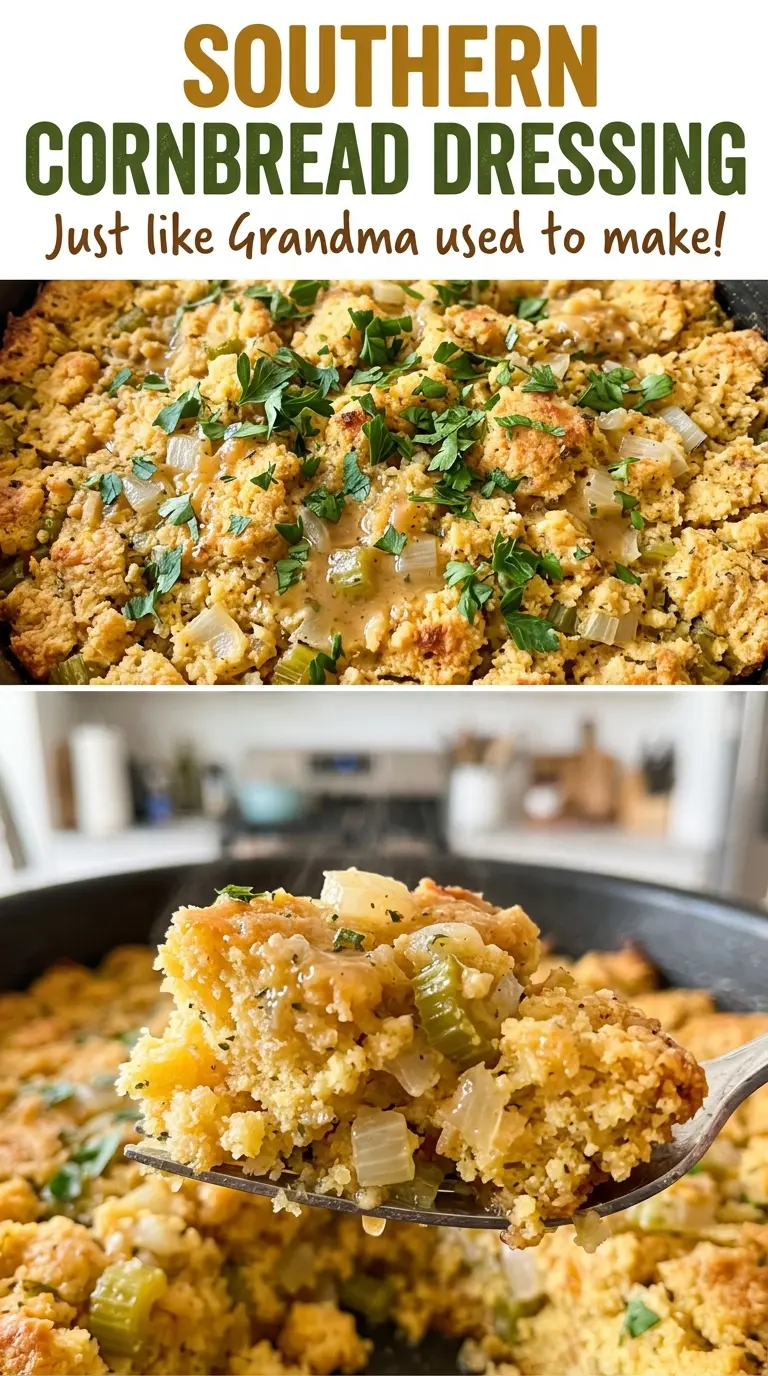
I like the way the two breads give the finished dressing a little contrast: a browned top with a tender middle that holds together when you serve it. The cornbread takes a bit of extra oven time before it joins the rest, but that work pays off in a casserole that’s moist without turning pasty. Underneath the golden top, each bite is savory, soft, and full of corn flavor.
Kitchen Note
I wait for the center to reach 160°F before taking the dressing out, even when the top is already golden. Give it the full 10-minute rest before serving so the center has time to settle.
Save this Southern cornbread dressing for its golden top, tender middle, and savory sage flavor.
Why the Cornbread Needs to Dry Before It Meets the Broth
Fresh cornbread still holds moisture inside its crumb. Add chicken broth to it right away and the outside can soften before the middle has a chance to absorb the liquid evenly. Drying the crumbles in a low oven gives them a drier surface and a sturdier texture, so they can take on the broth without collapsing into a heavy paste.
That’s a different job from baking the cornbread until it’s golden and cooked through. Once it has cooled completely, crumbling and drying it creates the base for the dressing rather than just breaking up a warm pan of cornbread. The finished mixture should be evenly moistened, not swimming in liquid; giving the cornbread this extra step helps the center bake up tender while the top turns golden.
The Ingredients That Give This Dressing Its Texture and Savory Base
- Yellow cornmeal and all-purpose flour — Cornmeal brings the familiar grainy corn character, while flour helps the cornbread hold together after it’s crumbled. A standard bag of cornmeal works well; there’s no need for a specialty grind. For a gluten-free version, use a cup-for-cup gluten-free flour blend in place of the all-purpose flour.
- Buttermilk — Its acidity works with the baking soda, and its thickness gives the cornbread a tender crumb. If you don’t have buttermilk, stir lemon juice or white vinegar into regular milk and let it stand for 5 minutes before using. The cornbread may be a little less rich, but the acidic milk still works in the batter.
- Eggs — One egg helps bind the cornbread batter; the remaining eggs help the dressing set as it bakes. Use large eggs as listed, and whisk the dressing eggs with the salt and broth so they distribute through the bread mixture.
- White sandwich bread — Plain soft bread is a good fit here, and the inexpensive store-brand loaf is fine. Its mild taste won’t compete with the cornmeal, sage, or vegetables; seeded or strongly flavored bread would pull the dressing in another direction.
- Chicken broth, butter, and dried rubbed sage — Broth carries savory flavor through the bread, butter softens the onion and celery, and rubbed sage gives the dressing its familiar earthy note. Choose a broth you enjoy sipping; a very salty one can make the finished dish taste saltier than intended.
Build the Dressing in Four Stages for an Even, Tender Bake
Bake the Cornbread Until the Center Tests Clean
Heat the oven to 400°F and coat a 9-inch square baking pan with cooking spray. Whisk the cornmeal, flour, baking powder, baking soda, and the cornbread portion of the kosher salt in a large bowl. In a separate bowl, whisk one egg with the buttermilk and vegetable oil, then stir the wet mixture into the dry ingredients just until combined; stop once you no longer see dry pockets. Bake for 22–27 minutes, until golden and a toothpick inserted in the center comes out clean, then cool completely for about 45 minutes.
Dry the Crumbles Until They Feel Dry to the Touch
Crumble the cooled cornbread onto an 18×13-inch rimmed baking sheet, spreading it out rather than leaving large chunks together. Lower the oven to 250°F and bake for 20–25 minutes, stirring once halfway through. The useful cue is how the crumbs feel: they should be dry to the touch, not soft or damp in the middle. If you leave big pieces, they won’t dry as evenly as the smaller crumbles.
Soften the Vegetables Before Adding the Sage
Raise the oven temperature to 350°F and grease a 9×13-inch baking dish with 1 tablespoon of butter. Melt the remaining butter in a 12-inch skillet over medium heat, then cook the finely chopped onion and celery for 8–10 minutes, until tender. Stir in the dried rubbed sage and black pepper and cook for 30 seconds. Don’t rush the vegetables; they should be tender before they’re folded into the bread.
Moisten, Fold, and Bake Until the Center Sets
Combine the cornbread crumbles and torn white bread in a large bowl, then fold in the cooked vegetables. Whisk the remaining eggs with the remaining kosher salt and chicken broth, pour it over the bread, and fold until the mixture is evenly moistened. Spread it in the prepared dish and bake uncovered for 45–55 minutes, until the top is golden and the center is set rather than loose. Use the doneness and resting cues in the Kitchen Note before serving.
Three Straightforward Ways to Adapt the Flavor or Ingredients
Make It Vegetarian with Vegetable Broth
Replace the chicken broth with the same amount of vegetable broth. The dressing keeps its savory, moist texture, though it won’t have the same poultry flavor; choose a well-seasoned vegetable broth to keep the base from tasting flat.
Use Gluten-Free Flour and Bread
Use a cup-for-cup gluten-free flour blend in the cornbread and gluten-free white sandwich bread for the torn bread. Choose gluten-free baking powder as well. The result can be a little more crumbly, but it keeps the cornbread-and-bread character of the dish.
Trade the Sage for Dried Thyme
Use the same amount of dried thyme in place of the dried rubbed sage, stirring it into the tender vegetables with the black pepper. Thyme gives the dressing a lighter, more herbal aroma, while the cornbread and buttery vegetables stay the same.
Storage and Reheating
- Refrigerator: Refrigerate leftovers within 2 hours in a covered container and use them within 3–4 days. The top will soften as the dressing chills.
- Freezer: Freeze cooled portions in airtight containers for up to 2 months for best texture. Thaw overnight in the refrigerator; the bread may be a little softer after freezing.
- Reheating: Cover a portion and warm it in a 350°F oven until the center reaches 165°F. Reheating uncovered for too long can dry out the edges before the middle is hot.
Questions That Come Up When Making Southern Cornbread Dressing
Southern Cornbread Dressing
Ingredients
Equipment
Method
- Heat the oven to 400°F and coat a 9-inch square baking pan with cooking spray.
- Whisk together the cornmeal, flour, baking powder, baking soda, and 1/2 teaspoon of the salt in a large bowl.
- In a medium bowl, whisk 1 egg with the buttermilk and vegetable oil.
- Stir the wet mixture into the dry ingredients just until combined.
- Pour the batter into the prepared pan and bake for 22–27 minutes, until golden and a toothpick inserted in the center comes out clean.
- Cool the cornbread completely, about 45 minutes.
- Crumble the cooled cornbread onto an 18x13-inch rimmed baking sheet.
- Reduce the oven temperature to 250°F and bake the crumbles for 20–25 minutes, stirring once halfway through, until dry to the touch.
- Increase the oven temperature to 350°F and grease a 9x13-inch baking dish with 1 tablespoon of the butter.
- Melt the remaining 4 tablespoons butter in a 12-inch skillet over medium heat.
- Add the onion and celery and cook for 8–10 minutes, until tender.
- Stir in the sage and pepper and cook for 30 seconds.
- Combine the cornbread crumbles and torn bread in a large bowl.
- Fold in the cooked vegetables.
- Whisk the remaining 2 eggs with the remaining 1 teaspoon salt and chicken broth.
- Pour the egg mixture over the bread mixture and fold until evenly moistened.
- Spread the mixture in the prepared baking dish.
- Bake uncovered for 45–55 minutes, until golden on top, set in the center, and at least 160°F in the center.
- Rest for 10 minutes before serving.