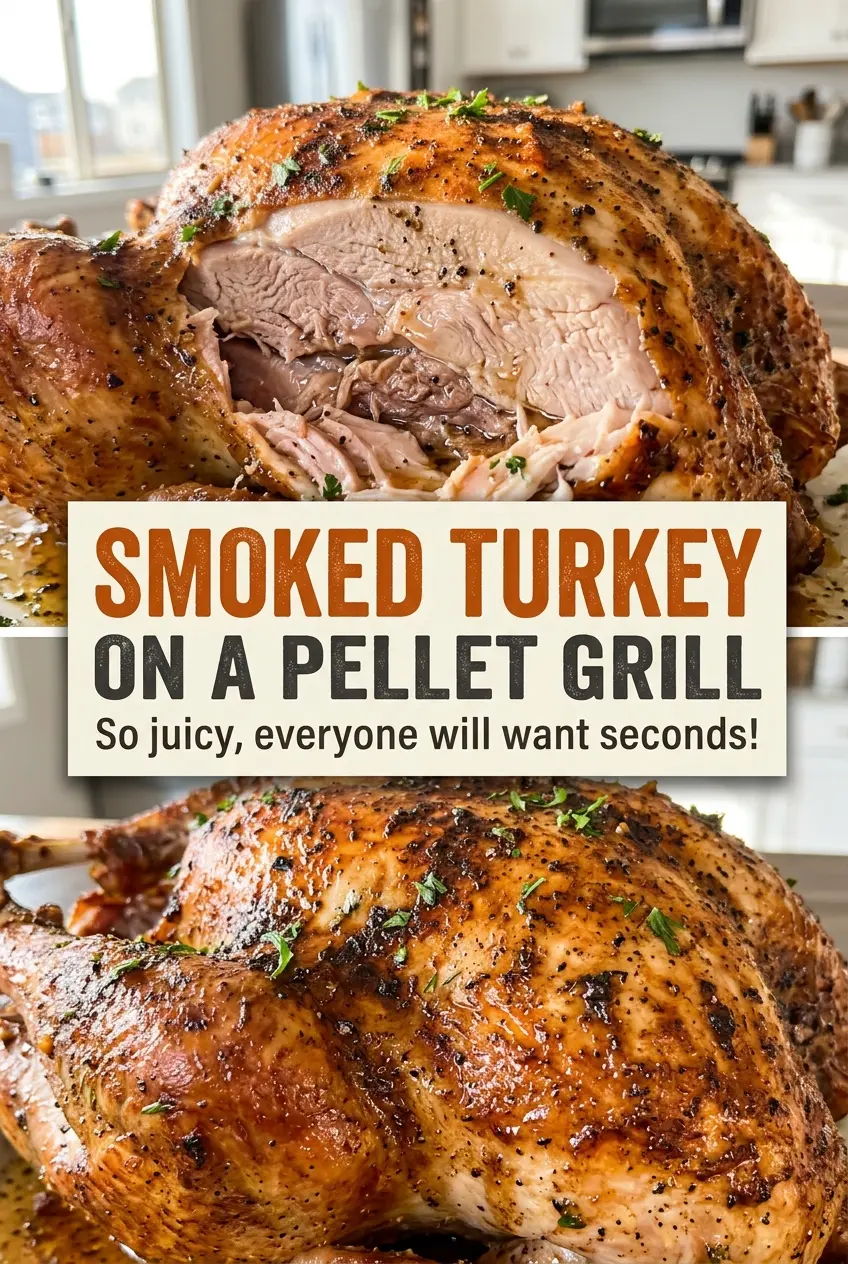
The first thing I watch is the color on the breast. At 325°F, a whole turkey can brown before the thickest parts are ready, and that’s when a loose foil tent earns its place beside the grill. For this smoked turkey on a pellet grill, I keep the heat steady, check both the breast and thigh, and let the thermometer—not the color—tell me when it’s time to come off.
A fully thawed, unbrined turkey gives the seasoning room to do its job without starting out too salty. I pat the skin dry, coat it with olive oil, then work a simple blend of kosher salt, pepper, paprika, garlic powder, dried thyme, and onion powder over the outside. The result is savory, gently smoky turkey with browned skin and meat that’s ready to carve after a proper rest.
Kitchen Note
I keep the spices dry and blend them together before they go anywhere near the turkey. Since the oil is already on the skin, the dry rub stays easy to sprinkle and spread instead of turning into a thick paste in the bowl.
Save this smoked turkey on a pellet grill for the browned, herb-seasoned skin and steady hardwood smoke—apple, pecan, or hickory all work beautifully.
Why This Pellet-Grill Turkey Starts at 325°F, Not Low and Slow
It’s easy to assume that a smoked turkey needs the lowest possible grill setting. This one is different: the pellet grill is set to 325°F, so the bird cooks at a steady roasting temperature while hardwood pellets provide the smoke. Dropping the heat just to make the cook feel more like low-and-slow barbecue changes the cooking conditions and makes the stated time range less useful.
Color is only one clue, and it isn’t the deciding one. The breast can look beautifully browned while the innermost thigh still needs time, or the breast can darken faster than you’d like. Keep the grill at its set temperature and judge doneness with a thermometer in both spots. If the breast is browning too quickly, loosely tent that area with foil while the rest of the turkey continues to cook.
The wood choice gives you room to steer the smoke without changing the grill temperature. Apple is a gentler direction, while hickory gives a more pronounced wood character; the seasoning stays the same either way. That balance keeps the turkey tasting like turkey, with smoke and spices supporting it rather than taking over.
What the Unbrined Bird and Dry Rub Need From Each Other
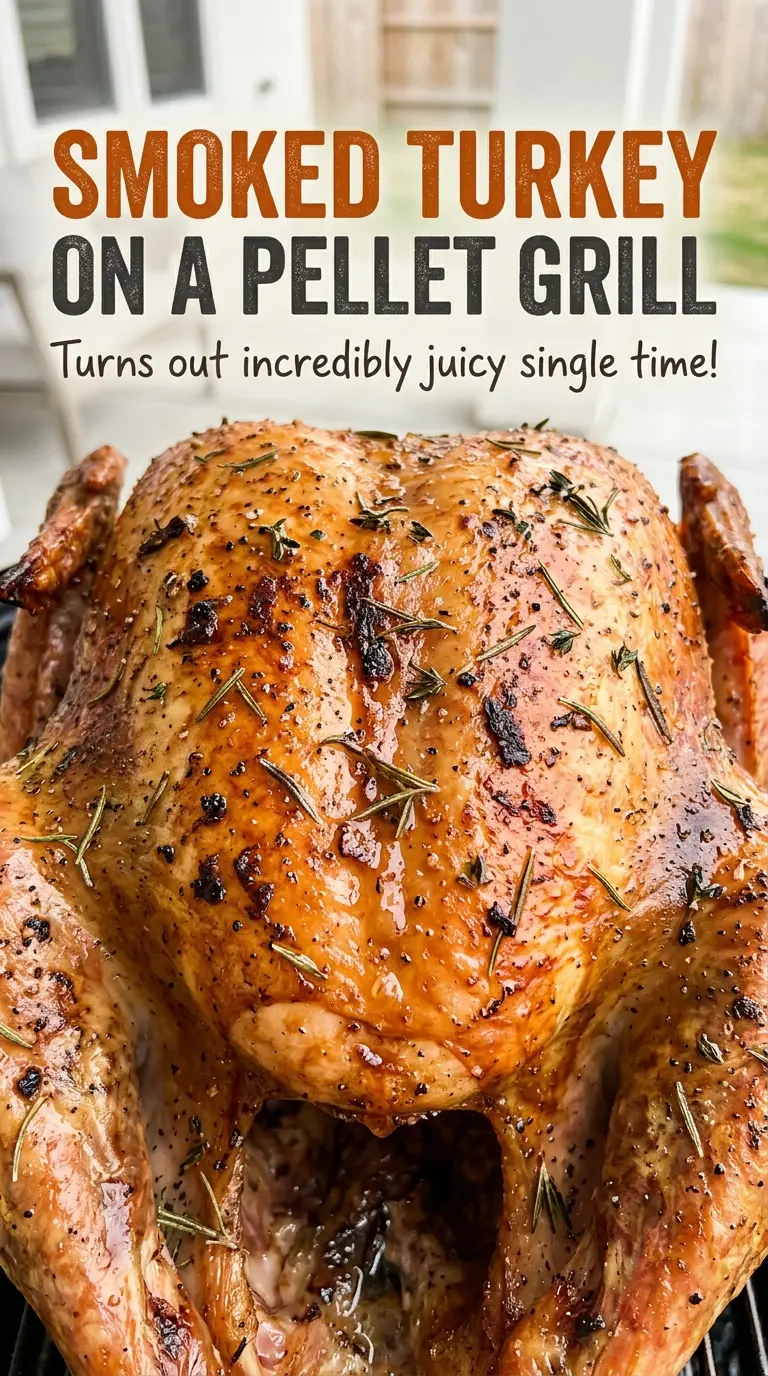
- Whole turkey — Start with a fully thawed 12- to 14-pound bird with the giblets and neck removed. A turkey that hasn’t been pre-brined is important here because the seasoning includes a measured amount of kosher salt; an already salted bird can turn out too salty.
- Olive oil — A thin coating gives the dry seasonings something to cling to and helps you spread them over the legs and wings as well as the breast. Use a fresh oil with a clean smell; there’s no need for a specialty bottle.
- Kosher salt — Its larger crystals are easy to distribute over a whole bird. I wouldn’t replace it with table salt at the same volume because the finer grains pack more tightly and can make the turkey too salty.
- Black pepper and paprika — Pepper gives the rub its warm bite, and paprika adds color with a mild, savory note. Freshly opened spices have a clearer aroma, but they don’t need to be expensive.
- Garlic powder, onion powder, and dried thyme — These round out the rub with savory and herbal notes that hold up during the long cook. Use dried thyme here rather than fresh leaves, which are harder to distribute evenly across the skin.
- Hardwood pellets — Apple, pecan, and hickory are all suitable choices. Pick one wood for a straightforward flavor; the pellet type changes the character of the smoke, not the seasoning blend.
From Dry Skin to a Reliable Thermometer Reading
Dry the turkey and tuck the wings
Use paper towels to pat the turkey dry, including around the legs and wings. Dry skin gives the oil and seasoning a more even surface to cling to, while wet patches can leave the coating uneven. Tuck each wing tip behind its shoulder before you season the bird. Set the turkey aside only long enough to finish preparing the rub.
Oil first, then season the outside
Rub the olive oil over the turkey, working it across the breast, legs, and wings. Combine the kosher salt, black pepper, paprika, garlic powder, dried thyme, and onion powder in a bowl, then distribute that mixture evenly over the skin. Pay attention to the sides and legs instead of concentrating all the seasoning on the breast. If a patch looks bare, smooth the rub across it with your fingers.
Let the closed grill do the cooking
Preheat the pellet grill to 325°F with hardwood pellets such as apple, pecan, or hickory. Set the turkey breast-side up directly on the grill grate and keep the lid closed while it smokes. The cook takes 3 1/2 to 5 hours, depending on the bird and grill. If the breast browns too quickly, loosely tent the breast with foil rather than covering the whole turkey tightly.
Check both thick spots, then rest
Insert a thermometer into the thickest part of the breast and the innermost thigh, keeping the probe from touching bone. The turkey is ready when both readings are at least 165°F; a browned surface by itself doesn’t confirm that the center is done. Transfer the bird to a cutting board and tent it loosely with foil. Give it the full 30-minute rest before carving so you’re not trying to slice a just-cooked turkey while it’s still difficult to handle.
How Apple, Pecan, and Hickory Change the Smoke
Choose apple for a gentler smoke
Apple pellets give the turkey a milder, slightly fruity smoke character. They’re a good pick when you want the savory rub and the turkey itself to stay in the foreground.
Choose pecan for a rounded middle ground
Pecan brings a warm, nutty smoke that sits between delicate fruitwood and a bolder hardwood. Keep the same grill setting and seasoning; changing the pellets is enough to give the finished turkey a different emphasis.
Choose hickory for a stronger wood note
Hickory gives the turkey a more assertive smoke flavor. Use it when you want the wood to be more noticeable alongside the paprika, pepper, and herbs, without changing the rub.
Storage and Reheating
- Refrigerator: Store carved leftovers in a covered container for 3 to 4 days. The skin softens in the refrigerator, even though the meat stays suitable for another meal.
- Freezer: Freeze carved turkey in airtight portions for up to 3 months for best quality. Thaw it in the refrigerator before reheating.
- Reheating: Place portions in an oven-safe dish, cover with foil, and warm in a 325°F oven until hot throughout. Reheating uncovered for too long dries the edges; avoid relying on appearance alone and heat leftovers to 165°F.
The Pellet-Grill Turkey Questions That Come Up at the Grill
Smoked Turkey on a Pellet Grill
Ingredients
Equipment
Method
- Preheat a pellet grill to 325°F with hardwood pellets, such as apple, pecan, or hickory.
- Pat the turkey dry with paper towels.
- Tuck the wing tips behind the shoulders.
- Rub the olive oil over the turkey, including the legs and wings.
- Combine the salt, pepper, paprika, garlic powder, thyme, and onion powder.
- Rub the seasoning mixture evenly over the skin.
- Set the turkey breast-side up directly on the grill grate.
- Smoke with the lid closed for 3 1/2 to 5 hours, until a thermometer inserted into the thickest part of the breast and the innermost thigh without touching bone reads at least 165°F.
- Tent the breast loosely with foil if it browns too quickly.
- Transfer the turkey to a cutting board.
- Tent the turkey loosely with foil.
- Rest for 30 minutes before carving.