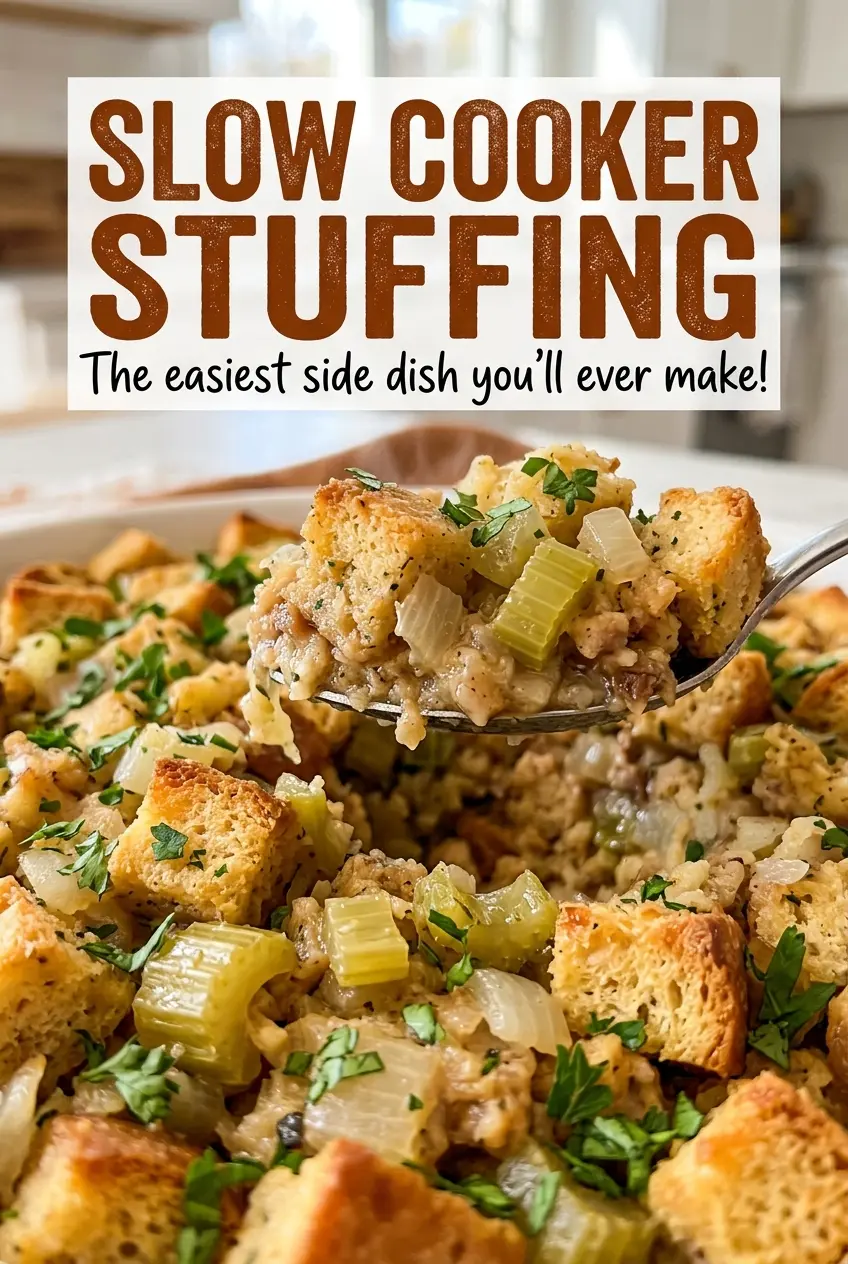
The onion and celery soften slowly in butter, and that first panful tells you a lot: the vegetables should be tender, not browned. I like this slow cooker stuffing when oven space is already spoken for, but I still want the familiar savory bread-and-herb flavor on the table. The slow cooker takes care of the long, covered cook while the stovetop handles the vegetables.
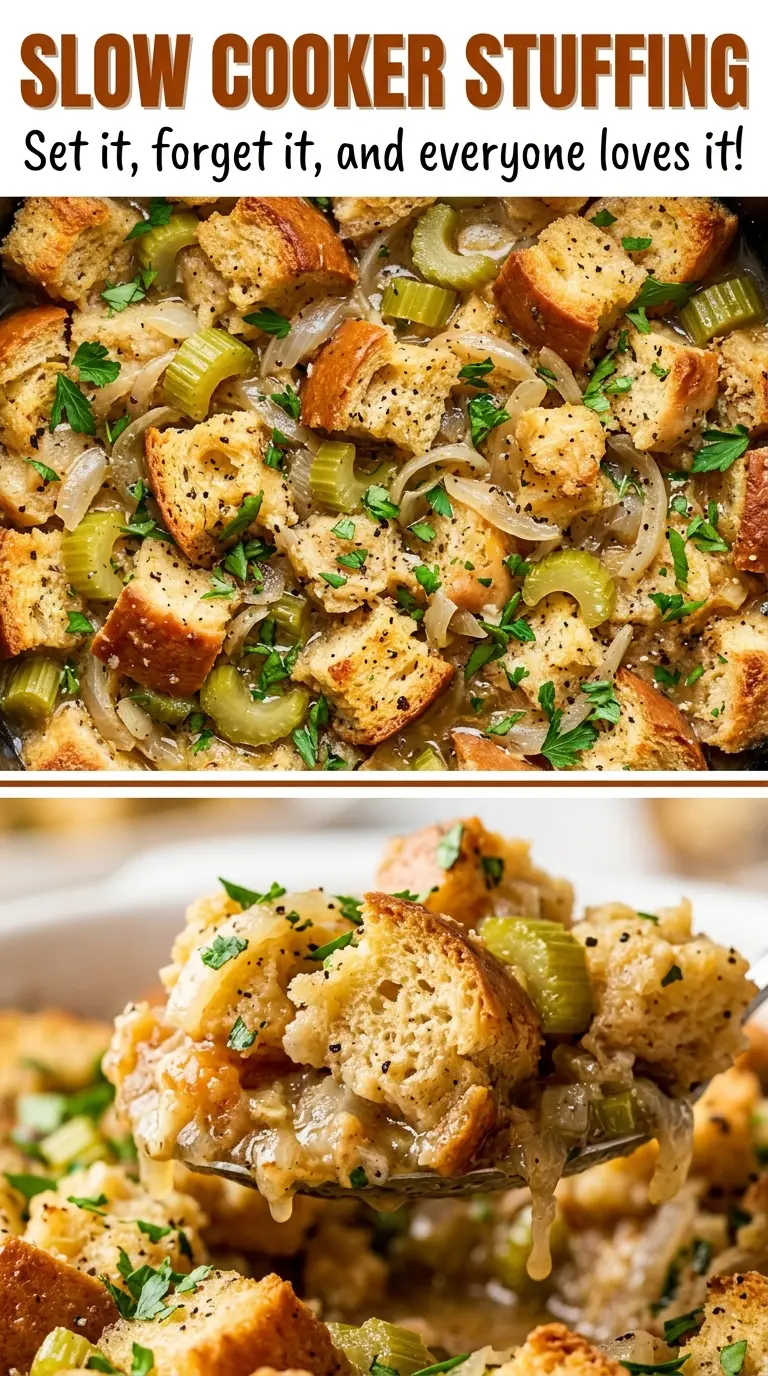
What makes this version dependable is giving the bread cubes their liquid before they go into the slow cooker. The broth, eggs, and seasonings get whisked together first, then tossed with the bread and softened vegetables until the cubes look evenly moistened. That order gives the whole batch a chance to absorb the mixture before cooking, so you don’t end up with a seasoned puddle in one spot and dry bread in another. The finished stuffing is tender through the center, with sage and poultry seasoning in every scoop.
Kitchen Note
Don’t rush the covered rest at the end. The 10 minutes with the slow cooker turned off let the stuffing settle before you scoop it, so it holds together better on the plate.
Save this slow cooker stuffing for a meal when oven space is tight and you still want tender, herb-seasoned bread cubes.
Why the Bread Needs Even Moisture Before It Goes Into the Cooker
Dry bread cubes don’t all take up liquid at the same pace once they are packed into a slow cooker. If the broth mixture gets poured over the cubes without tossing, some pieces can stay comparatively dry while other areas turn heavy and wet. Mixing everything in a large bowl first gives you room to lift and turn the cubes rather than pressing them down into a dense layer.
The eggs belong in the broth mixture, not added on their own to the bread. Whisking them together with the broth and seasonings spreads the binder and herbs through the liquid, and tossing that mixture with the cubes gives each handful a similar start. Add the cooked onion and celery after the pour, then toss again until the vegetables are distributed. Look across the bowl before transferring it: you want the bread evenly moistened, not swimming in liquid or showing large dry patches.
This is especially useful with dried cubes because their exact shape and surface vary from bag to bag. The listed amount is about 10 cups, but the visual cue matters more than trying to judge each cube individually. A thorough toss at this stage is much easier than trying to correct uneven moisture after the stuffing is already cooking.
What the Unseasoned Bread Cubes Make Possible
- Dried unseasoned bread cubes — These provide the structure and absorb the broth mixture without bringing an additional seasoning blend into the dish. The bag’s weight and approximate cup measure are useful guides; choose dried cubes rather than soft bread, which won’t behave the same way in the slow cooker.
- Low-sodium chicken broth — It moistens the cubes and carries the seasonings through the batch. Low-sodium broth gives the listed salt and poultry seasoning room to come through without relying on the salt level of a full-sodium broth; an inexpensive carton is fine as long as it’s low-sodium chicken broth.
- Eggs — Whisked into the broth, they help the cooked stuffing hold together instead of eating like loose, wet bread cubes. Keep them in the mixture and whisk until the yolks and whites are fully combined.
- Butter, onion, and celery — Butter carries the flavor of the softened vegetables through the stuffing, while the finely chopped onion and celery bring savory sweetness and a little texture. Chop them finely so they’re easy to distribute through the cubes; there isn’t a need for a premium butter here.
- Sage and poultry seasoning — Together, these make the recognizable savory seasoning in this batch. The bread is unseasoned, which lets the measured herbs season the whole dish rather than competing with an unknown mix already on the cubes.
The Skillet Sauté and Slow Cooker Cues That Matter
Soften the Onion and Celery Without Browning Them
Coat the inside of a 6-quart slow cooker with nonstick cooking spray before you start assembling. Melt the butter in a 12-inch skillet over medium heat, then add the finely chopped onion and celery. Stir occasionally as they cook for 8 to 10 minutes, watching for the pieces to turn soft and translucent rather than taking on browned edges. Browning isn’t the goal here; softened vegetables mix into the bread more evenly.
Whisk the Seasoned Broth Separately
Put the bread cubes in a large bowl so there’s room to toss them without crushing the pieces. In a separate bowl, whisk together the chicken broth, eggs, dried sage, poultry seasoning, salt, and black pepper until the eggs are blended through. If the eggs remain streaky, the binder and seasoning won’t be as evenly distributed when poured. Pour this mixture over the cubes, add the softened vegetables, and toss until the cubes look evenly moistened.
Let the Slow Cooker Carry the Long Cook
Transfer the moistened bread mixture to the prepared slow cooker and cover it. Cook on LOW for 4 to 5 hours or on HIGH for 2 to 3 hours. Keep the lid in place so the cooker can hold its heat through the cook. Check the center with a food thermometer; the stuffing is ready when the center reaches 160°F, even if the outside looks set sooner.
Rest Before Scooping
When the center reaches 160°F, turn off the slow cooker and leave the stuffing covered for 10 minutes. The center should feel set rather than soupy when you lift a spoonful. Scoop gently from the side toward the center so the portions include both the vegetables and the seasoned bread. The short covered rest gives the batch time to settle without continuing to cook on an active setting.
Where This Stuffing Can Flex—and Where It Can’t
Keep the bread cubes unseasoned
The measured sage, poultry seasoning, salt, and pepper are balanced for plain dried bread cubes. Seasoned cubes would bring their own salt and herbs, so the finished batch would no longer have the same seasoning balance. If you want this particular flavor, stick with the unseasoned kind.
Keep the egg and broth together
The eggs and broth are mixed as one liquid before they meet the bread. Leaving out the eggs changes how the stuffing binds, and changing the liquid changes how the dried cubes moisten. I keep those parts together rather than offering an egg-free or broth swap that would need a different tested ratio.
Use the six-quart slow cooker for this batch
The full amount is sized for a 6-quart slow cooker, which leaves room to hold and cook the bread mixture as one batch. A smaller insert changes how deeply the mixture sits and how it heats, so I don’t recommend treating a smaller cooker as a direct swap for this quantity.
Storage and Reheating
- Refrigerator: Refrigerate leftovers within 2 hours and keep them covered for 3 to 4 days. The bread softens further as it sits.
- Freezer: Freeze cooled portions in airtight containers for up to 2 to 3 months for best quality. Thaw overnight in the refrigerator; the texture may be softer after thawing.
- Reheating: Reheat a portion in a covered microwave-safe dish, stirring partway through, until it reaches 165°F. Don’t leave it uncovered for the whole reheating time or the edges can dry before the center is hot.
The Slow Cooker Stuffing Questions That Come Up Most
Slow Cooker Stuffing
Ingredients
Equipment
Method
- Coat the inside of a 6-quart slow cooker with nonstick cooking spray.
- Melt the butter in a 12-inch skillet over medium heat.
- Add the onion and celery to the skillet.
- Cook, stirring occasionally, until softened, 8 to 10 minutes.
- Put the bread cubes in a large bowl.
- Whisk together the broth, eggs, sage, poultry seasoning, salt, and pepper in a separate bowl.
- Pour the broth mixture over the bread cubes.
- Add the cooked vegetables.
- Toss until evenly moistened.
- Transfer the mixture to the slow cooker.
- Cover and cook on LOW for 4 to 5 hours or HIGH for 2 to 3 hours, until the center reaches 160°F.
- Turn off the slow cooker.
- Let the stuffing rest, covered, for 10 minutes before serving.