The first time I made a shrimp boil in the slow cooker, I expected the potatoes and shrimp to be ready together. They weren’t: the potatoes needed the long stretch, while the shrimp only needed a short finish. Adding the shrimp near the end is what makes this slow cooker shrimp boil work, with fork-tender potatoes and shrimp that stay plump instead of turning tough.
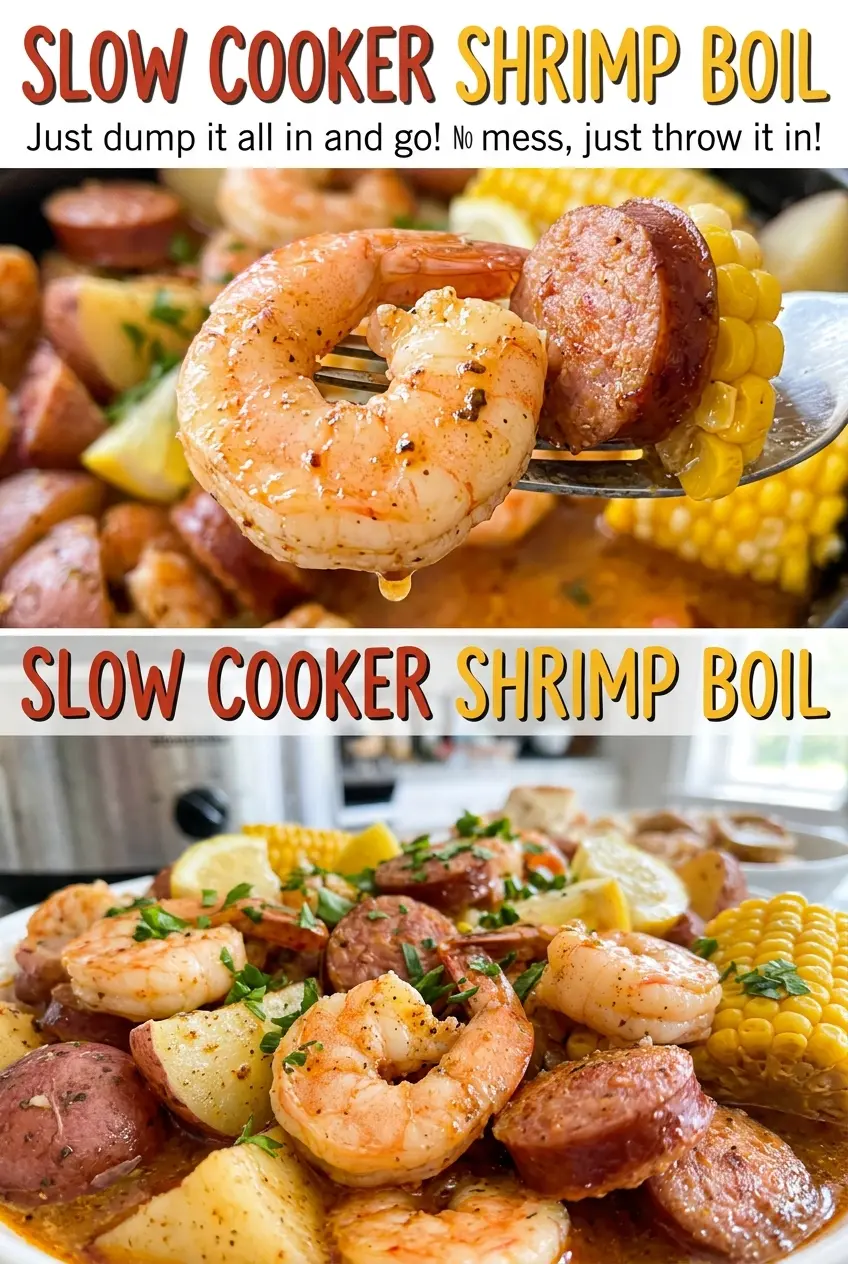
The sausage, corn, garlic, Old Bay, lemon, and water go in together, so the vegetables and potatoes have time to cook while the seasonings infuse the liquid. Once the potatoes are tender, I add the thawed shrimp and let them cook just until opaque. A final drizzle of melted butter brings everything together in the bowl, with sweet corn and smoky sausage tucked between the shrimp.
Kitchen Note
Halve any baby potatoes larger than 1 1/2 inches before they go into the cooker. Keeping the pieces close in size helps them become fork-tender at about the same time.
Save this slow cooker shrimp boil for a hands-off dinner with tender potatoes, corn, and buttery shrimp.
Why the Slow Cooker Liquid Isn’t the Sauce
A slow cooker shrimp boil has more liquid in the pot than you’ll want on the plate. The potatoes, sausage, corn, garlic, Old Bay, and lemon cook together in water, giving the ingredients time to pick up those savory, citrusy seasonings. That cooking liquid does its job in the cooker, but it isn’t meant to become a broth for serving.
After the shrimp are cooked, I lift the solids out with a slotted spoon and discard the lemon slices and liquid. Then the melted butter goes over the shrimp, corn, potatoes, and sausage, where it clings to the food instead of thinning into a watery sauce. Toss gently so the shrimp stay intact and the butter reaches the pieces at the bottom of the bowl, too.
This finish keeps the serving bowl easy to portion: you get the full mix of ingredients without ladling broth alongside them. It also means the final butter is easy to adjust at the table without changing the slow cooker’s cooking liquid.
What Each Ingredient Brings to the Slow Cooker

- Baby red potatoes — Their waxy texture helps them hold their shape through the long cook. Small Yukon Gold potatoes are a useful substitute; halve larger ones to keep the pieces close in size.
- Smoked sausage — Choose a smoked sausage with a flavor you like, since it seasons the cooking liquid as well as adding savory bites to the bowl. Andouille is a good swap when you want more peppery heat; cut it into the same size pieces.
- Corn — Fresh ears cut into thirds give you substantial pieces that are easy to lift out and eat. Frozen corn-on-the-cob sections are the closest stand-in when fresh corn isn’t available; thaw them and cut them to a similar size before adding.
- Garlic, Old Bay, and lemon — Smashed garlic releases flavor into the liquid without disappearing into it, while Old Bay provides the familiar seafood-seasoning flavor. A similar seafood seasoning blend can replace Old Bay in the same quantity, though its salt and heat may differ. Fresh lemon slices add a brighter aroma than bottled juice; if you don’t have a lemon, leaving it out is better than changing the liquid with a splash of juice.
- Large raw shrimp — Peeled and deveined shrimp are ready to add after the potatoes soften, and thawed shrimp cook more predictably than frozen ones. Choose raw shrimp rather than precooked; the slow cooker finish is designed to cook them through.
- Unsalted butter — It melts into a simple coating for the drained ingredients without adding extra salt. Salted butter works, but it makes the finished dish saltier, so keep that in mind when choosing your seasoning blend.
Build the Potatoes First, Then Finish with Shrimp
Load the Slow Cooker
Add the potatoes, sausage, corn, smashed garlic, Old Bay, lemon slices, and water to a 6-quart slow cooker. Stir so the seasoning and liquid are distributed around the ingredients. Keep the potatoes in similar-sized pieces so they cook evenly. There’s no need to add the shrimp at this stage; they go in after the potatoes are tender.
Cook Until the Potatoes Give Easily
Cover and cook on LOW for 5–6 hours or HIGH for 3–4 hours, until the potatoes are fork-tender. Test a potato with a fork rather than relying on the clock alone, since size can affect how quickly it softens. The fork should slide in without the potato feeling firm in the center. If the potatoes need more time, keep the cooker covered and continue cooking before moving on.
Add the Shrimp at the End
Add the thawed, peeled, and deveined shrimp once the potatoes are fork-tender, and set the cooker to HIGH if needed. Cover and cook for 15–25 minutes, until the shrimp are opaque and reach 145°F. Check the thickest shrimp for doneness; the flesh should no longer look translucent. The shrimp can turn tough if they stay in the heat after they’re cooked, so use the visual and temperature cues rather than leaving them in for extra time.
Drain and Coat with Butter
Use a slotted spoon to transfer the solids to a serving bowl, leaving the lemon slices and cooking liquid behind. Discard both rather than pouring the liquid over the food. Melt the butter in a microwave-safe bowl for 30–45 seconds, then drizzle it over the shrimp boil. Toss gently to coat without breaking up the shrimp or potatoes.
Two Easy Ways to Adapt This Shrimp Boil
Use Andouille for a Peppery, Spicier Pot
Replace the smoked sausage with an equal amount of andouille, cut into the same 1-inch pieces. Its peppery seasoning adds more heat and a bolder sausage flavor alongside the Old Bay.
Make the Finish Dairy-Free
Use a dairy-free plant-based butter in place of the unsalted butter and melt it before drizzling. The shrimp boil keeps its buttery finish, though the flavor depends on the brand; choose one that melts smoothly for the most even coating.
Storage and Reheating
- Refrigerator: Refrigerate leftovers within 2 hours in an airtight container and eat within 3 days. The potatoes soften and the shrimp firm up as they chill.
- Freezer: Freezing isn’t my first choice; the potatoes can turn mealy and the shrimp can become rubbery when thawed.
- Reheating: Reheat in a covered microwave-safe dish in short bursts, stirring gently between bursts, until the leftovers reach 165°F. Avoid long stretches of high heat, which can toughen the shrimp.
Questions That Come Up When Making Slow Cooker Shrimp Boil
Slow Cooker Shrimp Boil
Ingredients
Equipment
Method
- Add the potatoes, sausage, corn, garlic, Old Bay, lemon slices, and water to a 6-quart slow cooker.
- Stir the ingredients.
- Cover and cook on LOW for 5–6 hours or HIGH for 3–4 hours, until the potatoes are fork-tender.
- Add the shrimp and set the cooker to HIGH if needed.
- Cover and cook for 15–25 minutes, until the shrimp are opaque and reach 145°F.
- Use a slotted spoon to transfer the solids to a serving bowl.
- Discard the lemon slices and cooking liquid.
- Melt the butter in a microwave-safe bowl for 30–45 seconds.
- Drizzle the melted butter over the shrimp boil.
- Toss gently.