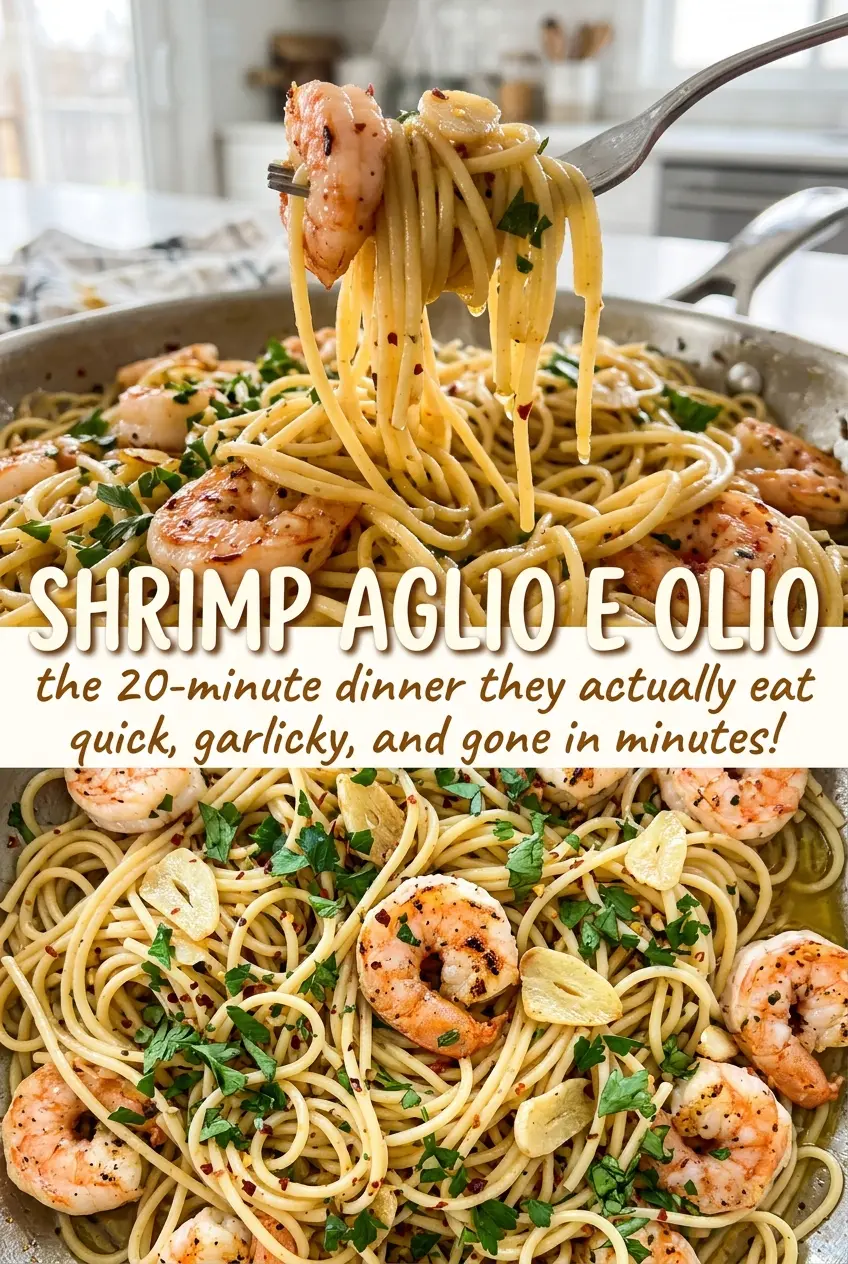
The shrimp hit the hot skillet and turn opaque at the edges before you’ve had time to think about the garlic. I cook them first, then move them to a plate so they don’t overcook while the oil picks up the garlic and red pepper. That little pause is what makes this Shrimp Aglio e Olio feel composed instead of rushed.
The pasta water matters just as much as the olive oil. Once it meets the spaghetti, it helps the oil cling to every strand instead of pooling at the bottom of the pan. Keep an eye on the garlic as it cooks; it should smell fragrant and turn only pale gold, not brown. The finished noodles are glossy, lightly spicy, and tangled with tender shrimp and fresh parsley.
Kitchen Note
I scoop the reserved pasta water into a measuring cup before draining the spaghetti. It’s an easy detail to miss when the pot is steaming, and once the water goes down the sink, there’s no getting that starchy liquid back.
Save this Shrimp Aglio e Olio for a quick skillet dinner with garlicky olive oil, a little heat, and tender shrimp folded through spaghetti.
Why the Shrimp and Garlic Need Separate Turns in the Skillet
Shrimp and sliced garlic may share the same pan, but they don’t want the same heat or the same cooking time. The shrimp need a quick sear over medium-high heat, while garlic tastes sweet and aromatic when it softens gently in olive oil. Leave the shrimp in the skillet as the garlic cooks and they’ll keep cooking after they’re already done; start the garlic first and it may be sitting in the pan too long before the pasta is ready.
Cooking the shrimp first also leaves the skillet ready for the oil, garlic, and pepper flakes. I lower the heat before adding them, then stir until the garlic is fragrant and just beginning to turn pale gold. That small color change gives the oil a mellow garlic aroma without the sharp, bitter edge you get from browned garlic. The shrimp go back in at the end, when they only need a brief toss with the pasta to warm through.
What the Garlic, Olive Oil, and Pasta Each Bring to the Pan
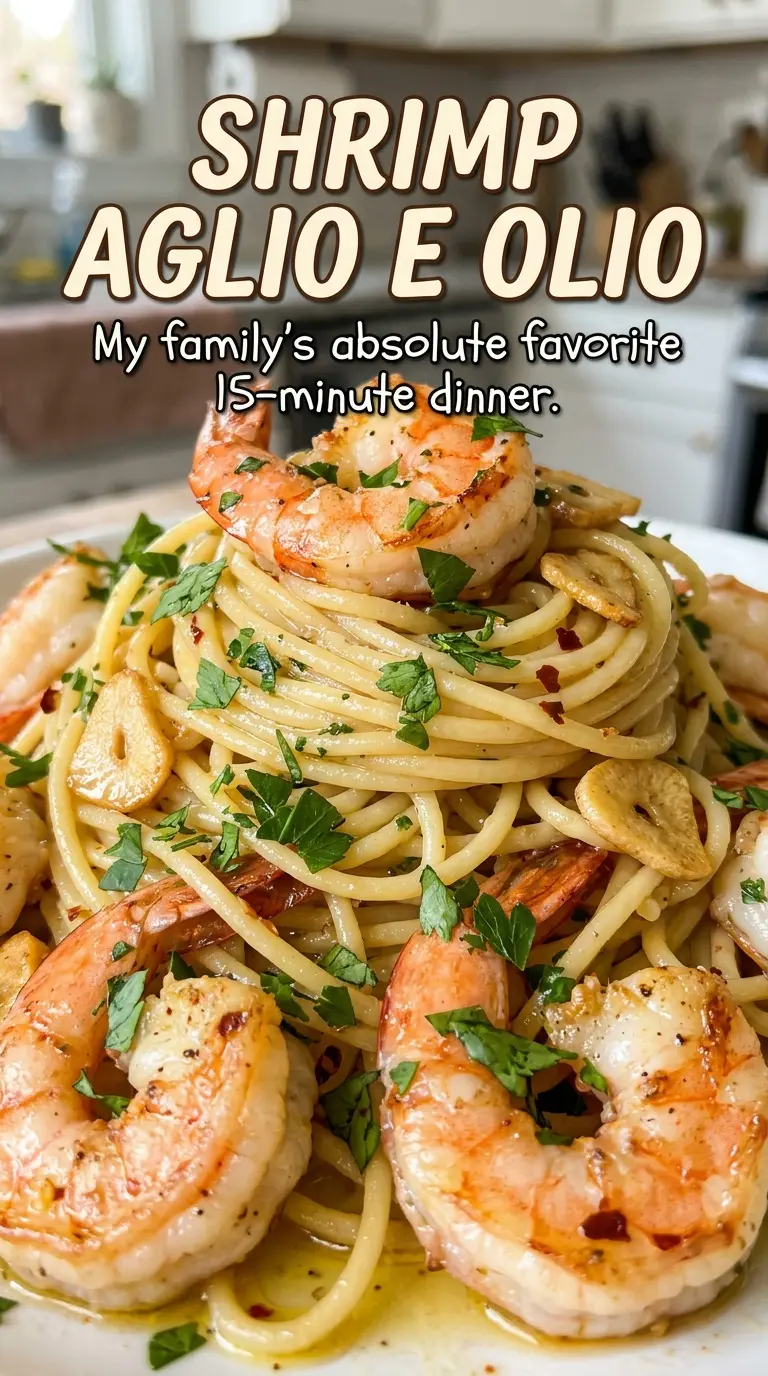
- Spaghetti — Its long strands give the garlic oil plenty of surface to cling to. A regular, inexpensive dried spaghetti works well here; cook it until al dente so it stays springy when tossed in the skillet. Linguine is the closest swap if that’s what you have, though the broader noodles make the dish feel a little less delicate.
- Olive oil — The oil carries the garlic and red pepper flakes across the pasta, so choose one whose flavor you like. A basic olive oil is fine; there’s no need for a special bottle. It’s divided so the shrimp can sear first and the garlic can infuse a fresh portion afterward.
- Large raw shrimp — Large shrimp are easier to turn and less likely to overcook while you build the pasta. Pat them dry before they go into the skillet; excess moisture makes them steam instead of sear. Peeled and deveined shrimp save prep time, but check that they’re fully thawed if they were frozen.
- Garlic and red pepper flakes — Thinly sliced cloves soften into the oil and bring a mellow garlic flavor, while the flakes provide a gentle heat. Slice the cloves evenly so the smaller pieces don’t brown before the thicker ones soften. Garlic powder won’t create the same infused oil, so sliced fresh garlic is worth using here.
- Fresh parsley — Chopped parsley adds a clean, green finish after the richer oil and shrimp. Use fresh parsley for its bright flavor and tender texture; dried parsley won’t give the same fresh lift. Chop it before you start cooking so it’s ready to toss in at the end.
The Fast Skillet Sequence That Keeps Shrimp Tender
Cook the Spaghetti and Save Its Water
Bring 4 quarts of water to a boil in a 6-quart pot, then add 1 tablespoon of kosher salt and the spaghetti. Cook according to the package directions until the noodles are al dente, with a little firmness at the center. Before draining, reserve 1 cup of the pasta water. Drain the spaghetti and keep it nearby while you cook the shrimp.
Sear the Shrimp in a Single Layer
Season the patted-dry shrimp with the remaining 1/2 teaspoon of kosher salt. Heat 2 tablespoons of olive oil in a 12-inch skillet over medium-high heat, then arrange the shrimp in a single layer. Cook for 1 to 2 minutes per side, until opaque and 145°F at the thickest part, then transfer them to a plate. If the skillet is crowded, the shrimp won’t sear as evenly, so give them room.
Let the Garlic Infuse the Oil
Reduce the heat to medium-low and add the remaining 2 tablespoons of olive oil, the sliced garlic, and the red pepper flakes. Stir as they cook for 1 to 2 minutes; the garlic should smell fragrant and turn just pale gold. The slices can go from pale to too dark quickly, so stay close and keep them moving. If they brown, the oil will taste bitter.
Toss Until the Spaghetti Looks Glossy
Add the spaghetti and 1/2 cup of the reserved pasta water to the skillet. Toss for about 1 minute, until the strands look glossy rather than slick with oil. Return the shrimp to the pan, add the parsley, and toss for about 30 seconds until everything is combined and heated through. Serve while the noodles are loose and shiny, before they have time to settle together.
Three Easy Ways to Adapt Shrimp Aglio e Olio
Make It Gluten-Free With Gluten-Free Spaghetti
Swap in gluten-free spaghetti and cook it according to its package directions, stopping when it’s al dente. The pasta water may be less starchy than water from wheat pasta, so the finished coating can be a little less cohesive. Keep the shrimp, garlic, and oil method the same.
Use Linguine for a Broader Noodle
Replace the spaghetti with linguine and cook it to al dente according to the package directions. Its wider shape gives the dish a slightly heartier bite while still tossing well with the garlic oil. Reserve the pasta water before draining, just as you do with spaghetti.
Make a Vegetarian Garlic-and-Oil Pasta
Leave out the shrimp and skip the shrimp-searing stage. Cook the garlic and red pepper flakes in the olive oil, then toss in the spaghetti with pasta water and finish with parsley. You’ll have a simpler, lighter pasta with the garlic and chile taking center stage.
Storage and Reheating
- Refrigerator: Refrigerate leftovers within 2 hours and eat them within 3 to 4 days. The spaghetti will absorb some oil and lose a little of its spring as it sits.
- Freezer: I don’t recommend freezing the finished dish; the spaghetti softens and the shrimp can turn rubbery after thawing.
- Reheating: Warm leftovers gently in a skillet over medium-low heat with a small splash of water, stirring until hot throughout. Reheat to 165°F, and avoid high heat, which can toughen the shrimp before the pasta warms evenly.
Questions That Come Up When Making This Shrimp Pasta
Shrimp Aglio e Olio
Ingredients
Equipment
Method
- Bring the water to a boil in a 6-quart pot, add 1 tablespoon salt and the spaghetti, and cook according to package directions until al dente.
- Reserve 1 cup pasta water, then drain the spaghetti.
- Season the shrimp with the remaining 1/2 teaspoon salt.
- Heat 2 tablespoons olive oil in a 12-inch skillet over medium-high heat, add the shrimp in a single layer, and cook for 1 to 2 minutes per side, until opaque and 145°F at the thickest part; transfer to a plate.
- Reduce the heat to medium-low and add the remaining 2 tablespoons olive oil, garlic, and red pepper flakes; cook for 1 to 2 minutes, stirring, until the garlic is fragrant and just turning pale gold.
- Add the spaghetti and 1/2 cup reserved pasta water, then toss for about 1 minute until the pasta is glossy.
- Return the shrimp to the skillet, add the parsley, and toss for about 30 seconds until combined and heated through.