Sheet pan shrimp fajitas deliver the kind of dinner that feels bigger than the effort it takes. The shrimp come out juicy and lightly charred, the peppers soften just enough to keep their sweetness, and the onions pick up those browned edges that taste like you stood over a skillet for much longer than you did. Everything finishes on one pan, which means the fajita seasoning clings to the vegetables and shrimp instead of getting lost in a pile of sauces or extra dishes.
What makes this version work is timing. The vegetables get a head start so they can soften and caramelize before the shrimp go in. Shrimp cook fast, and if you roast them from the beginning, they turn rubbery before the peppers are even close to done. A hot oven helps here, too. It gives the edges a little blister and keeps the whole pan moving toward that smoky, roasted flavor instead of steaming into softness.
Below, I’ll walk through the little details that matter most: how to keep the shrimp from overcooking, which ingredients carry the flavor, and how to adapt the pan if you want to swap the tortillas, skip the dairy, or stretch the meal a little further.
The shrimp stayed juicy and the peppers had those little charred edges I always try to get. I loved that the whole pan was done right on time and the lime at the end pulled everything together.
Save these sheet pan shrimp fajitas for a fast dinner with roasted peppers, smoky spice, and almost no cleanup.
The Trick to Roasting Shrimp Without Turning Them Tough
The biggest mistake with fajita-style shrimp is treating them like the vegetables. They don’t need the same amount of time, and they don’t forgive overcooking. That’s why the peppers and onions go in first. They need those extra minutes to soften and pick up color, while the shrimp only need a short blast at the end to turn pink and just curled.
The other detail that matters is the hot oven. At 425°F, the vegetables can actually roast instead of sitting there and sweating. If your pan is crowded, though, you’ll lose that edge and end up with soft peppers instead of caramelized ones. Give everything a single layer if you can, and use a second sheet pan if the vegetables are piled up.
- If the shrimp look opaque all the way through and the tails have curled into tight little Cs, they’re done.
- If the vegetables are still stiff after the first roast, they were cut too thick or the pan was too full.
- If the pan seems wet, the shrimp were probably thawed with too much surface moisture. Pat them dry before seasoning.
What Each Ingredient Is Actually Doing in This Dish
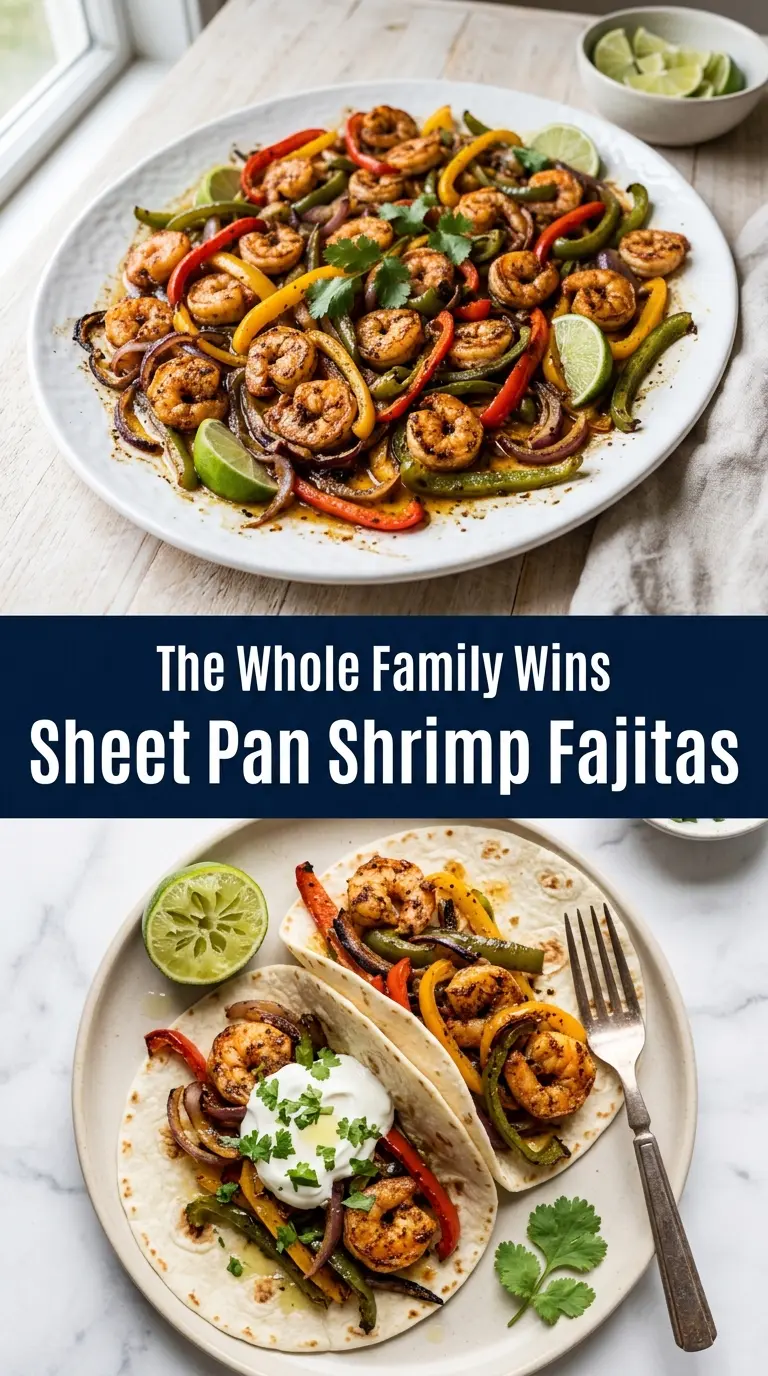
- Shrimp — Large shrimp hold up best here because they stay juicy through the short roast. Smaller shrimp cook too fast and can turn chewy before the vegetables are ready.
- Bell peppers and onion — These are the backbone of the dish. Slice them into even strips so they soften at the same rate, and don’t cut them paper-thin or they’ll collapse before the shrimp go in.
- Olive oil — This carries the spice mixture and helps the vegetables roast instead of dry out. You want enough to coat everything lightly but not so much that the pan turns greasy.
- Chili powder, cumin, smoked paprika, garlic powder, onion powder, and cayenne — Together they build that fajita flavor without needing a bottled seasoning mix. Smoked paprika matters here because it gives you that grilled note even though everything is going into the oven.
- Lime juice — Add it at the end, not before roasting. If it goes in too early, it dulls the seasoning and can make the shrimp taste flat instead of bright.
- Flour tortillas — They’re soft and flexible, which works well with juicy shrimp and roasted vegetables. Warm them before serving so they don’t crack when you fold them.
Roast the Vegetables First, Then Give the Shrimp Their Short Window
Season the Pan in One Bowl
Toss the sliced peppers and onion with olive oil and the spices until every piece is coated and looks glossy. That coating matters because it keeps the vegetables from drying out and gives them a seasoned surface that browns in the oven. Spread them in an even layer on the sheet pan so they roast instead of steam. If they’re piled up, they’ll soften before they take on color.
Let the Vegetables Start Caramelizing
Roast the vegetables first until the onion edges start to brown and the peppers lose their raw crunch. That head start is what builds depth in a fast recipe like this. If you add the shrimp too early, the vegetables will lag behind while the shrimp overcook. A good visual cue is softened peppers with a few dark spots around the edges.
Add the Shrimp at the End
Toss the shrimp in the remaining seasoning, then add them to the pan and return everything to the oven. They need only long enough to turn pink and curl into loose C shapes. If they tighten into full O shapes, they’ve gone too far. Pull the pan the moment the centers look opaque and the shrimp feel firm but still springy.
Finish With Lime and Serve Right Away
Squeeze the lime over the hot pan as soon as it comes out of the oven. The heat wakes up the spices and cuts through the richness of the oil. Serve immediately with warm tortillas and toppings while the shrimp are still juicy. Sitting too long in the pan is the fastest way to lose the texture you worked for.
Three Ways to Make These Fajitas Fit What You Have
Corn Tortilla Version
Swap in corn tortillas if you want a gluten-free meal with a little more chew and corn flavor. Warm them well so they stay pliable. They won’t hold as much filling as flour tortillas, but they pair nicely with the smoky shrimp and roasted peppers.
Dairy-Free Toppings
Skip the sour cream and use extra guacamole, salsa, or a spoonful of plain dairy-free yogurt if you want something creamy. The fajitas don’t need a rich topping to work, but a cool contrast does help balance the spice.
Make It Spicier or Milder
For more heat, increase the cayenne or add sliced jalapeños with the peppers. For a milder pan, leave out the cayenne and use a mild chili powder. The smoked paprika should stay either way because it gives the fajitas their roasted, savory backbone.
Storage and Reheating
- Refrigerator: Store the shrimp and vegetables in an airtight container for up to 3 days. The peppers will soften a little more in the fridge, but the flavor holds well.
- Freezer: The cooked filling can be frozen, but shrimp texture gets less tender after thawing. If you plan to freeze it, undercook the shrimp by about 30 seconds and cool everything quickly before freezing.
- Reheating: Reheat gently in a skillet over low to medium-low heat or in short bursts in the microwave. High heat turns shrimp rubbery fast, so stop as soon as everything is hot.
Answers to the Questions Worth Asking
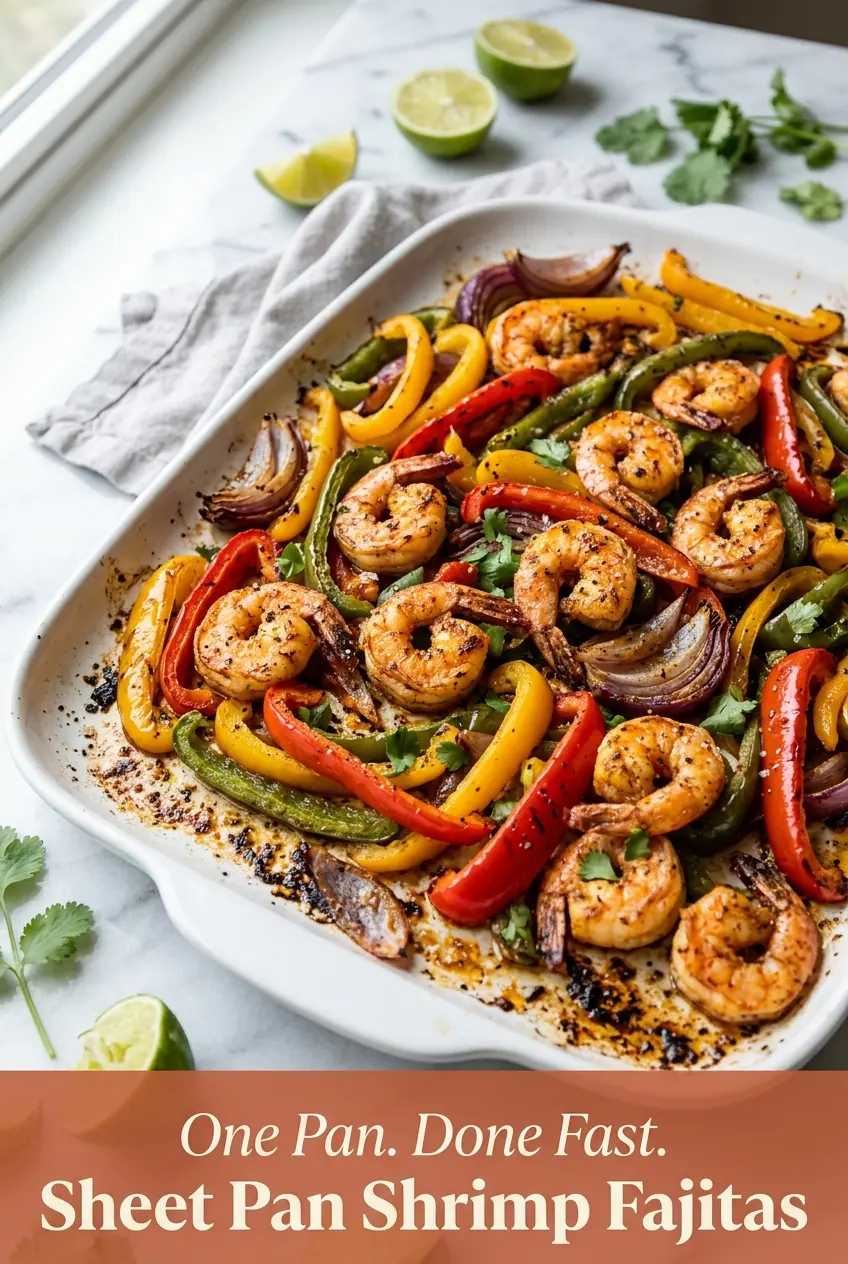
Sheet Pan Shrimp Fajitas
Ingredients
Equipment
Method
- Preheat the oven to 425°F and line a large sheet pan with foil, then lightly grease it for easy cleanup.
- In a large bowl, combine olive oil, chili powder, cumin, smoked paprika, garlic powder, onion powder, cayenne pepper, salt, and black pepper until evenly mixed.
- Add sliced bell peppers and onion to the spice mixture and toss until fully coated, then spread them in a single layer on the sheet pan.
- Roast the vegetables for 12 minutes, until slightly softened and beginning to char at the edges (visible browning on the peppers and onions).
- Add shrimp to the same spice bowl and toss well so each piece is coated, then move the shrimp onto the sheet pan alongside the vegetables.
- Return to the oven and roast for 6–8 minutes until the shrimp are pink, curled, and cooked through; target an internal temperature of 120°F.
- Squeeze the lime juice over everything right out of the oven so it soaks into the shrimp and peppers.
- Serve immediately by wrapping the shrimp fajita mixture in warm small flour tortillas and topping with sour cream, guacamole, fresh cilantro, and lime wedges as desired.