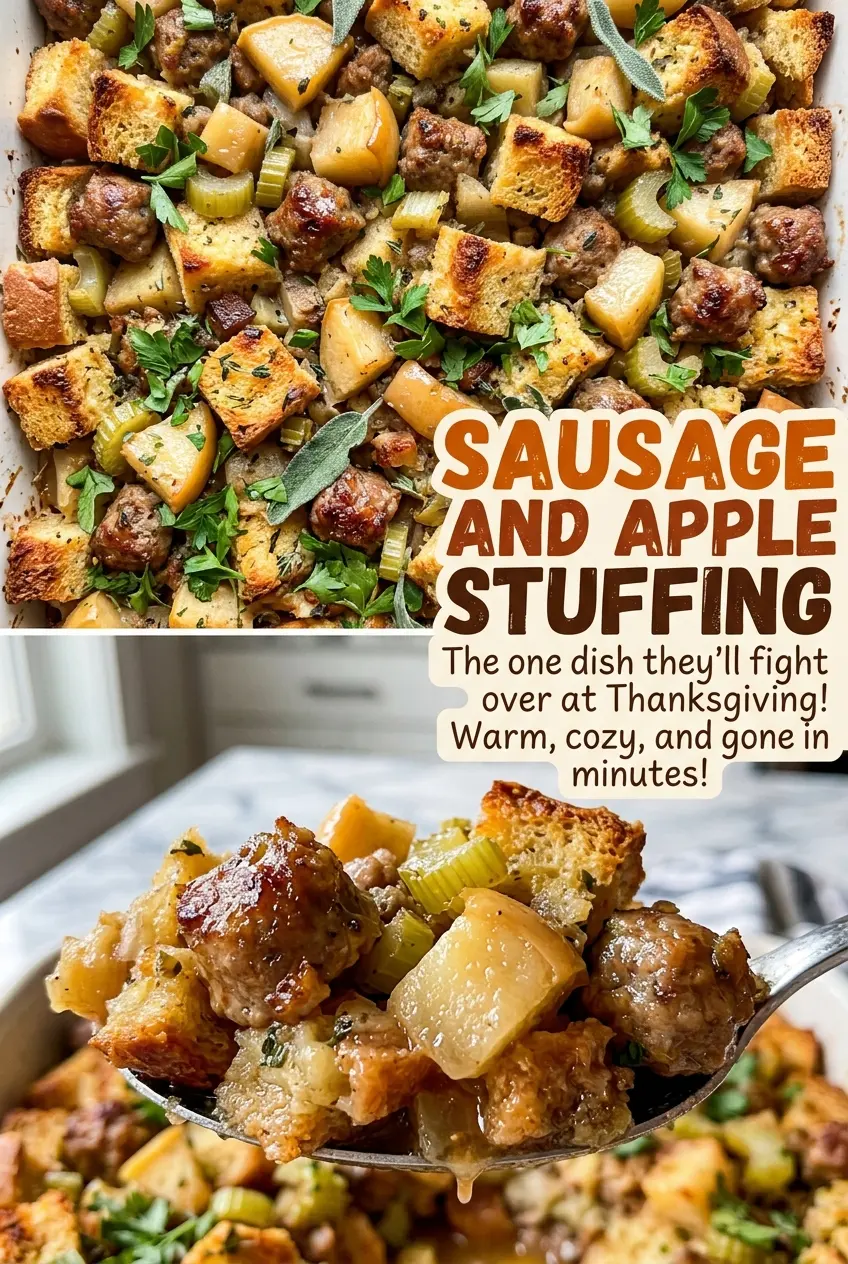
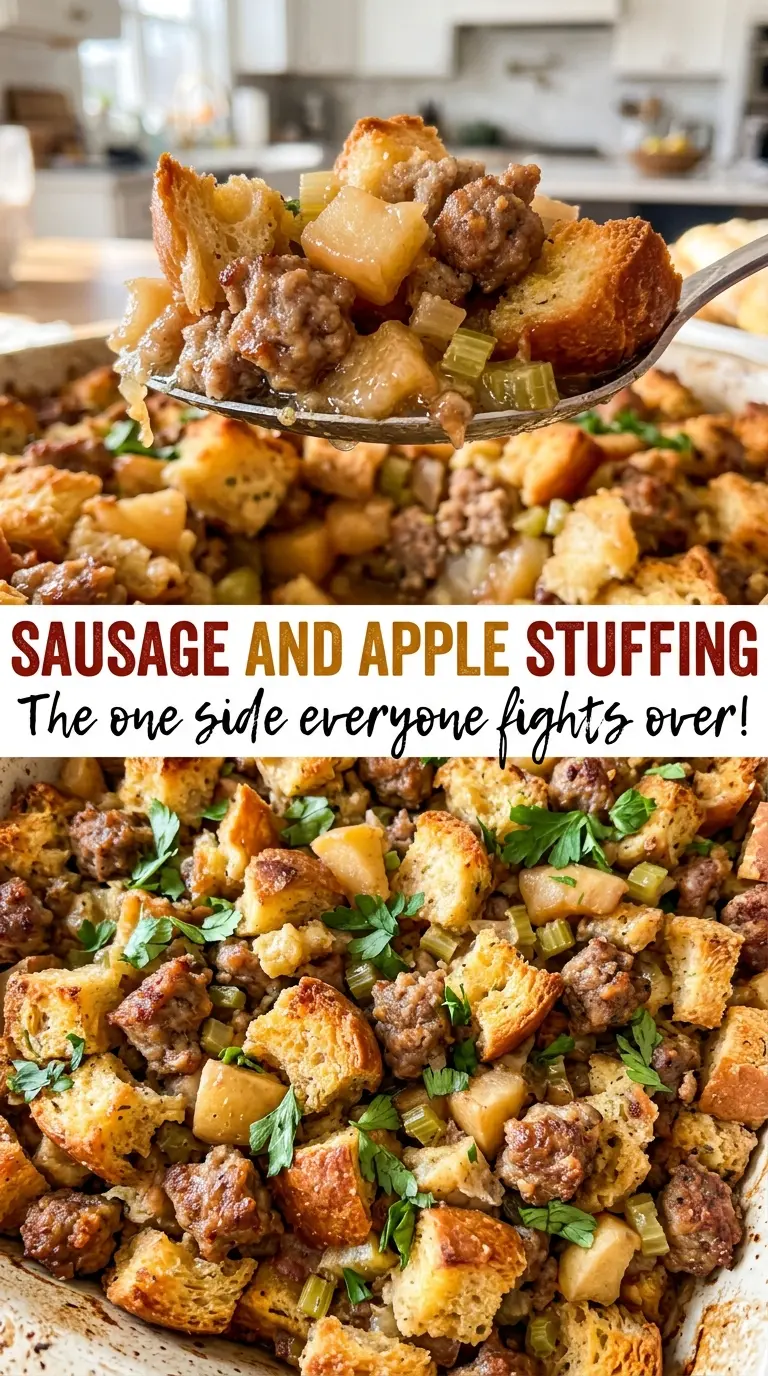
When the broth and egg mixture hits the bread cubes, the bowl can look uneven at first: a few pieces drink it in quickly while others still seem dry. A thorough toss brings everything together without crushing the bread, which is what gives Sausage and Apple Stuffing a tender middle and a golden top instead of a dense, soggy layer.
I brown the sausage in the same skillet I use for the vegetables, so the onion and celery pick up some of that savory flavor as they soften. The apples go in near the end with sage and thyme; they soften but still bring a little bite to each scoop. Once the mixture is evenly moistened, it goes into the oven covered, then uncovered to brown. The finished stuffing is savory, gently sweet, and soft beneath its crisp top.
Kitchen Note
Use an extra-large bowl, at least 8 quarts, before you start tossing. The bread, sausage, vegetables, and liquid need room to move, and a crowded bowl makes it much harder to moisten everything evenly.
Save this Sausage and Apple Stuffing for its savory pork, tender apples, and golden, herb-scented top.
Why This Stuffing Needs an Even Toss, Not More Liquid
Dry bread cubes are meant to absorb the broth mixture, but adding liquid doesn’t help if it lands unevenly. A few wet clumps and a few dry pockets usually mean the mixture needs another careful toss, not an extra pour. Whisking the broth with the eggs, salt, and pepper first gives you one consistent liquid to distribute through the bowl.
The eggs help the baked stuffing hold together, while the bread keeps the center tender. Toss until the cubes are evenly moistened, then stop before they turn mushy. The top and center finish differently in the oven: covering the dish first lets the middle cook through, and uncovering it later gives the surface time to turn golden. That contrast is what makes each serving both soft and lightly crisp.
The Bread, Sausage, and Apples Each Set a Different Texture
- Dried bread cubes — Unseasoned cubes give you room to control the herbs and salt, while their dry surface absorbs the broth without starting out soggy. Keep the cubes intact as you toss; crushed crumbs make the finished stuffing heavier. A fresh loaf isn’t a direct one-for-one replacement because it brings more moisture.
- Bulk pork sausage — Pork sausage brings savory richness and small, browned pieces throughout the dish. Break it up as it cooks so you don’t end up with a few oversized bites. The browned bits in the skillet also season the butter and vegetables that follow.
- Apples — Choose firm apples that hold their shape when cooked. Their gentle sweetness balances the sausage and herbs; a very soft apple is more likely to break down into the stuffing. Core and dice them before they go into the skillet.
- Chicken broth and eggs — Low-sodium broth lets the sausage and seasonings stay in balance, and the eggs help bind the moistened cubes as they bake. Whisk the liquid ingredients together before pouring so the eggs don’t collect in just one part of the bowl.
- Sage and thyme — Dried rubbed sage gives the stuffing its familiar savory warmth, and dried thyme adds an earthy note. Rubbed sage disperses more easily through the skillet mixture than a large, intact leaf would.
Build the Stuffing in the Skillet, Then Let the Oven Finish It
Brown the Sausage in Small Pieces
Heat a 12-inch skillet over medium heat and cook the bulk pork sausage, breaking it into small pieces as it browns. Give it 8 to 10 minutes, checking that the pieces are browned and the sausage reaches 160°F. Large clumps brown unevenly, so break them apart as you go. Transfer the cooked sausage to the extra-large bowl with the bread cubes.
Soften the Vegetables Before Adding the Apples
Melt the butter in the same skillet, then add the diced onion and celery. Cook them for about 5 minutes, until softened rather than browned. Add the diced apples, sage, and thyme, and cook for 3 minutes. The apples should be warmed through and beginning to soften; scrape the skillet mixture into the bowl with the sausage and bread.
Coat the Cubes with the Broth Mixture
Whisk the chicken broth, eggs, salt, and black pepper in a medium bowl until combined. Pour the mixture over the bread and skillet ingredients, then toss until the cubes look evenly moistened. Lift from the bottom of the bowl as you turn the mixture so sausage and vegetables don’t stay gathered underneath. Stop once the liquid is distributed and the cubes are still recognizable.
Bake Covered, Then Uncover to Brown
Heat the oven to 350°F and coat a 9×13-inch baking dish with nonstick cooking spray. Transfer the stuffing to the dish, cover it with foil, and bake for 30 minutes. Uncover and bake for another 10 to 20 minutes, until the top is golden and the center reaches 160°F. Let it rest for 10 minutes before serving so the middle has time to settle.
Three Ways to Shift the Sausage-and-Apple Balance
Choose a Tart Apple for More Contrast
Use firm Granny Smith apples in place of a sweeter apple. Their sharper tang cuts through the richness of the pork and keeps the apple flavor bright, while the diced pieces still soften in the skillet.
Make It Gluten-Free with Dried Bread Cubes
Replace the unseasoned bread cubes with an equal weight of unseasoned gluten-free dried bread cubes. Their texture may be a little less cohesive after baking, so toss gently and give the cubes time to absorb the broth mixture before transferring them to the dish.
Bring in a Little Heat
Use hot bulk pork sausage instead of mild bulk pork sausage. It keeps the same savory pork base but gives each bite a noticeable peppery warmth, so the apples make a particularly nice counterpoint.
Storage and Reheating
- Refrigerator: Cool and refrigerate within 2 hours; keep covered for 3 to 4 days. The bread softens as it sits.
- Freezer: Freeze airtight portions for up to 1 month for the best texture. Thaw overnight in the refrigerator before reheating.
- Reheating: Cover and warm in a 325°F oven until the center reaches 165°F. Uncover near the end if you’d like to bring back some crispness on top; repeated reheating can dry out the bread.
Questions That Come Up Before This Stuffing Goes in the Oven
Sausage and Apple Stuffing
Ingredients
Equipment
Method
- Heat the oven to 350°F.
- Coat a 9x13-inch baking dish with nonstick cooking spray.
- Place the bread cubes in an extra-large (at least 8-quart) bowl.
- Cook the sausage in a 12-inch skillet over medium heat, breaking it into small pieces, until browned and it reaches 160°F, 8 to 10 minutes.
- Transfer the sausage to the bowl with the bread cubes.
- Melt the butter in the skillet.
- Add the onion and celery and cook until softened, about 5 minutes.
- Add the apples, sage, and thyme and cook for 3 minutes.
- Add the skillet mixture to the bowl and toss with the sausage and bread cubes.
- Whisk the broth, eggs, salt, and pepper in a medium bowl.
- Pour the broth mixture over the bread mixture and toss until evenly moistened.
- Transfer the mixture to the prepared baking dish and cover with foil.
- Bake for 30 minutes.
- Uncover and bake for 10 to 20 minutes more, until the top is golden and the center reaches 160°F.
- Rest the stuffing for 10 minutes before serving.