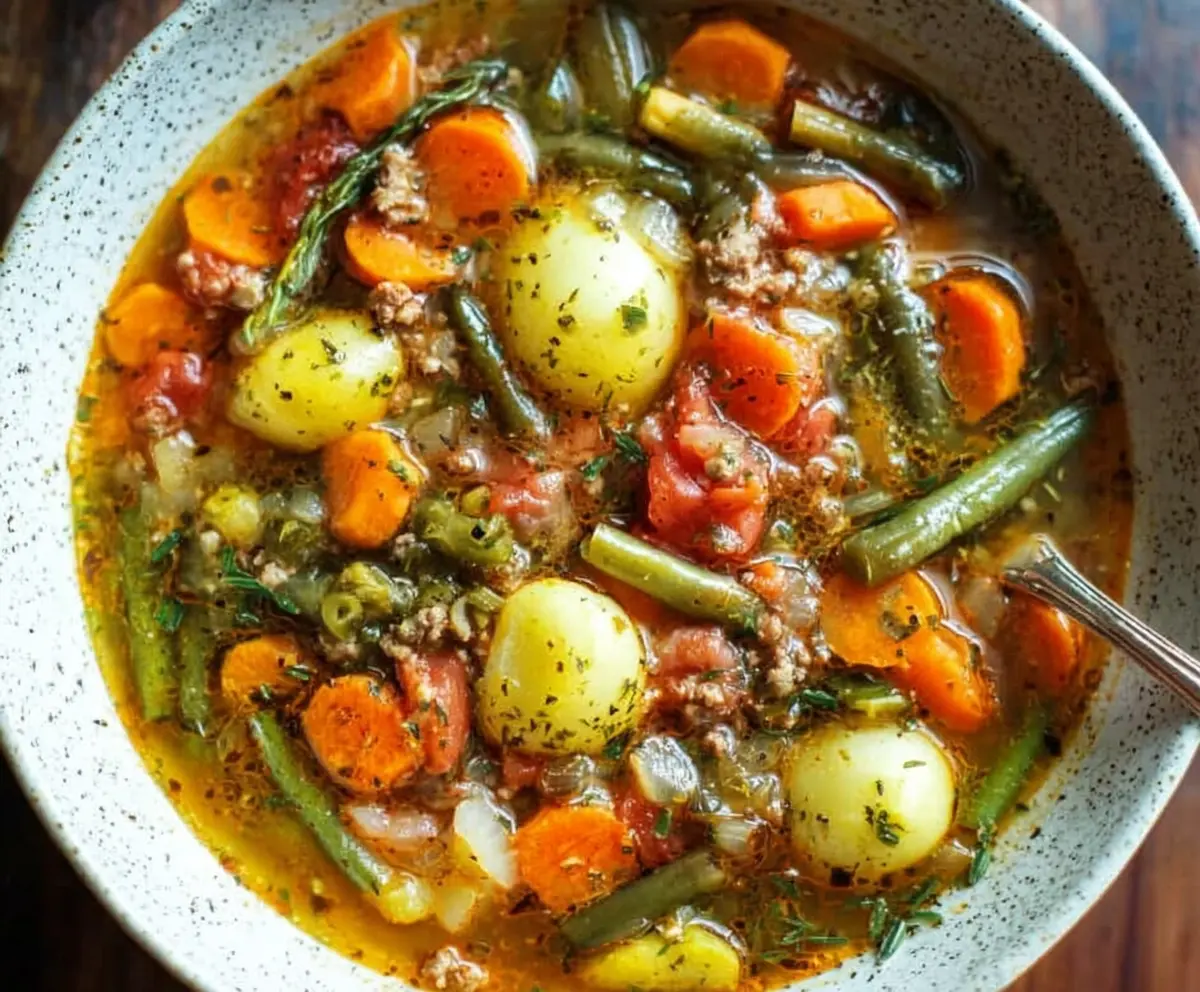
Rustic Vegetable Soup is a hearty and comforting bowl filled with chunky vegetables like carrots, potatoes, tomatoes, and green beans, all simmered together in a flavorful broth. It’s the kind of soup that feels like a warm hug on a cold day, simple yet full of taste and texture. The rustic style means the veggies are cut in bigger pieces, giving each spoonful a satisfying bite.
I love making this soup when I want something easy but nourishing. It’s a great way to use up whatever vegetables are in the fridge, and I always add a pinch of herbs to bring it all together. Sometimes I throw in a little garlic and onion to boost the flavor without much effort. One tip I’ve learned is to let it simmer slowly so the vegetables soften just right but still keep some of their character.
My favorite way to enjoy Rustic Vegetable Soup is with a slice of crusty bread on the side. Dunking the bread into the broth makes it taste even better and fills you up nicely. This soup also makes great leftovers, tasting even better the next day when the flavors get a chance to blend. It’s the kind of recipe I turn to whenever I want something cozy, wholesome, and easy to prepare.
Key Ingredients & Substitutions
Potatoes: Yukon gold or baby potatoes hold their shape well and add a nice texture. You can swap these for red potatoes or fingerlings if you prefer. Avoid starchy types like russets—they’ll break down too much.
Ground Meat: Ground beef or Italian sausage adds richness and heartiness. For a vegetarian version, simply skip the meat and add a can of beans instead for protein and texture.
Green Beans: Fresh green beans give a nice snap and color. If fresh aren’t available, frozen green beans work fine. Just add them a little later in cooking to keep their texture.
Herbs: Thyme, oregano, and rosemary bring warmth but aren’t overpowering. Feel free to swap dried herbs for fresh if you have them; just use about three times as much fresh.
How Do You Get the Vegetables Tender but Not Mushy?
The trick is simmering the soup gently and timing when you add your vegetables:
- Start with onion and garlic, then add the ground meat to brown for flavor.
- Pour broth and add potatoes and carrots first, as they take longer to cook.
- Add green beans last, about 10 minutes before finishing, so they stay firm.
- Keep heat low enough to maintain a gentle simmer—you want bubbles, but not a rolling boil.
- Check vegetables with a fork now and then; they should be tender but still hold their shape.
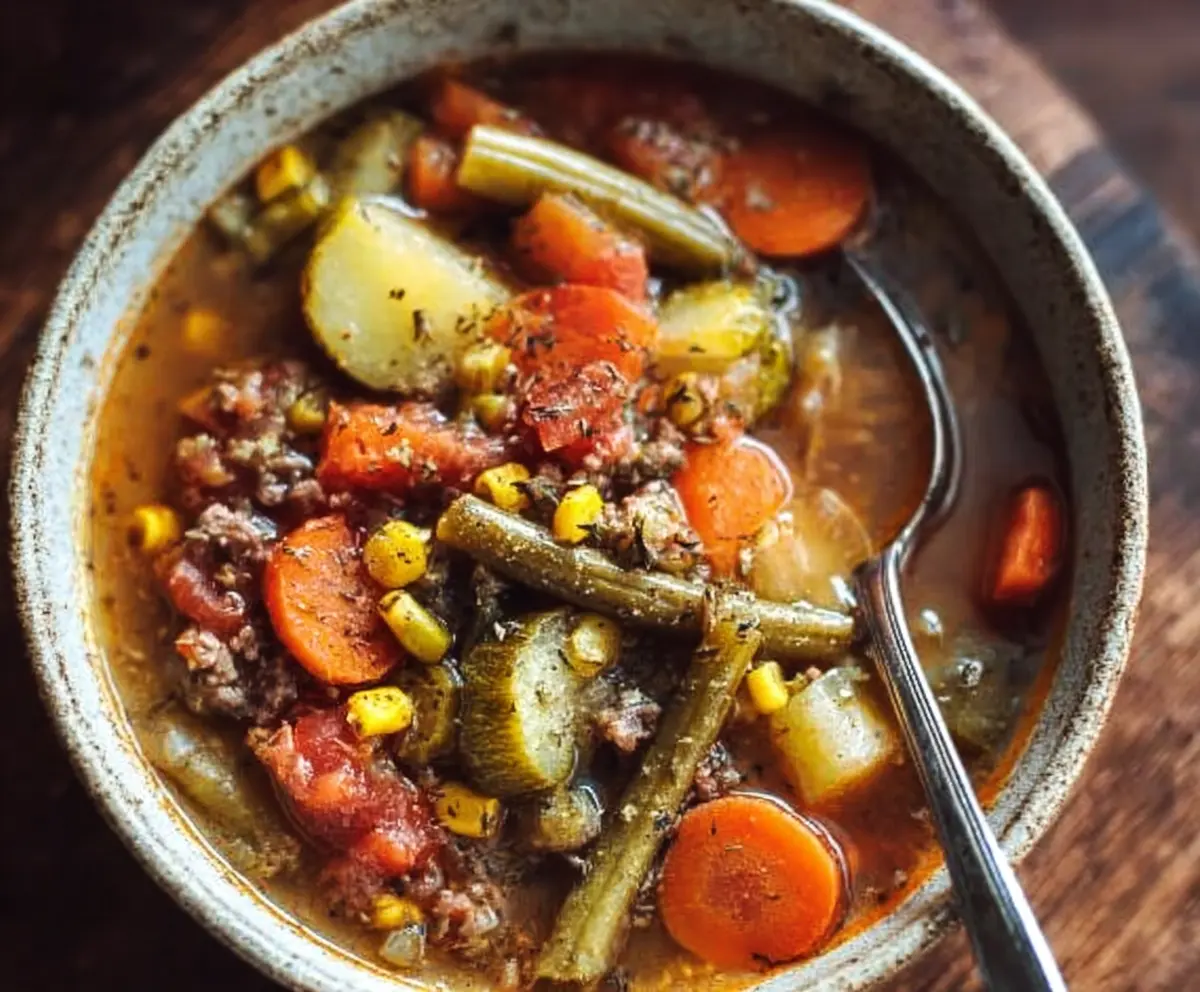
Equipment You’ll Need
- Large heavy-bottomed pot – Perfect for even heat and simmering the soup without burning.
- Wooden spoon – Great for stirring gently without scratching your pot.
- Chef’s knife – Makes chopping vegetables quick and safe.
- Cutting board – Keeps your work surface clean and stable while chopping.
- Ladle – Helps you serve the soup easily and neatly into bowls.
Flavor Variations & Add-Ins
- Swap ground beef for cooked shredded chicken for a lighter protein option.
- Add cooked white beans or lentils to boost fiber and protein, making it more filling.
- Stir in some chopped kale or spinach near the end for extra greens and nutrients.
- Toss in a pinch of smoked paprika or red pepper flakes for a subtle smoky or spicy kick.
How to Make Rustic Vegetable Soup?
Ingredients You’ll Need:
- 2 tbsp olive oil
- 1 medium onion, diced
- 2 cloves garlic, minced
- 1 lb ground beef or Italian sausage (optional for rustic flavor)
- 4 cups vegetable broth (or beef broth if using ground beef)
- 3-4 small Yukon gold or baby potatoes, peeled
- 3 medium carrots, peeled and sliced
- 1½ cups green beans, trimmed and cut in halves
- 1 can (14.5 oz) diced tomatoes with liquid
- 1 tsp dried thyme
- 1 tsp dried oregano
- ½ tsp dried rosemary
- Salt and black pepper to taste
- Fresh parsley, chopped (for garnish)
How Much Time Will You Need?
This soup takes about 10 minutes to prepare and 30 minutes to cook. Total time is around 40 minutes. It’s quick enough for a weekday dinner but satisfying like a slow-cooked meal.
Step-by-Step Instructions:
1. Start with Sautéing:
Heat olive oil in a large pot over medium heat. Add the diced onion and cook until soft and translucent, about 4-5 minutes. Then stir in the minced garlic and cook for another 30 seconds until it smells wonderful.
2. Brown the Meat (Optional):
Add the ground beef or Italian sausage if you’re using it. Break it apart with your spoon as it cooks. Let it brown well, around 6-8 minutes. Drain any extra fat if there’s too much.
3. Build the Soup:
Pour in the broth and bring it to a boil. Add the peeled potatoes, sliced carrots, green beans, and canned diced tomatoes with their juice.
4. Season and Simmer:
Stir in the thyme, oregano, and rosemary. Sprinkle with salt and pepper as you like. Lower the heat and let the soup simmer uncovered for 25-30 minutes. The vegetables will become tender and all the flavors blend beautifully.
5. Serve and Enjoy:
Give it a taste and adjust salt or pepper if needed. Serve the soup hot in bowls, garnished with fresh parsley. It’s great with a slice of crusty bread on the side.
Can I Use Frozen Vegetables Instead of Fresh?
Yes! Frozen carrots, green beans, and potatoes work well. Add them a bit later in the cooking process—about 10-15 minutes before the soup is done—to prevent them from getting too mushy.
How Can I Make This Soup Vegetarian?
Simply skip the ground beef or sausage and use vegetable broth instead of beef broth. For extra protein and heartiness, add a can of drained and rinsed white beans or lentils.
What’s the Best Way to Store Leftovers?
Keep leftovers in an airtight container in the fridge for up to 3 days. Reheat gently on the stove or in the microwave. The soup often tastes even better the next day as flavors meld.
Can I Freeze Rustic Vegetable Soup?
Absolutely! Freeze the soup in freezer-safe containers for up to 3 months. Thaw overnight in the fridge before reheating slowly on the stove for best texture and flavor.