The brown sugar softens into the butter as the squash roasts, collecting in the hollow where the seeds used to be. That little pool is what makes each bite taste sweet and buttery without needing a separate sauce. I make this roasted acorn squash with brown sugar when I want a simple side that can go straight from the oven to the table.
Cutting each squash from stem to tip gives you two sturdy halves with room for the butter and sugar. The oven does the rest: the flesh turns tender while the top edges take on a bit of color. Keep the halves cut-side up, and the sweet butter stays where it belongs—ready to spoon over the soft, earthy squash.

Kitchen Note
I start checking at 45 minutes, but I don’t take the squash out just because the timer says so. The flesh should give easily when pierced with a knife; if it still feels firm, it needs more time in the oven.
Save this roasted acorn squash with brown sugar for a buttery, tender side made with just a few pantry staples.
Why the Brown Sugar Belongs in the Squash Cavity
It might seem easier to scatter the sugar over the baking sheet, but it belongs in the hollow of each half. The cavity gives the butter and brown sugar a place to soften together as the squash roasts. Cut-side up also keeps that mixture close to the flesh, so it can be spooned over each portion instead of running away across the pan.
There’s a nice balance at work here. Acorn squash has a mild, earthy sweetness of its own, while the brown sugar brings a deeper caramel note. Butter rounds out the sugar and helps it coat the tender interior. A little salt and black pepper keep the finished squash from tasting one-note or candy-sweet.
The result is still plainly squash, not a dessert disguised as a side dish. You get savory flesh, a sweet buttery center, and edges that have spent the whole roast absorbing those flavors. Scrape a little of the softened mixture across the inside before serving so each bite gets some of both.
What the Squash, Sugar, and Butter Each Bring
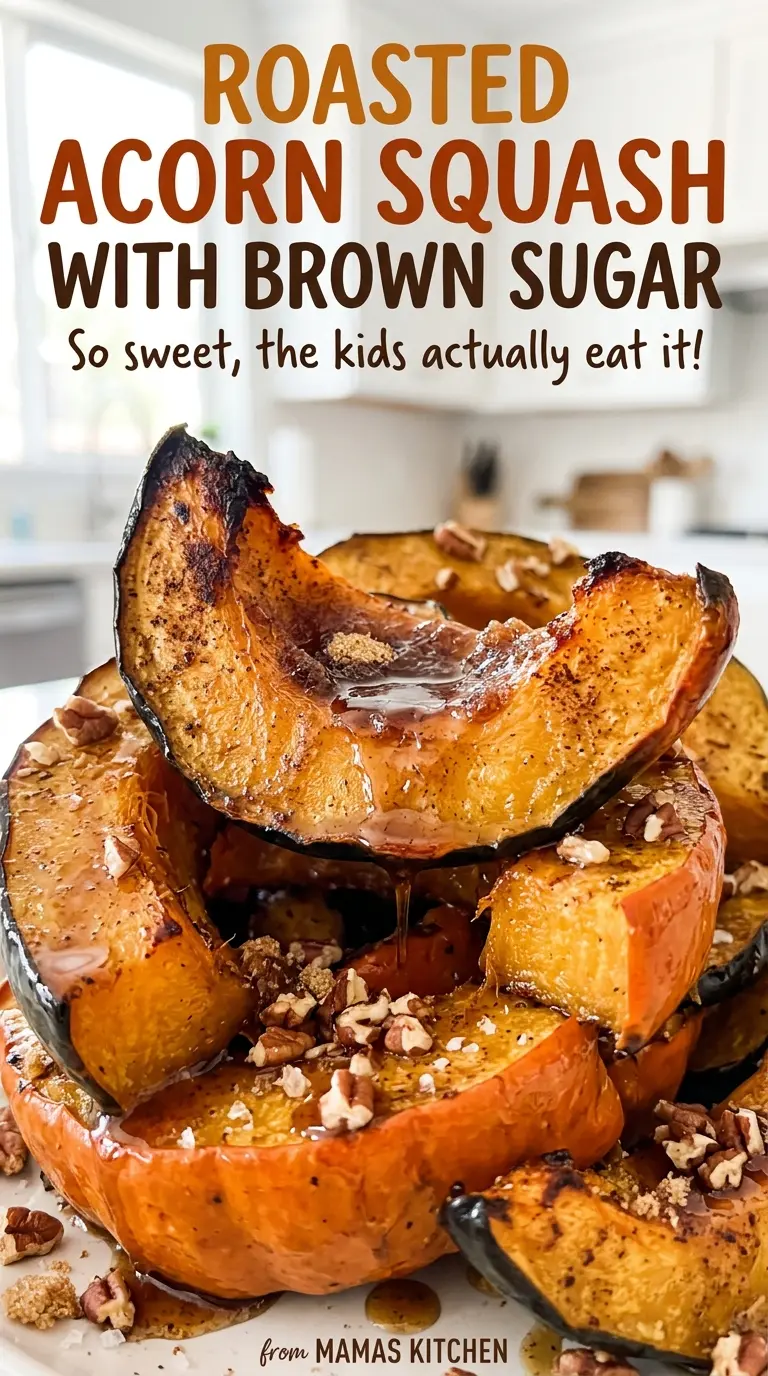
- Acorn squash — Choose two medium squash that feel firm and substantial for their size. The curved halves make natural serving portions, and the cavity holds the sweet butter mixture. The recipe is built around acorn squash; other winter squash can have different cavity sizes and roasting times.
- Light brown sugar — Its soft, moist texture settles neatly into the cavities and mellows as it heats. Dark brown sugar works in the same amount if you want a deeper molasses note; the final squash will taste richer and less delicately sweet.
- Unsalted butter — Unsalted butter lets the measured kosher salt do the seasoning, rather than leaving the result dependent on how salty a butter brand is. For a dairy-free version, use a firm plant-based butter made for baking in its place; the squash will have a slightly different buttery flavor.
- Kosher salt and freshly ground black pepper — The salt sharpens the squash’s natural sweetness, while freshly ground pepper adds a clean, mild bite. Pre-ground black pepper can stand in at the same listed amount, though its aroma is less lively.
From Halving the Squash to a Tender Roast
Cut and Clear the Cavities
Heat the oven to 400°F. Cut each squash in half from stem to tip, then scoop out and discard the seeds and strings. Work around the cavity until the loose fibers are gone, leaving the flesh intact. Each half should have a clear hollow to hold the seasonings and toppings.
Season the Cut Surfaces
Arrange the halves cut-side up on a rimmed baking sheet. Season them with kosher salt and freshly ground black pepper, then divide the brown sugar and butter among the cavities. Keep the sugar and butter inside the squash rather than scattering them on the pan. The four butter pieces fit naturally across the four halves.
Roast Until the Flesh Gives Easily
Roast for 45 to 55 minutes, until the squash is tender and a knife pierces the flesh easily. The exact point within that range depends on the squash, so look for tenderness rather than relying on the clock alone. The butter will melt into the sugar, and the cut surfaces will look glossy as the squash softens. If the knife meets firm resistance, return the pan to the oven and check again.
Two Simple Ways to Adapt the Sweetness or Butter
A Deeper Brown-Sugar Finish
Swap the light brown sugar for the same amount of packed dark brown sugar and divide it among the cavities as usual. Dark brown sugar brings more molasses flavor and a deeper sweetness, so the squash tastes a little more robust without changing the roasting method.
A Dairy-Free Version
Use an equal amount of firm plant-based butter made for baking instead of dairy butter, and divide it among the squash cavities. The sweet, tender result stays much the same, though the buttery flavor depends on the plant-based product you choose.
Storage and Reheating
- Refrigerator: Store leftovers in a covered container for 3 to 4 days. The squash will soften further as it sits.
- Freezer: Freeze cooled portions in an airtight freezer container for up to 3 months. Thaw them in the refrigerator; the flesh will be softer after freezing.
- Reheating: Warm covered in a 350°F oven until hot, or heat individual portions in the microwave. Keep the squash covered so the flesh doesn’t dry out, and reheat leftovers to 165°F.
Questions That Come Up When Roasting Acorn Squash
Roasted Acorn Squash with Brown Sugar
Ingredients
Equipment
Method
- Heat the oven to 400°F.
- Cut each squash in half from stem to tip, then scoop out and discard the seeds and strings.
- Arrange the squash halves cut-side up on a rimmed baking sheet.
- Season with the salt and pepper.
- Divide the brown sugar and butter among the cavities.
- Roast for 45 to 55 minutes, until a knife pierces the flesh easily and the squash is tender.