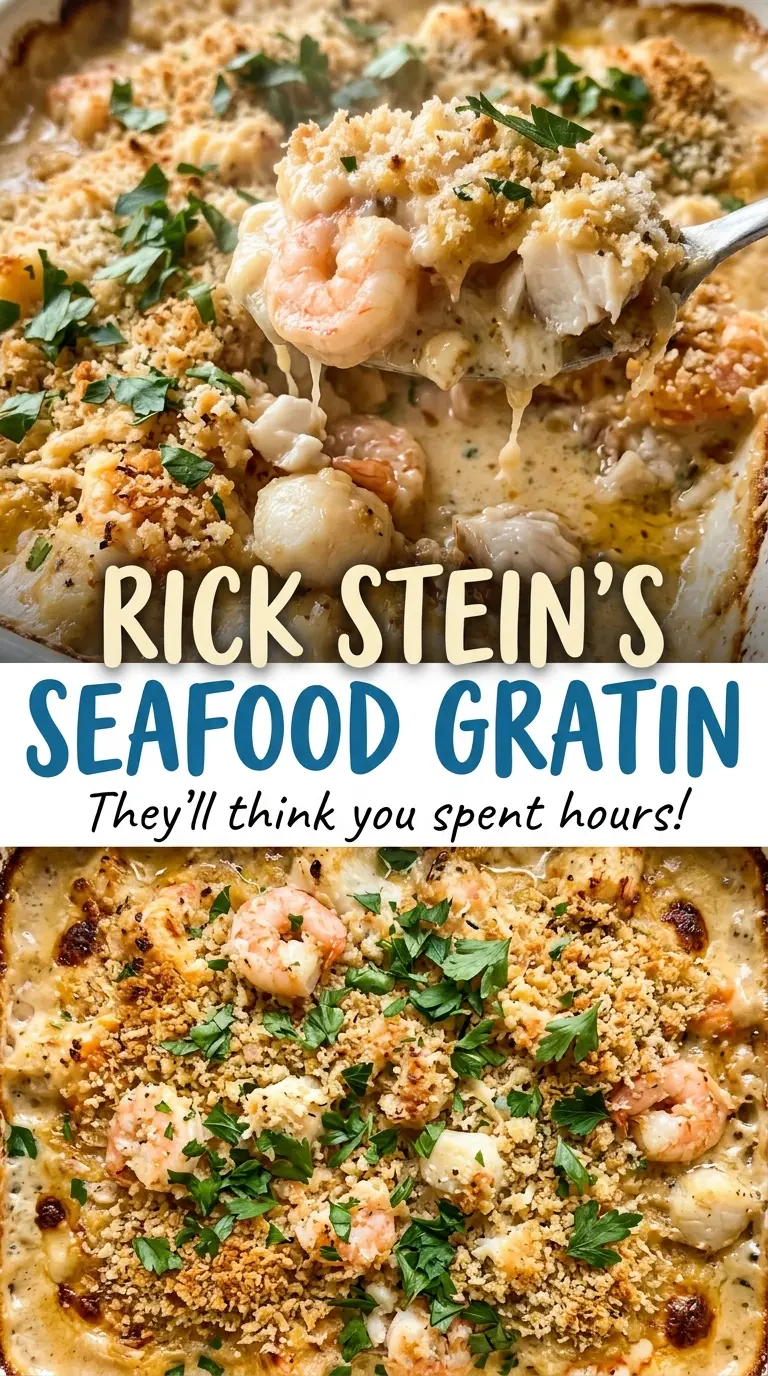
As the hot sauce hits the raw seafood, it settles around the pieces instead of sitting in a separate layer. That’s the start of this Rick Steins Seafood Gratin: cod, shrimp, and bay scallops baked together in a white wine cream sauce, with a crisp Parmesan-panko topping.
I arrange the seafood in one even layer and let the sauce do the work. The fish doesn’t need a separate pan or a pre-cook, and the shrimp and scallops stay tucked into the creamy sauce as they bake. Baking the topping separately from the seafood’s first stretch in the oven gives the crumbs a better chance to turn golden without asking the seafood to cook longer than it needs.

Kitchen Note
Pat the bay scallops dry before they go into the dish. Any water clinging to them ends up in the gratin, where it can loosen the sauce.
Save this Rick Steins Seafood Gratin for its tender seafood, creamy white wine sauce, and crisp Parmesan-panko top.
Why the Breadcrumbs Go On After the Seafood Starts Baking
The topping is deliberately held back until the seafood has already had its first turn in the oven. Panko needs direct heat to dry and brown; if it sits on the wet sauce from the beginning, the bottom of the crumb layer can absorb moisture before the top gets golden. Giving the seafood 12 to 15 minutes first lets the sauce heat through and the fish begin cooking before the crumbs arrive.
That staggered timing also keeps the topping from becoming a timer you have to manage separately. Once the panko and Parmesan are scattered over the dish, bake just until the surface is golden and the thickest pieces of cod reach 145°F. The shrimp and scallops should look opaque. If the crumbs are browning faster than the seafood is ready, the fish pieces may be unevenly sized, so keep the cod pieces close to the same 1-inch size when you cut them.
The Ingredients That Keep the Sauce Silky and the Seafood Distinct
- Cod, shrimp, and bay scallops — Raw seafood cooks directly in the sauce, so choose firm pieces that are evenly sized and have a clean, mild smell. Frozen raw seafood works after it’s fully thawed and drained. Haddock is the closest swap for cod; cut it into similar pieces so it cooks alongside the shellfish.
- Dry white wine — It gives the creamy sauce a little lift without making it sweet. An inexpensive dry bottle is fine; save anything oaky or sweet for another use. If you’re avoiding wine, replace it with the same amount of seafood stock for a rounder, less bright sauce.
- Whole milk and heavy cream — Together they make a sauce that coats the seafood without feeling as heavy as cream alone. Lower-fat milk makes the sauce less rich and can leave it thinner, so stick with whole milk for the intended texture.
- Butter and flour — These form the roux that thickens the sauce before it goes over the fish. All-purpose flour is dependable here; whisk it into the melted butter and keep stirring so it cooks evenly instead of clumping.
- Panko and Parmesan — Panko gives the top a lighter crunch than fine breadcrumbs, while Parmesan adds a salty, savory edge. Store-brand panko is perfectly suitable; finely grated Parmesan spreads through the crumbs more evenly than large shreds.
- Shallot, Dijon, and nutmeg — The shallot softens into the butter, and the mustard and nutmeg quietly round out the cream sauce. A small shallot is worth using for its mild flavor; ground nutmeg from the pantry is fine.
Building the Gratin Without Overcooking the Seafood
Arrange the seafood in one layer
Heat the oven to 400°F and grease a 9×13-inch baking dish with 1 teaspoon of the olive oil. Arrange the 1-inch pieces of cod, raw shrimp, and patted-dry bay scallops in an even layer. Spread them out rather than piling them into the center, so the hot sauce can reach the seafood throughout the dish.
Cook the shallot roux until smooth
Melt the butter in a medium saucepan over medium heat, then cook the finely chopped shallot for 3 minutes, until softened. Stir in the flour and keep stirring for 1 minute; it should look like a smooth paste rather than dry flour sitting in the pan. Whisk in the wine gradually, followed by the milk and cream, so the roux has time to blend without forming lumps.
Simmer until the sauce coats a spoon
Bring the sauce to a gentle simmer and whisk it for 4 to 6 minutes, until it leaves a coating on the back of a spoon. A hard boil isn’t needed; keep the heat moderate and whisk across the bottom and corners of the saucepan. Stir in the Dijon, kosher salt, black pepper, and nutmeg, then pour the hot sauce evenly over the seafood.
Bake, add the crumb topping, and rest
Bake the sauced seafood for 12 to 15 minutes at 400°F. Meanwhile, toss the panko and finely grated Parmesan with the remaining 1 tablespoon of olive oil. Scatter the crumbs evenly over the gratin and bake for another 8 to 12 minutes, until the top is golden, the thickest cod pieces reach 145°F, and the shrimp and scallops are opaque. Rest the dish for 5 minutes before serving so the hot sauce settles around the seafood.
Simple Swaps That Change the Seafood Gratin
Make the sauce and topping gluten-free
Use a cup-for-cup gluten-free flour blend in place of the all-purpose flour, and swap in gluten-free panko for the regular panko. Keep the same quantities and method. The topping may have a slightly different crunch depending on the brand, but you’ll still get the creamy sauce and crisp finish.
Add lemon to the Parmesan crumbs
For a brighter finish, toss finely grated zest from 1 lemon with the panko, Parmesan, and olive oil. The fresh citrus cuts through the creamy sauce without changing the seafood or the baking method.
Storage and Reheating
- Refrigerator: Refrigerate leftovers within 2 hours and use them within 3 to 4 days. The panko softens in the fridge, and the sauce thickens as it cools.
- Freezer: Freeze portions in an airtight container for up to 2 months for best quality. The sauce may separate slightly after thawing, and the seafood will be softer.
- Reheating: Reheat covered in a 325°F oven until the center reaches 165°F, uncovering near the end if you’d like to revive the topping. Reheat only the portion you plan to eat; high heat can make seafood tough before the middle warms through.
Questions That Come Up Before Baking Seafood Gratin
Rick Steins Seafood Gratin
Ingredients
Equipment
Method
- Heat the oven to 400°F.
- Grease a 9x13-inch baking dish with 1 teaspoon of the olive oil.
- Arrange the cod, shrimp, and scallops in an even layer in the prepared dish.
- Melt the butter in a medium saucepan over medium heat.
- Add the shallot and cook for 3 minutes until softened.
- Stir in the flour and cook for 1 minute, stirring constantly.
- Gradually whisk in the wine, then the milk and cream.
- Bring the sauce to a gentle simmer and cook for 4 to 6 minutes, whisking, until thick enough to coat the back of a spoon.
- Stir in the Dijon, salt, pepper, and nutmeg.
- Pour the hot sauce evenly over the seafood.
- Bake for 12 to 15 minutes at 400°F.
- Toss the panko and Parmesan with the remaining 1 tablespoon olive oil.
- Scatter the panko mixture evenly over the gratin.
- Bake for 8 to 12 minutes more at 400°F, until the topping is golden and the thickest cod pieces reach 145°F; the shrimp and scallops should be opaque.
- Rest the gratin for 5 minutes before serving.