Parmesan Crusted Chicken lands on the table with a crisp, savory shell and juicy meat underneath, and that contrast is exactly why it earns repeat status. The coating bakes up deeply golden without turning heavy, and the Parmesan gives it a salty, nutty edge that tastes a lot more intentional than a basic breadcrumb dinner. A squeeze of lemon at the end wakes everything up and keeps the crust from tasting flat.
The trick here is using grated Parmesan in the coating, not a dusting at the end. It mixes with the panko so the cheese melts into the crust as it bakes, which gives you those browned, lacy bits that cling to the chicken. Pounding the breasts to an even thickness matters just as much; it keeps the thin end from drying out before the thick end finishes.
Below you’ll find the method that keeps the coating on the chicken instead of on the pan, plus a few practical swaps if you’re working with different breadcrumbs or want to make the dish gluten-free.
The crust actually stayed on the chicken and got crisp around the edges instead of soggy. I pounded the breasts even like you said, and they were done at 24 minutes with no dry spots.
Parmesan Crusted Chicken with that crisp panko coating and lemony finish is worth pinning for quick dinners that still feel special.
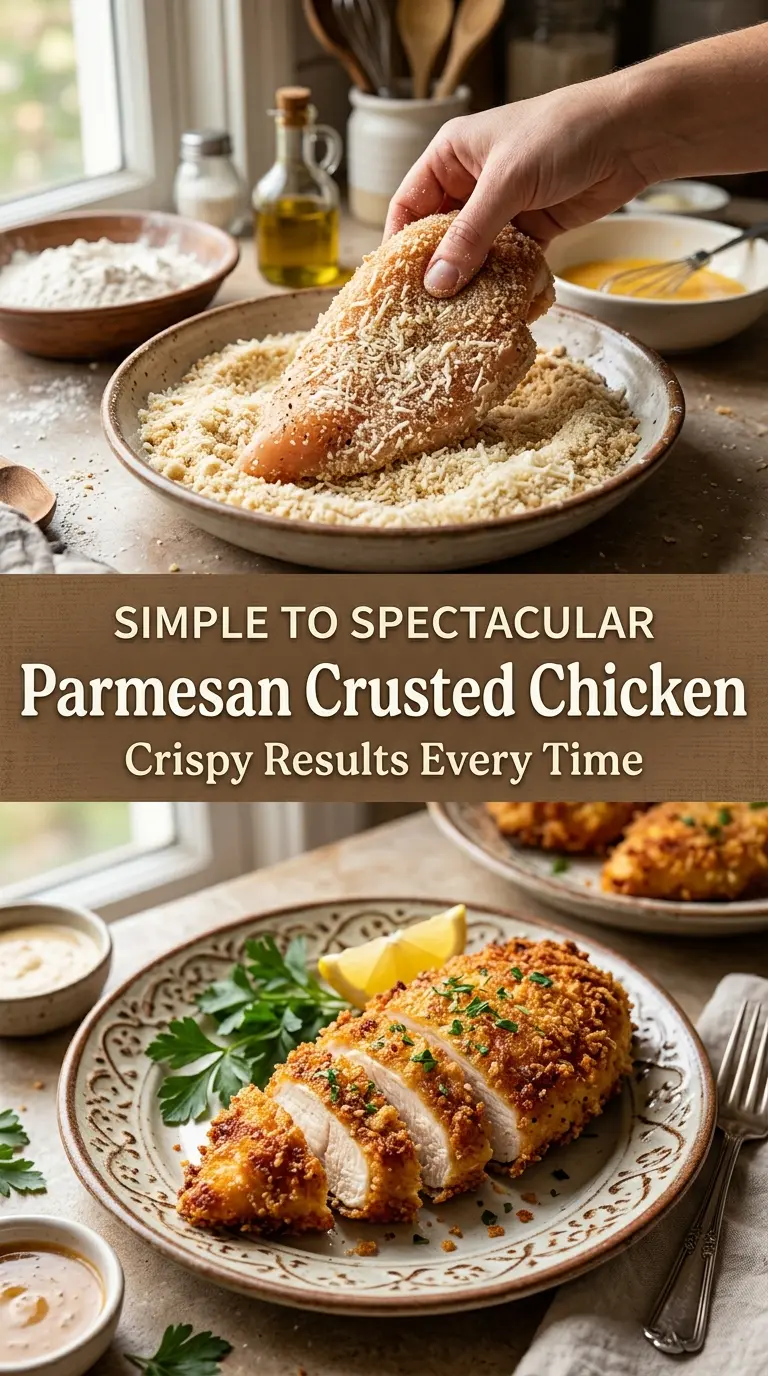
The Crust Stays Crispy Only If You Handle the Chicken the Right Way
The biggest mistake with breaded chicken is crowding the coating and then asking the oven to fix it. Once the chicken gets packed too tightly on the pan, steam collects underneath and the bottom side softens before the top ever has a chance to brown. Spacing the pieces out and using parchment keeps the crust dry enough to crisp instead of turning pasty.
The other detail that matters is the order of operations. The egg mixture should cling in a thin layer, not soak the chicken, and the breadcrumb-Parmesan mix needs to be pressed on firmly so it actually adheres. If the coating looks patchy before baking, it will come out patchy after baking too.
- Chicken breasts — Pound them to an even thickness so the whole piece cooks at the same rate. If one side is much thicker, it will still be pale and underdone when the thinner end is already dry.
- Parmesan — Use finely grated Parmesan, not big shreds. Finely grated cheese melts into the crust and browns evenly; bigger pieces can fall off before they do their job.
- Panko breadcrumbs — Panko gives this recipe its light crunch. Regular breadcrumbs will work in a pinch, but the coating will be denser and less shattering at the edges.
- Olive oil — A light drizzle on top helps the crust color in the oven without deep-frying. You don’t need much; too much oil can make the bottom greasy instead of crisp.
- Eggs and milk — This is the glue. Milk loosens the eggs just enough to create an even coating, and that thin binder helps the crust stay attached while the chicken bakes.
Building the Coating So It Browns Instead of Burning
Get the chicken to one even thickness
Lay the chicken breasts between sheets of parchment or plastic and pound the thickest part until the whole piece is fairly even. You’re aiming for uniform thickness, not a paper-thin cutlet. If one end stays bulky, the crust around it will overbrown before the center reaches temperature.
Set up a dry hand and a wet hand
Dip the chicken into the egg mixture first, then press it into the Parmesan-panko mixture until every surface is covered. The cleanest way to do this is one hand for the wet bowl and one hand for the dry bowl, which keeps the coating from turning into clumps on your fingers. Press gently but firmly so the crumbs actually grab onto the chicken.
Bake hot, then finish with a brief blast of heat
Place the coated chicken on a parchment-lined baking sheet and drizzle the tops with olive oil. Bake at 425°F until the crust is golden and the chicken registers done at the thickest point, usually 22 to 25 minutes depending on size. If you want extra crunch, broil it for 1 to 2 minutes at the end, but watch it closely because Parmesan can go from browned to bitter fast.
Let the crust settle before serving
Give the chicken a short rest after it comes out of the oven. The juices move back into the meat, and the coating firms up just enough to stay crisp when you slice it. If you cut immediately, the steam escapes all at once and the crust softens at the edges.
Gluten-Free Parmesan Chicken
Swap the panko for a gluten-free breadcrumb blend or crushed gluten-free cornflakes. The texture stays crisp, though cornflakes give a slightly rougher, more rustic crunch that browns fast.
Lighter Dairy-Free Version
Use a dairy-free Parmesan-style topping or add extra seasoned breadcrumbs with a spoonful of nutritional yeast. You won’t get the same salty melt from real Parmesan, but you will still get a savory crust with good browning.
Chicken Cutlets Instead of Full Breasts
If your chicken breasts are large, slice them into cutlets before coating. They cook faster and stay juicier, which also gives you more surface area for the crust.
Storage and Reheating
- Refrigerator: Store leftovers in an airtight container for up to 3 days. The crust softens a bit in the fridge, but it still reheats well.
- Freezer: Freeze after baking if you want to keep a batch on hand. Wrap pieces tightly and freeze for up to 2 months; the crust won’t stay quite as crisp, but the flavor holds up.
- Reheating: Reheat on a wire rack in a 375°F oven or air fryer until hot and the coating crisps back up. The common mistake is microwaving it straight from the fridge, which steams the crust and makes it limp.
Questions I Get Asked About This Recipe
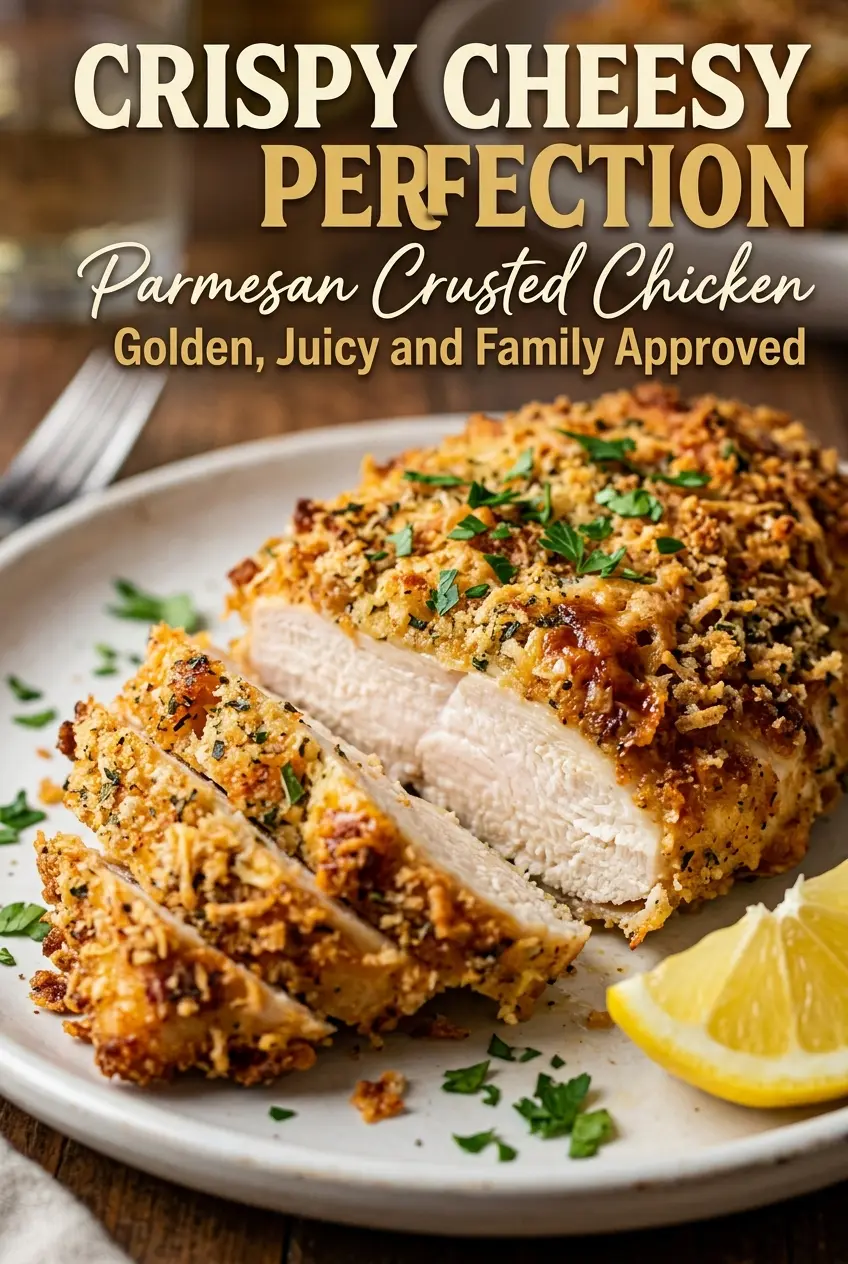
Parmesan Crusted Chicken
Ingredients
Equipment
Method
- Preheat the oven to 425°F (220°C). Keep the temperature steady so the crust sets quickly and turns golden.
- Line a baking sheet with parchment paper. This helps the crust release cleanly after baking.
- Pound the chicken breasts to an even thickness. Even thickness helps them cook through at the same time without drying out.
- In a shallow bowl, combine Parmesan, panko, garlic powder, Italian seasoning, paprika, salt, and black pepper. Mix until evenly speckled so every bite tastes seasoned.
- In a second bowl, whisk the eggs and milk. Whisk until smooth for an even coating.
- Dip each chicken breast into the egg mixture. Let excess drip off so the crust stays crisp instead of gummy.
- Coat each chicken breast thoroughly in the Parmesan breadcrumb mixture. Press gently so crumbs adhere all over.
- Place the coated chicken on the prepared baking sheet. Arrange in a single layer with space for airflow.
- Drizzle lightly with olive oil. The oil helps the crust brown and crisp in the oven.
- Bake for 22–25 minutes at 425°F (220°C) until golden brown and cooked through. The crust should look dry and crisp, not pale.
- Broil for 1–2 minutes for extra crispiness if desired. Watch closely so the top browns without burning.
- Garnish with fresh parsley. Add it right before serving so it stays bright.
- Serve with lemon wedges. Squeeze over the chicken to brighten the Parmesan flavor.