Pillowy gnocchi, tender chicken, and a lemon-parmesan sauce that clings to every bite make this one-pan dinner feel a little more special than the average weeknight skillet. The best part is the contrast: bright lemon cuts through the cream, spinach melts into the sauce, and the gnocchi turns soft and plush without needing a separate pot of boiling water. It lands on the table fast, but it still eats like something you took your time with.
What makes this version work is the order. The chicken gets browned first, then pulled out so the pan can build the sauce in those flavorful bits left behind. The gnocchi simmers right in the broth before the cream goes in, which helps it absorb flavor instead of tasting like it was dumped in at the end. The lemon goes in after the cream, not before, so the sauce stays smooth and the citrus stays fresh instead of turning sharp and thin.
Below you’ll find the small details that keep the sauce silky, plus a few swaps that still preserve the texture this dish needs. If you’ve had creamy skillet pasta go dull or heavy before, the technique here fixes that.
The sauce thickened up perfectly and the lemon stayed bright without tasting sour. I liked that the gnocchi cooked right in the skillet instead of getting mushy, and my husband went back for seconds before I’d even sat down.
Save this one-pan lemon chicken gnocchi for the nights when you want a creamy skillet dinner with bright citrus and almost no cleanup.
The Reason the Sauce Stays Creamy Instead of Breaking
This skillet works because the acid and dairy are handled in the right order. Lemon juice can make a cream sauce taste lively, but if it goes in too early or over too much heat, it can curdle the cream and leave you with a grainy pan instead of a smooth one. The broth and gnocchi get a head start first, which gives the starch time to soften the sauce before the cream and Parmesan go in.
The other thing that matters is heat control at the end. Parmesan melts best when the sauce is at a gentle simmer, not a hard boil. If the pan is bubbling aggressively when the cheese goes in, pull it off the burner for a minute and stir until it smooths out. That small pause keeps the sauce glossy and gives the cheese time to melt into the cream instead of clumping.
What Each Ingredient Is Actually Doing in This Dish
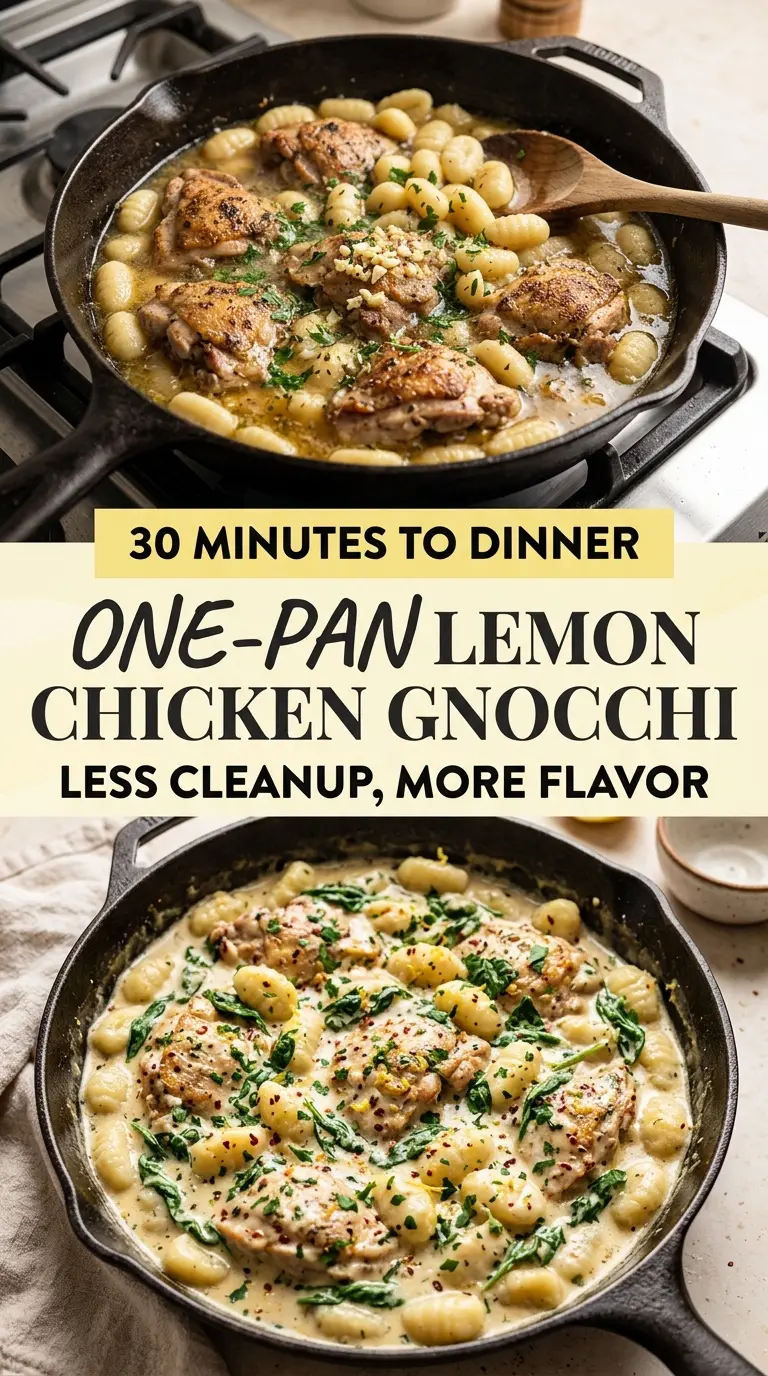
- Chicken breast — Diced chicken breast cooks fast and gives you plenty of browned edges for flavor. Thighs work too if you want a juicier result, but they’ll bring a richer, slightly heavier sauce. Cut the pieces evenly so they finish at the same time.
- Potato gnocchi — Shelf-stable or refrigerated gnocchi both work here, and neither needs pre-boiling. As it simmers in broth, it picks up flavor and helps thicken the sauce slightly. Don’t overcook it or it turns soft and bloated.
- Lemon — Use both zest and juice. The zest gives you the fragrant lemon oil that tastes rounder than juice alone, while the juice sharpens the creamy sauce. Bottled lemon juice won’t give the same brightness, so fresh matters here.
- Heavy cream — This is what gives the sauce its body and keeps the lemon from tasting harsh. Half-and-half can work in a pinch, but the sauce will be thinner and less stable when you add the Parmesan.
- Parmesan cheese — Grated Parmesan melts into the sauce and gives it salt, depth, and a little nutty finish. Use a finely grated block-style Parmesan if you can; pre-shredded cheese often has anti-caking agents that make sauces grainy.
- Baby spinach — Spinach softens in seconds and folds into the sauce without taking over. It’s there for color and a fresh, slightly earthy note. Chop it only if the leaves are large.
Building the Skillet in the Right Order
Brown the Chicken First
Season the chicken before it hits the pan, then cook it in olive oil over medium-high heat until the pieces are golden on the outside and cooked through. You’re looking for color on the edges, not pale steaming pieces. If the skillet looks crowded, the chicken will steam instead of brown, so work in batches if needed. Pull it out as soon as it’s done so it doesn’t dry out while the sauce comes together.
Let the Gnocchi Simmer in the Broth
Add the garlic for a short burst until it smells fragrant, then pour in the broth and bring it to a simmer before the gnocchi goes in. The gnocchi needs that simmering liquid to soften properly and pick up flavor from the pan. Stir every so often so it doesn’t stick to the bottom or clump together. If the broth disappears before the gnocchi is tender, add a splash more.
Finish With Cream, Lemon, and Cheese
Stir in the cream, lemon zest, and lemon juice after the gnocchi has started to soften, then return the chicken to the skillet. Add the Parmesan gradually while the heat stays gentle so it melts smoothly. Fold in the spinach at the end and let the sauce simmer just long enough to thicken slightly. If it looks thin at first, give it another minute or two; it tightens as the starch and cheese settle in.
How to Adapt It Without Losing the Texture
Make It Gluten-Free With the Right Gnocchi
Use gluten-free gnocchi and keep the rest of the recipe the same. The sauce doesn’t rely on flour, so the main thing you’re protecting is the gnocchi’s texture. Some gluten-free versions soften faster, so start checking them a minute early and stop as soon as they’re tender.
Swap in Chicken Thighs for a Richer Pan Sauce
Boneless skinless thighs bring more richness and stay juicier if you like a softer bite. They take a couple minutes longer than breast, so brown them fully before moving on. The sauce will taste a little deeper because the rendered fat adds body to the skillet.
Skip the Cream and Use Half-and-Half for a Lighter Sauce
Half-and-half works if you want a lighter finish, but the sauce will be thinner and a little less luxurious. Keep the heat low and let it simmer an extra minute so the sauce has time to tighten. Don’t boil it hard or it can separate once the lemon and cheese go in.
Make It Dairy-Free With Coconut Cream and a Parmesan Alternative
Use unsweetened coconut cream in place of the heavy cream and a dairy-free Parmesan-style cheese for the finish. The sauce will be a little silkier and slightly less sharp, so add the lemon gradually and taste as you go. This version works best if you want a creamy result without dairy, though the coconut note will be faintly present.
Storage and Reheating
- Refrigerator: Store leftovers in an airtight container for up to 3 days. The gnocchi will absorb more sauce as it sits, so the dish turns thicker by the next day.
- Freezer: I don’t recommend freezing this one. Cream sauces can split after thawing, and gnocchi tends to get mushy once frozen and reheated.
- Reheating: Warm it gently on the stove over low heat with a splash of broth or cream to loosen the sauce. High heat is the mistake that breaks the dairy and makes the chicken dry.
Questions I Get Asked About This Recipe
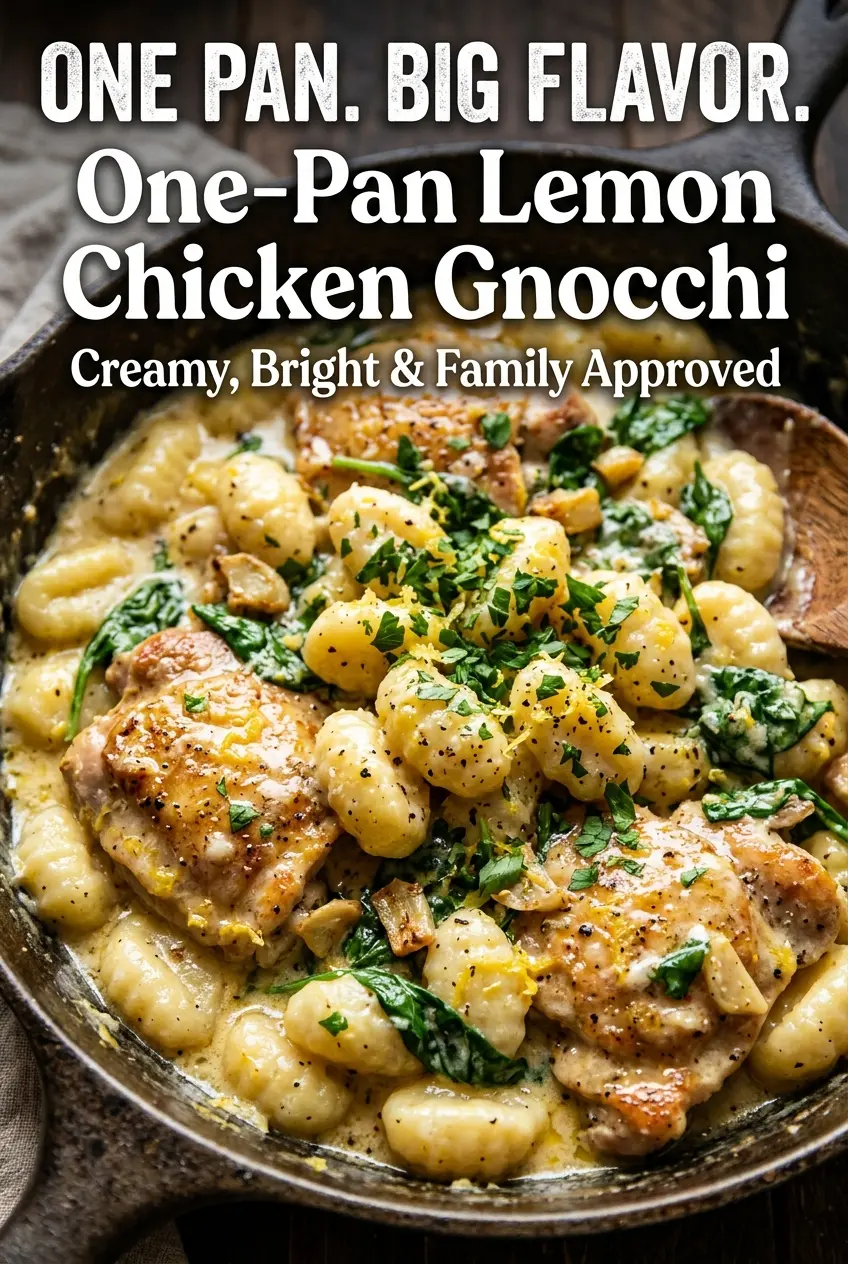
One-Pan Lemon Chicken Gnocchi
Ingredients
Equipment
Method
- Season the diced chicken breast with Italian seasoning, garlic powder, salt, and black pepper.
- Heat the olive oil in a large skillet over medium-high heat.
- Add the chicken and cook for 5–6 minutes until golden and cooked through, stirring as needed for even browning.
- Remove the chicken and set aside.
- Add the minced garlic to the skillet and cook for 30 seconds until fragrant and lightly softened.
- Pour in the chicken broth and bring to a simmer over medium-high heat.
- Add the potato gnocchi and cook for 4–5 minutes, stirring occasionally, until tender and the liquid looks slightly thickened.
- Stir in the heavy cream, lemon zest, and lemon juice.
- Return the cooked chicken to the skillet.
- Add the grated Parmesan cheese and stir until melted and the sauce turns smooth.
- Fold in the baby spinach and cook until wilted.
- Simmer for 2–3 minutes until the sauce thickens, then garnish with chopped fresh parsley and serve immediately.