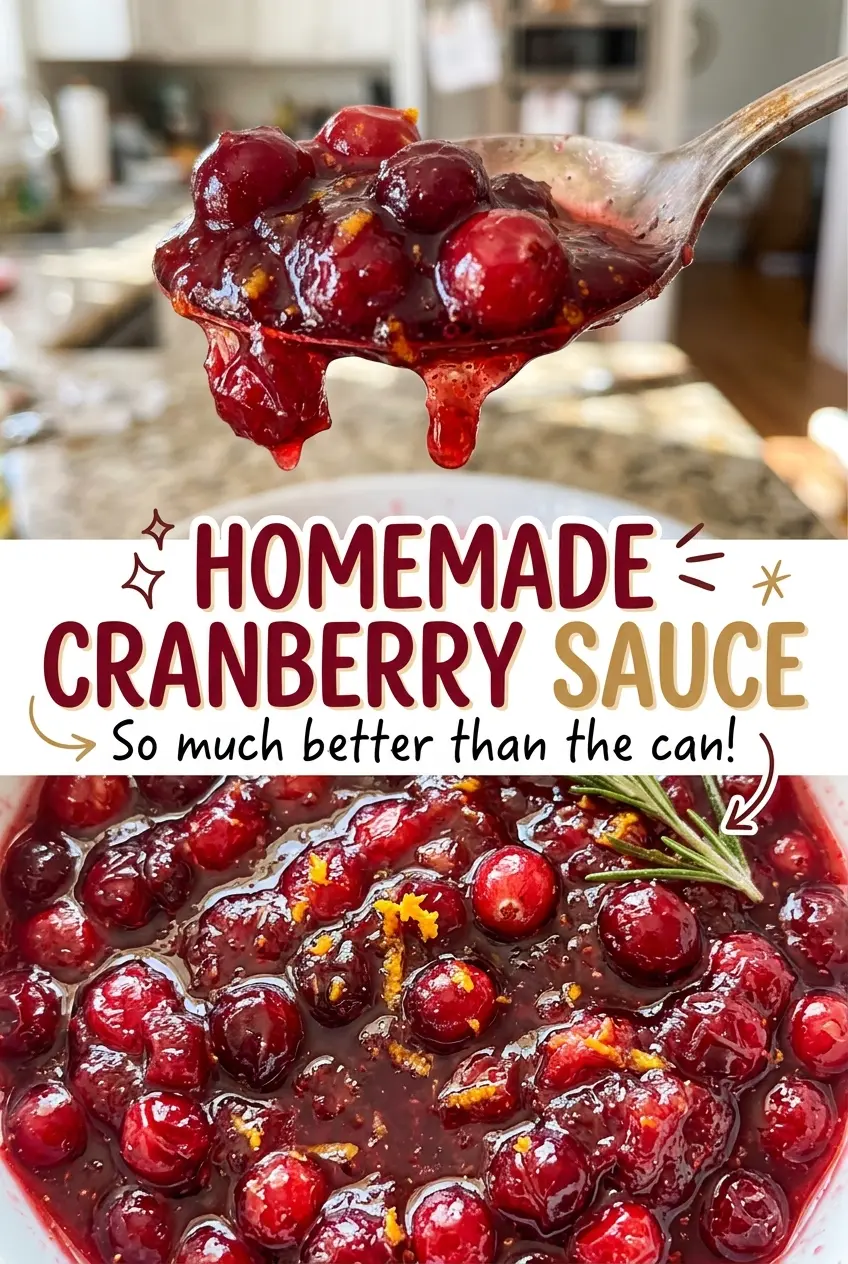
The saucepan starts with a jumble of firm berries, sugar, and juice; then, one by one, the cranberries pop and turn the liquid a deep ruby red. I like watching that change because it tells me the sauce is coming together without any extra thickeners or complicated steps. This homemade cranberry sauce makes eight servings, and its bright orange note keeps the tart berries from tasting one-dimensional.
Fresh cranberries bring plenty of their own character, so the job is mostly to give them enough heat to burst and enough time to soften. Stir while the sugar dissolves, then lower the heat and let the berries simmer. The sauce won’t look as thick in the pan as it will after it cools, which is worth remembering before you decide it needs more cooking.
The finished sauce has a little texture from the berries, a clean sweet-tart balance, and enough citrus to sit comfortably alongside a rich meal. It’s just as at home on a holiday table as it is tucked into a weekday dinner.
Kitchen Note
Pick through the cranberries while they’re dry, then rinse them. Stems and soft berries are easier to spot before they’re mixed into the saucepan.
Save this homemade cranberry sauce for a bright, berry-filled side with a simple orange lift.
Why Cranberry Sauce Thickens After the Berries Pop
Those berries do more than add color. Cranberries contain natural pectin, and as they soften and burst, that pectin helps the cooking liquid turn into a spoonable sauce. The sugar dissolves into the water and orange juice first; then the heat breaks down the fruit and concentrates everything into a cohesive mixture.
That order explains why a pan can look too loose even when the simmer has done its job. While the sauce is hot, the liquid moves freely around the berries. As it cools, the mixture thickens, so chasing a heavy, jam-like consistency over the burner can take it further than you want. Look for most of the berries to have popped and for the liquid to look less watery, rather than expecting it to set fully in the saucepan.
There’s also a reason to stir occasionally instead of constantly. The berries need contact with the hot liquid to cook evenly, but uninterrupted simmering gives them time to split and soften. A few whole berries are welcome; the goal is a thickened sauce with texture, not a perfectly smooth puree.
Cranberries, Sugar, and Orange Juice: What Each One Contributes
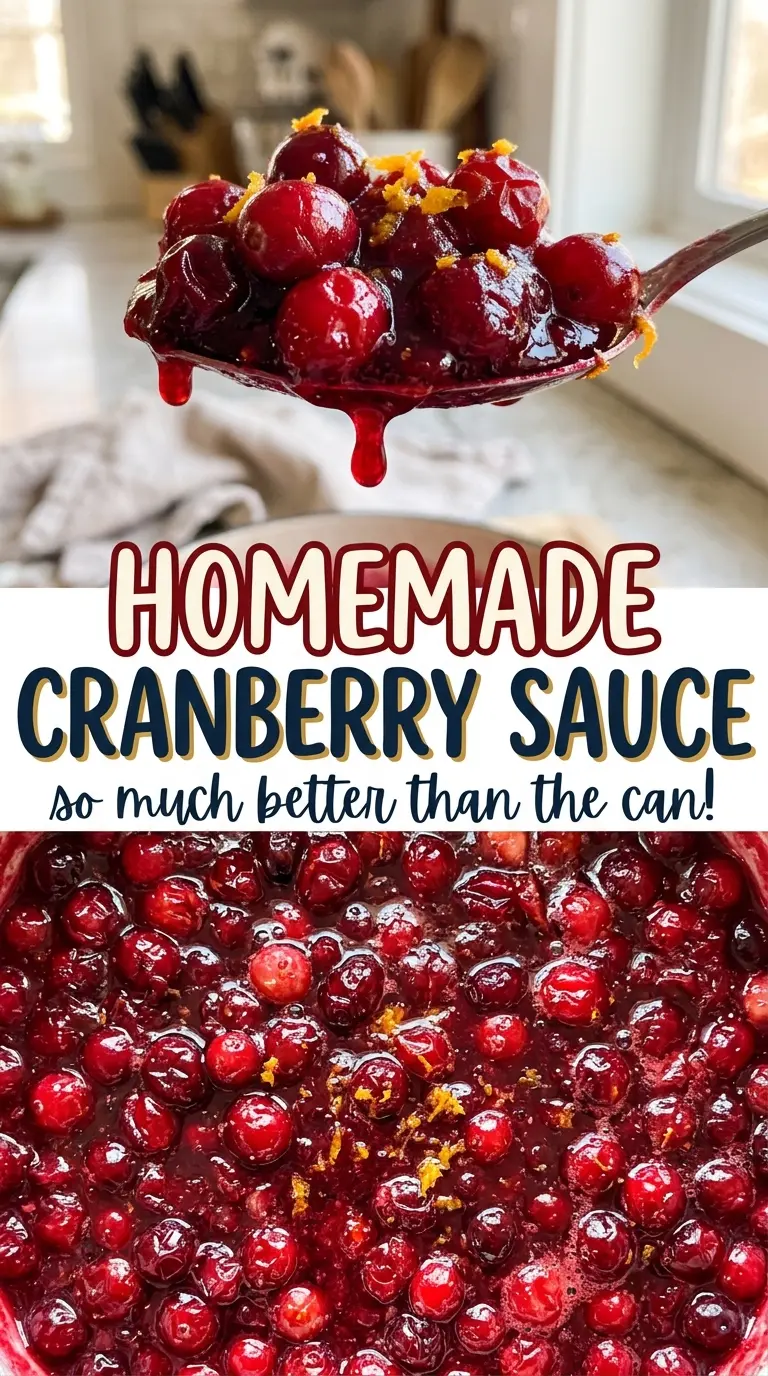
- Fresh cranberries — Pick firm berries with an even color and discard any that are shriveled or soft. Rinsing removes grit, while leaving the berries whole lets them pop naturally during the simmer. Frozen berries can work, but the fresh berries in this version give the clearest timing and texture cues.
- Granulated sugar — It balances the cranberries’ sharp tartness and dissolves cleanly into the cooking liquid. If you want a deeper, less neutral sweetness, light brown sugar can replace it measure for measure; expect a hint of molasses and a slightly darker sauce.
- Orange juice — It brings a rounded citrus note that water alone won’t provide. Carton orange juice is convenient and works well here; for a citrus-free sauce, replace the juice with the same amount of water, knowing the result will taste simpler and more purely tart.
- Water — Water gives the berries enough liquid to start cooking while the sugar dissolves. It doesn’t need to be anything special; ordinary drinking water is fine.
The 10-to-12-Minute Simmer That Turns Berries Into Sauce
Dissolve the Sugar Before the Berries Cook Down
Put the picked-over, rinsed cranberries, sugar, water, orange juice, and kosher salt in a medium saucepan. Set it over medium-high heat and stir as the mixture warms. Keep stirring until the sugar dissolves so there aren’t dry crystals sitting at the bottom of the pan. The berries will still look mostly whole at this point.
Bring the Pan to a Full Boil
Let the mixture come to a boil over medium-high heat, stirring as the sugar finishes dissolving. The surface should bubble actively, and the cranberries will begin to move around in the liquid. Don’t rush ahead while sugar is still visible on the pan or spoon; give it a moment to dissolve before lowering the heat. Once it boils, reduce the heat to medium-low.
Simmer Until Most Berries Have Popped
Keep the cranberry mixture at a gentle simmer for 10 to 12 minutes, stirring occasionally. You’ll hear and see berries pop, and the liquid will change from thin and bright to thicker and more deeply colored. If the pan is bubbling hard enough to spit, lower the heat slightly to keep it at a simmer. Stop when most of the berries have burst and the sauce has thickened, even if a few berries remain whole.
Let the Sauce Set as It Cools
Take the saucepan off the heat and let the sauce cool for at least 30 minutes. It will thicken further during that time, so don’t judge the final texture while it’s piping hot. The berries should look softened and glossy, with enough body for the sauce to hold briefly on a spoon. Once cooled, it’s ready to serve or pack away.
How to Make This Cranberry Sauce Less Sweet, Smoother, or Citrus-Free
A More Tart, Less Sweet Sauce
Use less granulated sugar if you prefer the cranberries’ tart edge to lead. The sauce will taste sharper, and it may not feel quite as rounded or thick once cooled. Reduce the sugar gradually the first time so you can find the balance you like without losing the fruit’s natural sweetness altogether.
A Smoother Spoonful
For a less chunky finish, press some of the softened berries against the side of the saucepan with your spoon near the end of the simmer. This keeps some berry texture while releasing more pulp into the sauce. Press only as many as you need to reach the consistency you prefer.
A Citrus-Free Batch
Replace the orange juice with an equal amount of water. The cranberries still cook and thicken, but the sauce loses the citrus aroma and tastes more direct and tart. This is the simplest adjustment if you need to avoid orange without changing the rest of the ingredient list.
Storage and Reheating
- Refrigerator: Store cooled sauce in a covered container for 3 to 4 days. It will become firmer and more gelled as it chills.
- Freezer: Freeze in an airtight, freezer-safe container for up to 2 months for best quality. Thaw it in the refrigerator; the texture may loosen slightly, so stir before serving.
- Reheating: Serve it cold or warm it gently in a saucepan over low heat, stirring now and then. If it seems too thick, stir in a small splash of water; avoid a hard boil, which can make the sauce reduce more than you intended.
Questions That Come Up While the Sauce Cooks
Homemade Cranberry Sauce
Ingredients
Method
- Combine the cranberries, sugar, water, orange juice, and salt in a medium saucepan.
- Bring to a boil over medium-high heat, stirring until the sugar dissolves.
- Reduce the heat to medium-low and simmer for 10 to 12 minutes, stirring occasionally, until most of the cranberries have popped and the sauce has thickened.
- Remove the pan from the heat and let the sauce cool for at least 30 minutes; it will thicken further as it cools.