The butter starts to soften and slide as soon as the turkey goes into the oven, but the best part of this roast happens before that: some of it gets tucked beneath the skin. That’s what gives the breast and thighs a layer of herby butter where it can do more than sit on the surface. For this Herb Butter Roast Turkey, I use rosemary, thyme, parsley, and finely grated garlic for a savory, fragrant crust without turning the preparation into a project.
A fully thawed bird and dry skin make the butter easier to spread and help the outside roast evenly. I loosen the skin gently with my fingers, then work about half the butter underneath and spread the rest over the turkey. Onion, lemon, and celery go in the cavity, while water sits in the roasting pan below the rack. The result is a golden roast with tender slices and a pan of savory drippings.
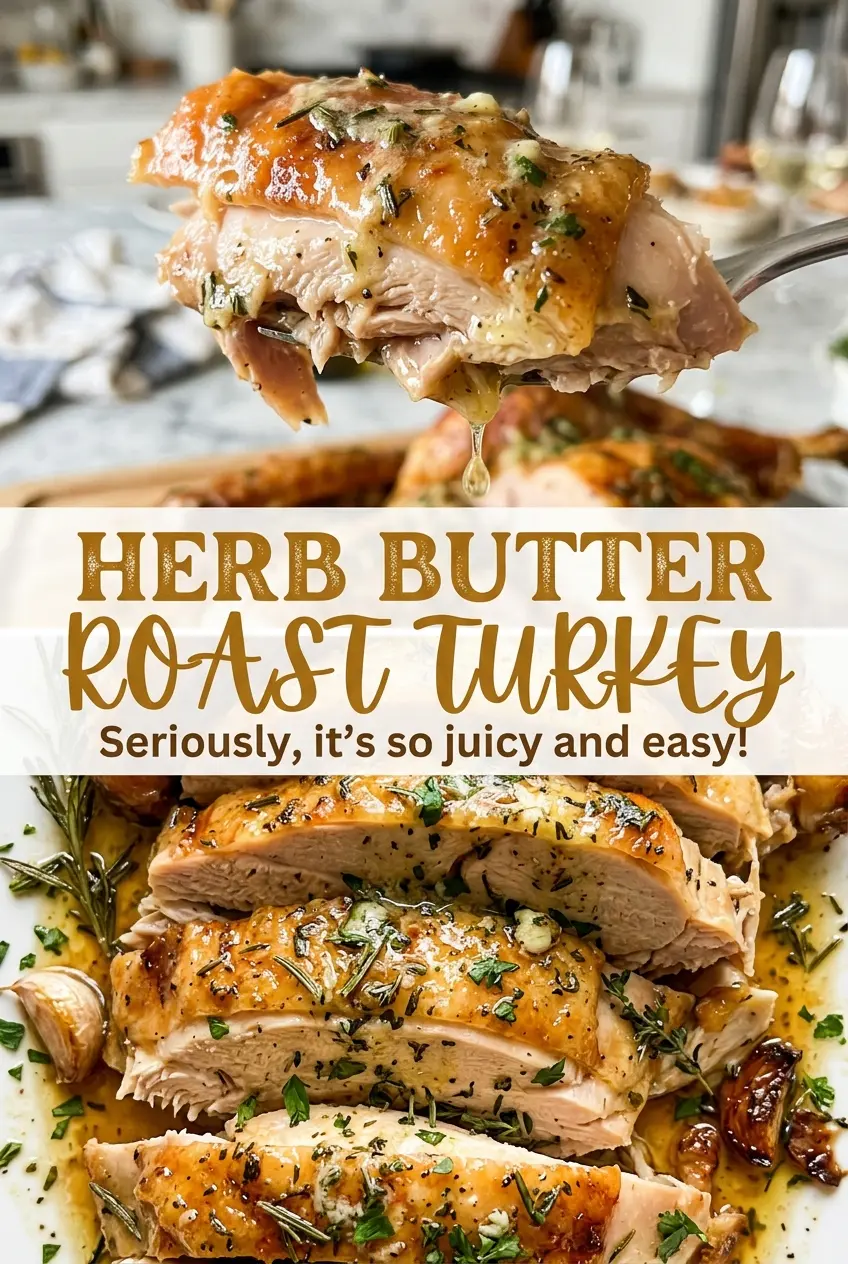
Kitchen Note
Pat the turkey dry before you start loosening the skin. Damp skin makes the butter harder to spread evenly, and the surface won’t roast up as nicely.
Save this Herb Butter Roast Turkey for a crisp-skinned centerpiece with rosemary, thyme, and garlic butter tucked beneath the skin.
Why Half the Herb Butter Belongs Under the Skin
Butter spread only over the outside melts down the surface of the turkey as it roasts. That still gives you a flavorful exterior, but it doesn’t put the same seasoning close to the meat. Loosening the skin lets you slide the herb butter into that space, where it coats the breast and thighs rather than simply running off the top.
Go slowly with your fingers. The skin should lift enough to make room for the butter, but it can tear if you force it or push too far in one spot. Once the butter is underneath, smooth it into an even layer from the outside of the skin. Then spread the rest across the exterior. The two placements do different jobs: the butter under the skin seasons the meat as it roasts, while the butter on top helps carry the herbs and garlic across the skin.
Keep the cavity for the onion, lemon, and celery, not bread stuffing. Those aromatics add fragrance inside the bird without packing the cavity tightly. Leaving the cavity open around them also keeps the roast focused on the turkey and the herb butter, instead of introducing a second dish with a different cooking time.
Fresh Herbs, Soft Butter, and the Aromatics That Shape the Roast
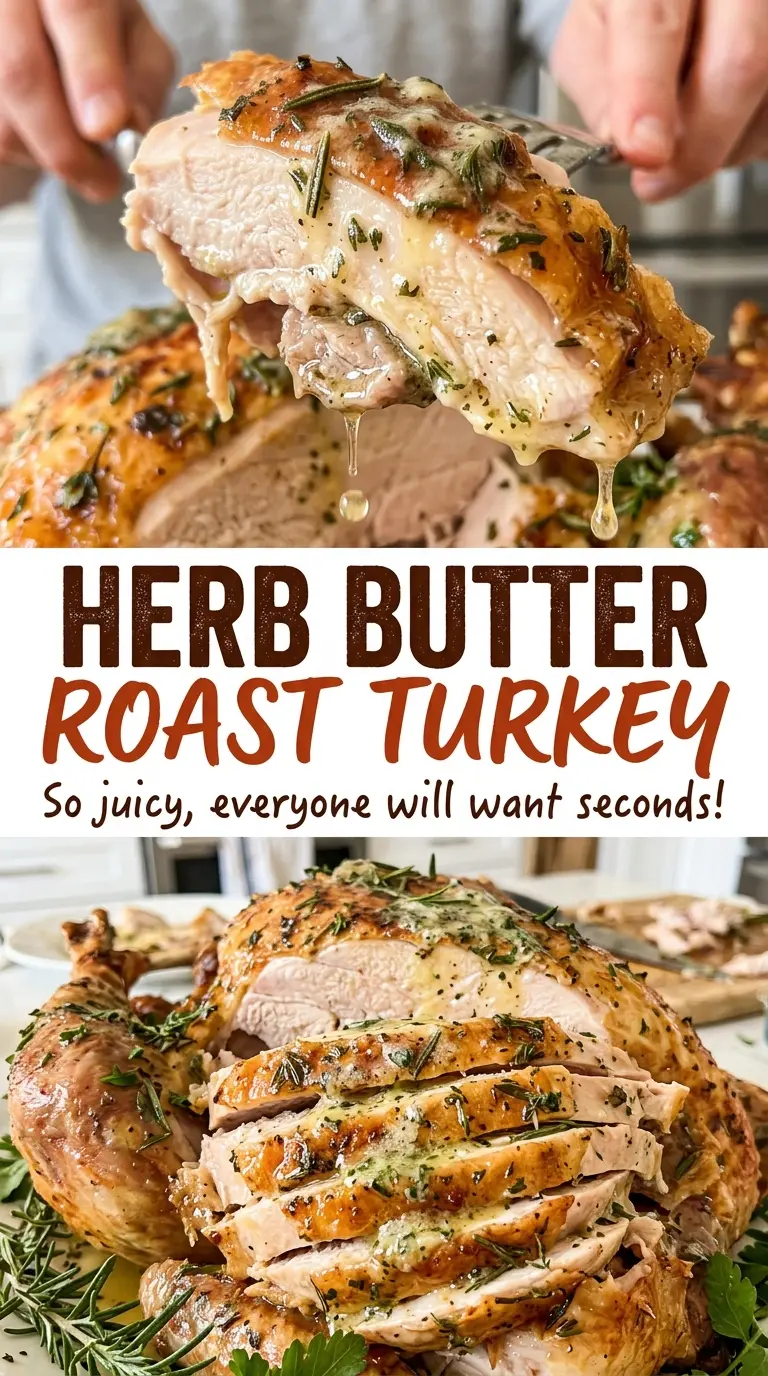
- Unsalted butter — Softened butter blends smoothly with the chopped herbs and grated garlic, so you can spread it without dragging at the skin. Unsalted butter also lets the kosher salt in the mixture stay at the intended level. Salted butter isn’t a direct swap here; it changes the salt balance.
- Fresh rosemary, thyme, and parsley — Each herb brings a different note: rosemary is piney, thyme is earthy, and parsley keeps the mixture tasting fresh. Fresh leaves chop into the butter and spread across the turkey. Dried herbs don’t have the same texture or strength, so they aren’t a straight spoon-for-spoon replacement; if one fresh herb isn’t available, leaving that herb out is more dependable than guessing a conversion.
- Finely grated garlic — Grating breaks the cloves down finely enough to distribute through the butter, instead of leaving large pieces in one spot. If you leave it out, the roast will still have the herb butter, but it will taste less savory and garlicky. There isn’t a need to replace it with another ingredient.
- The whole turkey — Start with a 12- to 14-pound bird that’s fully thawed, with the neck and giblets removed. A completely thawed turkey is easier to handle when loosening the skin and applying butter beneath it. Pat the skin dry before adding the mixture; that simple prep makes spreading easier.
- Onion, lemon, celery, and water — The quartered onion and lemon and the celery pieces scent the cavity as the turkey roasts. The water goes into the pan beneath the rack, not inside the bird. Keep those placements distinct so the aromatics stay in the cavity and the water is available in the roasting pan.
Building the Herb Butter Roast Without Tearing the Skin
Mix a Spreadable Herb Butter
Stir the softened butter with the chopped rosemary, thyme leaves, parsley, finely grated garlic, kosher salt, and black pepper in a small bowl. The mixture should look evenly speckled, with the garlic and herbs dispersed through it rather than clumped in one patch. If the butter is too firm to stir, give it time to soften; melted butter won’t stay in a neat layer under the skin. Keep it soft enough to spread but not runny.
Set Up the Pan and Loosen the Skin
Heat the oven to 325°F with a rack in the lower third, and place a rack inside a 16×13-inch roasting pan. Pat the fully thawed turkey very dry with paper towels. Carefully slide your fingers beneath the skin over the breast and thighs, working gradually so the skin lifts without tearing. If you meet resistance, ease back and try another spot rather than pushing through.
Butter the Bird and Fill the Cavity
Rub about half the herb butter beneath the loosened skin, smoothing it over the breast and thighs from the outside. Spread the remaining butter across the exterior. Put the quartered onion, lemon, and celery pieces in the cavity, tuck the wing tips behind the bird, and pour the water into the roasting pan. Set the turkey breast-side up on the rack, keeping the aromatics in the cavity and the water in the pan.
Roast, Check, and Rest
Roast for 3 to 3 3/4 hours, loosely tenting the breast with foil if it browns deeply before the turkey is done. Check the thickest part of the breast and the innermost thigh with an instant-read thermometer, keeping the tip away from bone; both spots should reach 165°F. Thermometer placement matters because a reading against bone can mislead you. Transfer the turkey to a cutting board, tent it loosely with foil, and let it rest for 30 minutes before carving.
Small Changes That Keep the Roast’s Herb Butter Character
A Garlic-Free Herb Butter
Leave the garlic out of the butter and keep the rosemary, thyme, parsley, salt, and pepper. The result will be more purely herbal and less savory, while the butter still spreads beneath the skin and across the turkey.
A Rosemary-Free Version
If rosemary’s piney flavor isn’t your preference, omit it and use the thyme and parsley already in the herb butter. You’ll lose that woodsy edge, but the turkey will still have a fresh, savory coating. Don’t compensate with dried rosemary; its concentrated flavor can take over.
A Naturally Gluten-Free Roast
The turkey, herb butter, and cavity aromatics in this roast contain no wheat-based ingredient, so the bird itself needs no gluten-free substitution. Keep the listed ingredients and method intact; the skin, butter, and pan drippings remain the focus.
Storage and Reheating
- Refrigerator: Store carved leftovers in a covered container and use them within 3 to 4 days. The skin softens in storage, though the meat stays useful for another meal.
- Freezer: Freeze carved portions in airtight freezer-safe packaging for 2 to 6 months for best quality. Thaw frozen leftovers in the refrigerator before reheating.
- Reheating: Warm sliced turkey covered in a 325°F oven with a little water until steaming hot throughout. Reheat only what you plan to serve; repeated warming dries the meat.
Questions That Come Up Before the Turkey Goes in the Oven
Herb Butter Roast Turkey
Ingredients
Equipment
Method
- In a small bowl, mix the butter, rosemary, thyme, parsley, garlic, salt, and pepper.
- Heat the oven to 325°F with a rack in the lower third, and set a rack inside a 16x13-inch roasting pan.
- Pat the turkey very dry with paper towels, then carefully loosen the skin over the breast and thighs with your fingers.
- Rub about half the herb butter under the skin, then spread the remaining butter over the outside of the turkey.
- Put the onion, lemon, and celery in the cavity, and tuck the wing tips behind the bird.
- Pour the water into the roasting pan, and set the turkey breast-side up on the rack.
- Roast for 3 to 3 3/4 hours.
- Loosely tent the breast with foil if it browns deeply before the turkey is done.
- Check that the thickest part of the breast and the innermost thigh reach 165°F on an instant-read thermometer, without touching bone.
- Transfer the turkey to a cutting board, loosely tent it with foil, and rest for 30 minutes before carving.