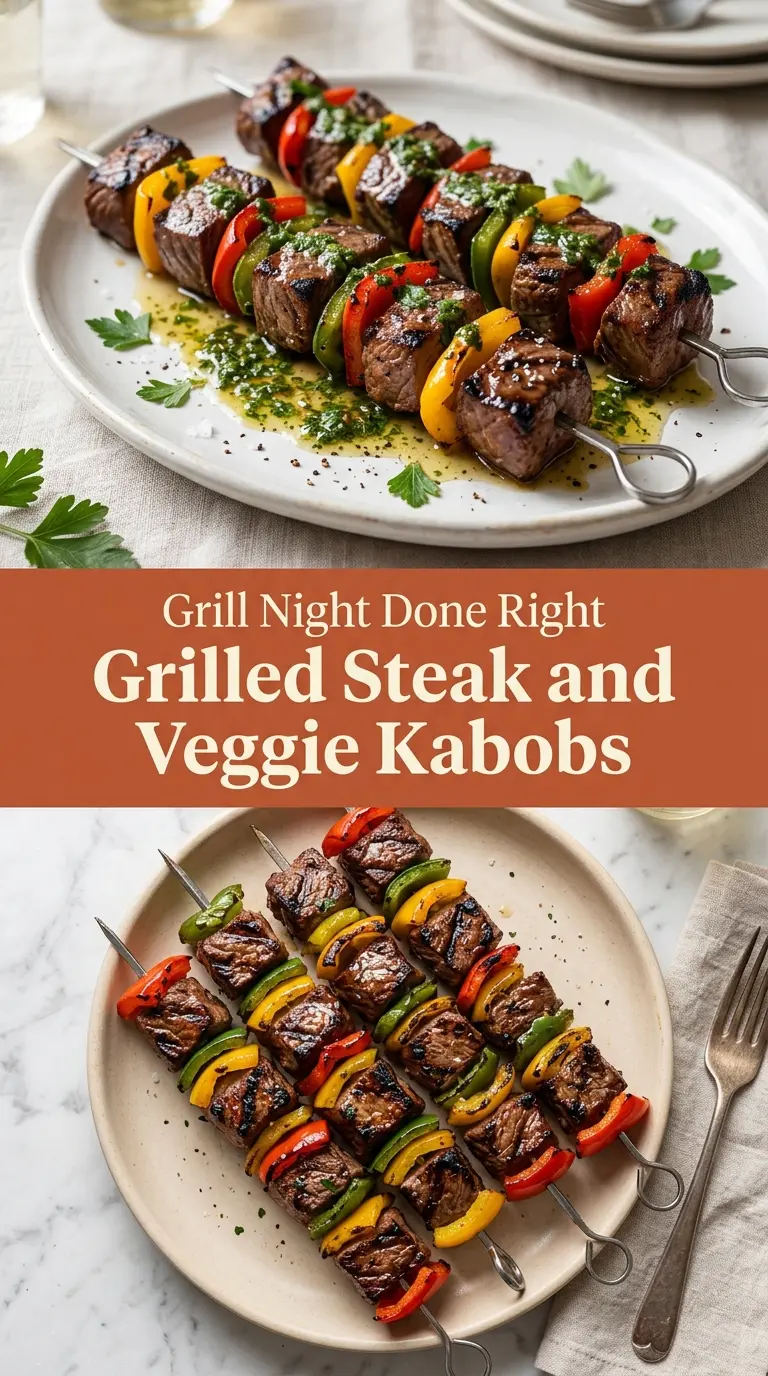
Charred edges, juicy steak, and vegetables that still have a little bite are what make these grilled steak and veggie kabobs worth keeping in the regular dinner rotation. The steak picks up a smoky, savory crust on the grill while the peppers, zucchini, and onion soften just enough to turn sweet without going mushy. Everything lands on the plate at the same time, and that alone makes dinner feel easier.
The marinade does the heavy lifting here. Soy sauce and Worcestershire bring salt and depth, smoked paprika adds that grill-house flavor, and olive oil helps the steak stay tender instead of drying out over the fire. The trick is not marinating forever; a short soak gives you plenty of flavor without making the beef overly salty or the texture soft.
Below, I’ll walk you through the one thing that keeps kabobs from turning dry, how to cut the vegetables so they finish at the same time as the steak, and a few swaps that keep this recipe flexible when you’re working with what’s in the fridge.
The steak stayed tender and the zucchini didn’t turn mushy, which never happens for me on kabobs. I followed the timing exactly and the peppers had just enough char without burning.
Juicy grilled steak kabobs with smoky veggies are the kind of dinner that disappears fast — pin this one for your next cookout or easy weeknight grill night.
The Reason These Kabobs Stay Juicy Instead of Drying Out on the Grill
The biggest mistake with steak kabobs is treating the meat and vegetables like they need the same amount of grill time. They don’t. Steak cubes cook fast, and if you leave them on long enough for the onions and peppers to go soft, the beef is already headed toward dry. The fix is simple: cut everything evenly, keep the grill hot, and pull the kabobs the moment the steak reaches the doneness you want.
Another thing that matters is how you thread the skewers. Leave a small gap between each piece so heat can move around the food instead of steaming it. Tight-packed skewers trap moisture, which gives you gray steak and limp vegetables instead of those crisp-edged, smoky bites you actually want.
- Sirloin steak — Sirloin is a great balance of flavor, tenderness, and price. It holds up well on skewers and stays juicy if you don’t overcook it. Ribeye works too, but it’s richer and a little softer.
- Bell peppers, zucchini, and red onion — These vegetables all grill at a similar pace if they’re cut generously. Smaller pieces burn before the steak is done, while oversized chunks stay raw in the center.
- Soy sauce and Worcestershire sauce — These build the savory base of the marinade. If you need a gluten-free version, use tamari in place of soy sauce and check that your Worcestershire sauce is gluten-free.
- Smoked paprika — This gives the kabobs that grilled, smoky note even before they hit the fire. Regular paprika works in a pinch, but you’ll lose some of that deeper charred flavor.
- Wooden or metal skewers — Metal skewers can go straight on the grill and conduct heat into the center of the meat. If you use wooden skewers, soak them long enough that the exposed ends don’t catch and burn before the kabobs are done.
What Each Ingredient Is Actually Doing in This Dish
The marinade is not there just for flavor. Olive oil helps carry the seasonings across the surface of the steak and keeps the meat from sticking to the grill. Garlic, paprika, and onion powder season the beef in a way that stays present even after the natural juices hit the heat.
Use the best steak you can comfortably afford, but don’t waste money on a cut that’s meant to be slow-cooked. Sirloin is the sweet spot here. If you swap in a leaner cut like top round, slice it large and keep the marinating time on the shorter side so it doesn’t dry out.
The vegetables are more than filler. They balance the richness of the beef and catch a little of the marinade as they cook. If your zucchini tends to collapse on the grill, cut it thicker than you think you need and keep the pieces on the outer edges of the skewer where the heat is slightly gentler.
Building Kabobs That Cook Evenly on the Grill
Mix the Marinade First
Whisk the oil, soy sauce, Worcestershire, garlic, smoked paprika, black pepper, salt, and onion powder until the mixture looks emulsified, not separated. That helps the seasonings cling to the steak instead of sliding off in the bowl. If the garlic sits in a pool of oil without being stirred through, the flavor will taste uneven once it hits the grill.
Let the Steak Take on Flavor, Then Stop
Toss the steak cubes in the marinade and refrigerate them for at least 30 minutes, but no longer than 2 hours. That window is enough for the surface to season without changing the texture of the meat. If you leave it overnight, the soy sauce can push the steak toward a cured, overly salty edge.
Thread for Heat, Not for Looks
Alternate steak and vegetables, but keep a little space between each piece. The gaps let the heat circulate and help the edges char instead of steam. If the cubes are jammed together, the outside will overcook before the centers are done.
Grill Hot and Pull Early
Cook the kabobs over medium-high heat, turning once, until the steak has a browned crust and the vegetables have visible grill marks. Medium-rare steak should come off around 135°F, and medium around 145°F. Let them rest for a few minutes before serving so the juices stay in the meat instead of running onto the plate.
Three Ways to Adjust These Kabobs Without Losing What Makes Them Good
Gluten-Free Version
Swap the soy sauce for tamari and check your Worcestershire label. You’ll keep the same savory depth without changing the flavor much, and the marinade still browns well on the grill.
Dairy-Free and Naturally Light
This recipe already fits dairy-free cooking as written. If you want it a little brighter, add a squeeze of lemon right before serving; that lifts the grilled flavor without changing the texture.
Swapping the Vegetables
Mushrooms, cherry tomatoes, and chunks of summer squash all work well, but they cook at different speeds. Keep the mushrooms and squash in larger pieces, and add tomatoes only if you like them soft and bursting on the skewer.
Making Them Ahead
You can marinate the steak and cut the vegetables a few hours in advance, then assemble the kabobs just before grilling. Don’t thread them too early if the vegetables are especially juicy; the salt in the marinade can start pulling moisture out and make the skewers less crisp.
Storage and Reheating
- Refrigerator: Store leftovers in an airtight container for up to 3 days. The vegetables soften a bit, but the flavor stays good.
- Freezer: Grilled kabobs can be frozen, but the vegetables lose texture. If you want to freeze them, pull the steak and vegetables off the skewers first and freeze in a sealed container for up to 2 months.
- Reheating: Warm them gently in a skillet over medium-low heat or in a 300°F oven until heated through. High heat turns the steak leathery fast, so keep the reheating slow.
Answers to the Questions Worth Asking
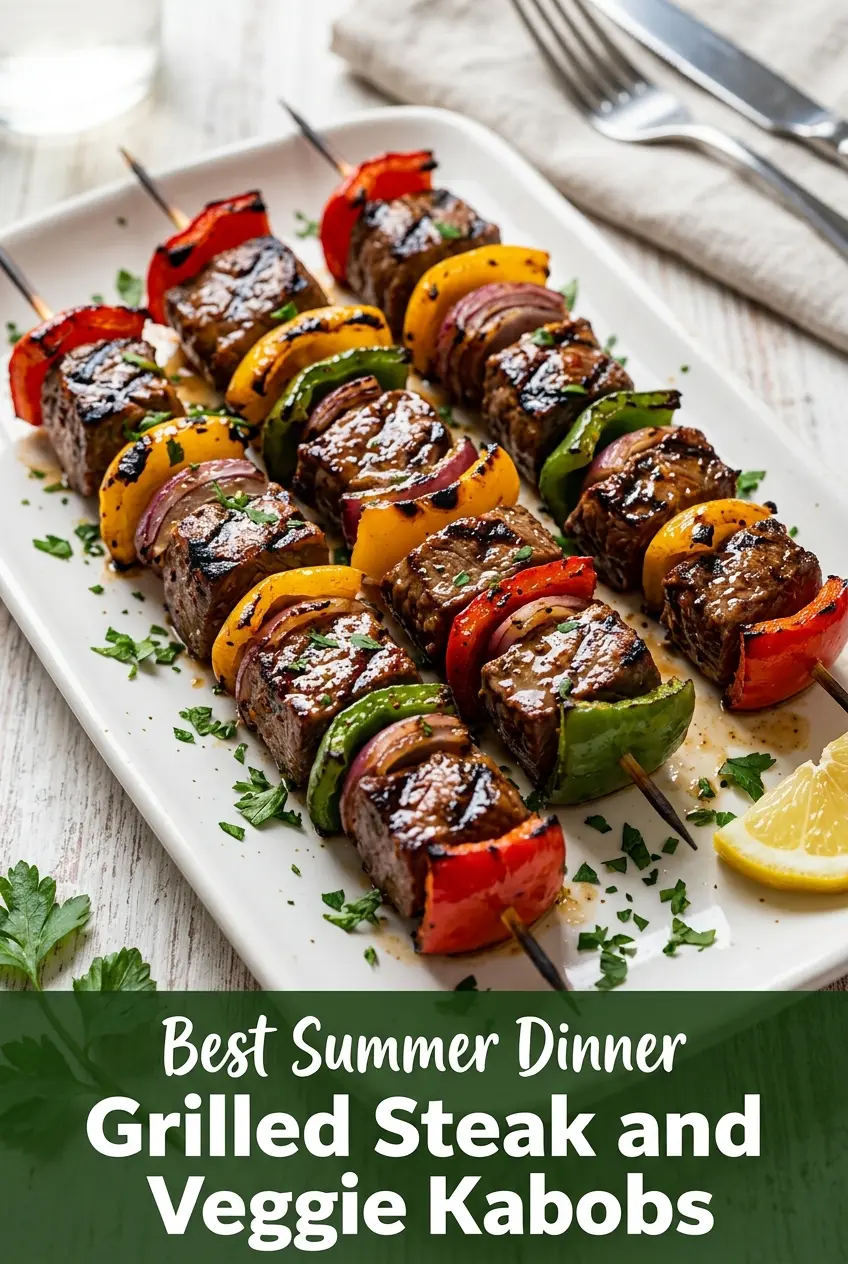
Grilled Steak and Veggie Kabobs
Ingredients
Equipment
Method
- In a large bowl, whisk together olive oil, soy sauce, Worcestershire sauce, minced garlic, smoked paprika, black pepper, salt, and onion powder until combined.
- Add steak cubes to the marinade and toss to coat, then cover the bowl.
- Refrigerate the covered steak for at least 30 minutes, up to 2 hours.
- Preheat the grill to medium-high heat (about 400°F).
- Thread steak and vegetables alternately onto skewers, leaving a small gap between each piece.
- Brush the skewers lightly with the remaining marinade.
- Place the kabobs on the grill and cook for 3–4 minutes per side, rotating once, until steak reaches 135°F for medium-rare or 145°F for medium.
- Continue grilling until the veggies are lightly charred and the steak is cooked to your desired doneness.
- Remove kabobs from the grill and let rest for 3 minutes before serving, so the juices settle.