Smoky grilled chicken over crisp romaine is one of those meals that never feels like a compromise. You get the cold crunch of a real Caesar salad, but the chicken turns it into dinner instead of a side dish. The contrast is what makes it work: charred edges, cool greens, creamy dressing, salty Parmesan, and croutons that still have some bite.
The part that matters most is the chicken and the dressing. The chicken only needs a simple seasoning rub, but it does need enough heat to pick up those dark grill marks before the inside dries out. The dressing leans on mayonnaise for body instead of raw egg, which makes it creamy fast and keeps it stable when you whisk in the lemon, Dijon, Worcestershire, and olive oil.
Below, I’ll walk through the grill timing that keeps the chicken juicy, how to toss the romaine so it stays crisp, and the small finishing touches that make this salad taste like something you’d order on purpose.
The chicken stayed juicy and the dressing coated every leaf without making the romaine soggy. I liked that the Parmesan in the dressing gave it that restaurant-style Caesar taste even before I added the cheese on top.
Save this grilled chicken Caesar salad for the nights when you want a crisp, hearty dinner with smoky chicken and a creamy homemade dressing.
The Reason the Chicken Stays Juicy Instead of Turning Dry and Chalky
Chicken breast dries out fast when it’s cooked over moderate heat for too long. For this salad, the goal is a hard, fast sear on the outside and a clean finish at 165°F in the center. That gives you grill marks and smoky flavor without squeezing every last drop of moisture out of the meat.
The other place this goes wrong is after the grill. Slice the chicken too soon and the juices run straight onto the board instead of staying in the meat. A short rest fixes that. It also makes the diagonal slices cleaner, which matters when you’re serving the chicken on top of a salad instead of beside it.
What Each Ingredient Is Actually Doing in This Dish
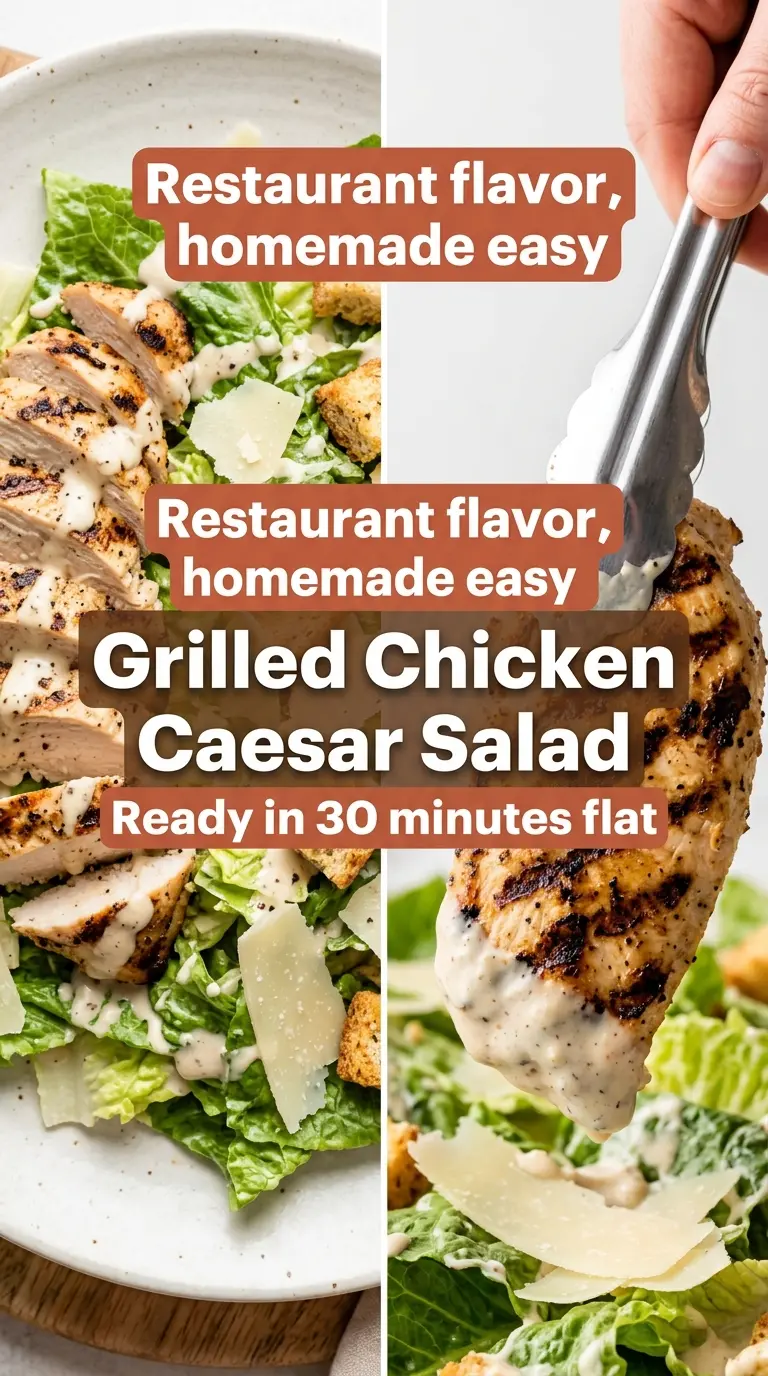
- Chicken breasts — Boneless, skinless breasts give you a lean main protein that slices neatly over the greens. If yours are thick in the middle, pound them lightly so they cook at the same rate from edge to center.
- Olive oil — A thin coating helps the seasoning cling and encourages browning on the grill. You don’t need a fancy bottle here; use one with a clean flavor since the dressing carries the stronger personality.
- Mayonnaise — This is what makes the Caesar dressing creamy without fuss. It also gives the dressing body so it coats the romaine instead of pooling at the bottom of the bowl.
- Parmesan cheese — Grated Parmesan dissolves into the dressing and sharpens the flavor, while shaved Parmesan on top gives you salty, nutty texture. Skip the shelf-stable pre-grated kind if you can; it won’t melt into the dressing as smoothly.
- Dijon mustard and Worcestershire sauce — Dijon brings a little bite and helps the dressing emulsify, while Worcestershire adds the savory depth that makes Caesar taste like Caesar. If you leave either out, the dressing gets flatter fast.
- Romaine hearts — Romaine is sturdy enough to stand up to a creamy dressing and still stay crisp. Chop it right before serving so the cut edges don’t wilt while the chicken rests.
- Croutons — These are there for crunch, so use ones that still snap. If they’re soft, toast them briefly in a dry skillet or oven before assembling.
How to Grill, Toss, and Assemble This Salad Without Losing the Crunch
Seasoning the Chicken for the Grill
Rub the chicken with olive oil, garlic powder, salt, and pepper until it looks lightly glossy and evenly coated. That thin film of oil helps the seasoning stick and keeps the surface from welding itself to the grates. If the chicken is uneven in thickness, the thinner end will overcook before the thick center is done, so a quick pound helps more than people expect.
Whisking the Dressing Until It Turns Creamy
Start with the mayonnaise, Parmesan, lemon juice, Dijon, Worcestershire, and garlic, then whisk until the mixture looks smooth and a little thick. Stream in the olive oil slowly so the dressing stays emulsified instead of looking greasy or broken. If it tastes flat, it usually needs salt, not more lemon. Salt wakes up the Parmesan and brings the dressing into focus.
Grilling to the Right Internal Temperature
Cook the chicken over medium-high heat until the outside has deep grill marks and the center reaches 165°F. Don’t chase the clock more than the thermometer, because grill heat changes fast and chicken breast can go from juicy to dry in a few minutes. If the chicken is sticking, leave it alone a little longer; once it sears properly, it releases more cleanly.
Tossing the Romaine Right Before Serving
Coat the chopped romaine with about two-thirds of the dressing first, then stop and look at it. The leaves should be lightly coated, not drenched, and you should still see plenty of green. Add the rest of the dressing only if the salad needs it. That keeps the lettuce crisp and avoids the heavy, soggy bowl problem that ruins a lot of Caesar salads.
Finishing the Plate
Rest the chicken for five minutes, then slice it on a diagonal so the pieces look generous and stay tender. Layer the chicken over the dressed romaine, scatter the croutons and shaved Parmesan over the top, and finish with the remaining dressing if you want it richer. Assemble right before serving so the croutons keep their crunch and the lettuce stays cold.
How to Adapt This for a Lighter, Dairy-Free, or Lower-Carb Version
Gluten-Free Caesar Salad
Use gluten-free croutons or skip them and add toasted nuts for crunch. Check the Worcestershire sauce label too, since some versions include gluten. The rest of the salad is naturally gluten-free.
Dairy-Free Version
Swap the Parmesan in the dressing for a dairy-free Parmesan-style alternative and use a dairy-free garnish on top, or leave the cheese out and add more lemon and a pinch more salt. You’ll lose some of the nutty depth, but the dressing still tastes bold and creamy thanks to the mayonnaise.
Lower-Carb Bowl
Skip the croutons and add sliced avocado or extra shaved Parmesan for more richness. The salad still feels complete because the chicken and dressing carry the meal; you only lose the crunch, so add another crisp element if you want it back.
Storage and Reheating
- Refrigerator: Store the chicken, dressing, and romaine separately for up to 3 days. Once the salad is dressed, the leaves soften quickly.
- Freezer: The grilled chicken freezes well for up to 2 months. The dressing and lettuce don’t freeze well, so keep those fresh.
- Reheating: Warm the chicken gently in a skillet over low heat or in short microwave bursts so it doesn’t toughen. Bring the chicken to just warm, not piping hot, before slicing and assembling.
Answers to the Questions Worth Asking
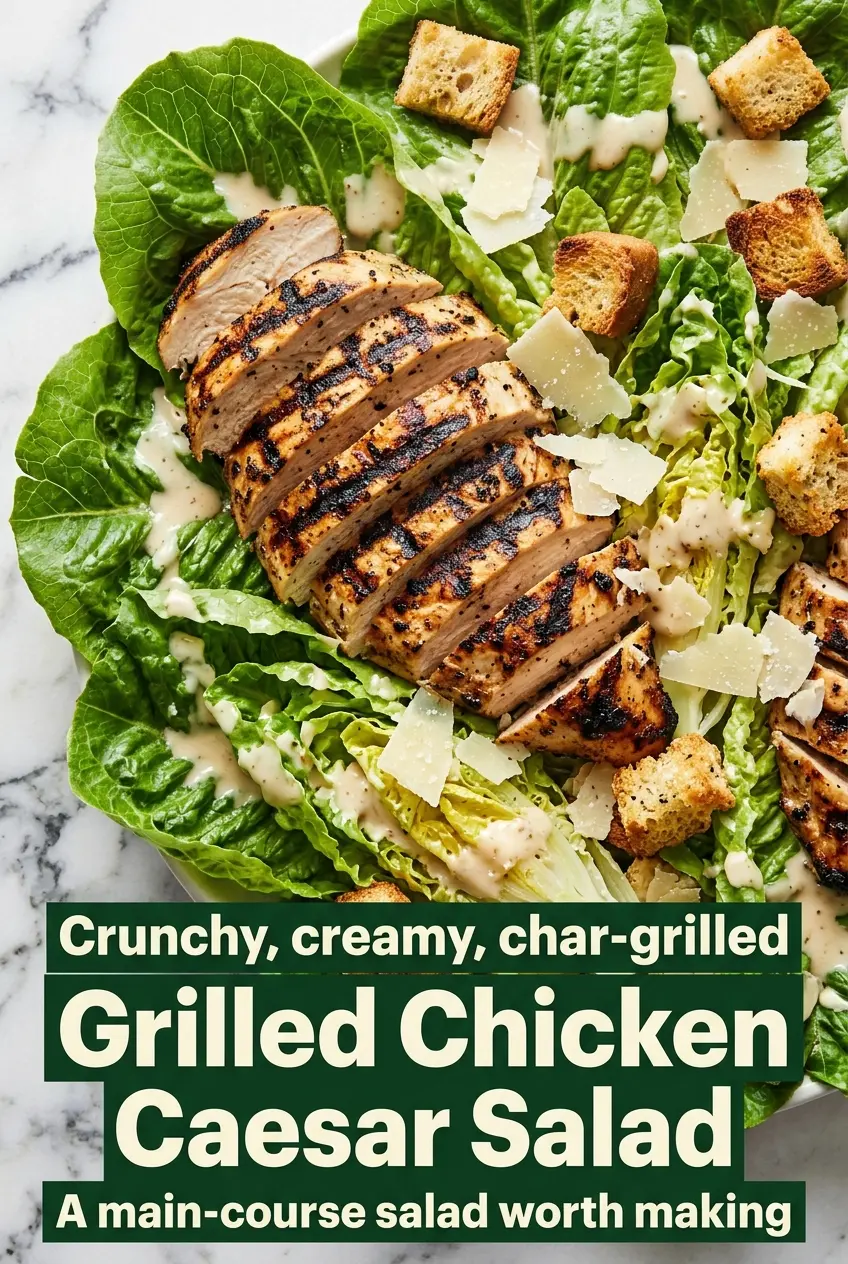
Grilled Chicken Caesar Salad
Ingredients
Equipment
Method
- Rub the chicken breasts with olive oil, garlic powder, kosher salt, and black pepper until evenly coated, then set aside.
- Arrange the seasoned chicken so it can sit at room temperature while you prep the grill.
- Whisk mayonnaise, grated Parmesan, lemon juice, Dijon mustard, Worcestershire sauce, and minced garlic until smooth.
- Slowly whisk in olive oil until the dressing looks creamy and fully combined, then season with salt and black pepper to taste.
- Preheat the grill to medium-high heat (about 400°F), then place the chicken on the grates.
- Grill for 6–7 minutes per side until deep grill marks form and the internal temperature reaches 165°F.
- Let the chicken rest for 5 minutes, then slice into thick diagonal strips.
- Toss chopped romaine with about two-thirds of the Caesar dressing in a large bowl until evenly coated.
- Divide dressed romaine among plates, top with sliced grilled chicken, croutons, and shaved Parmesan, then drizzle the remaining dressing over the top.