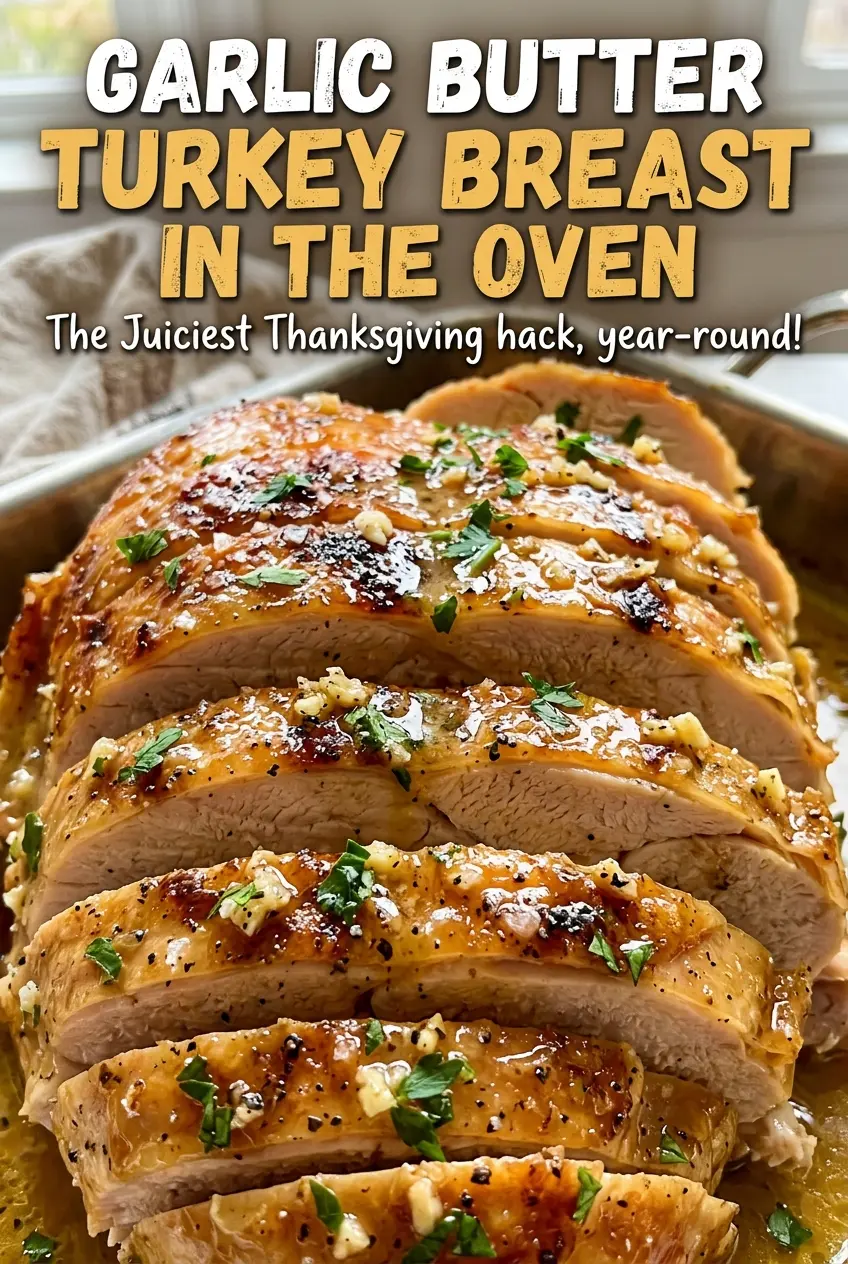
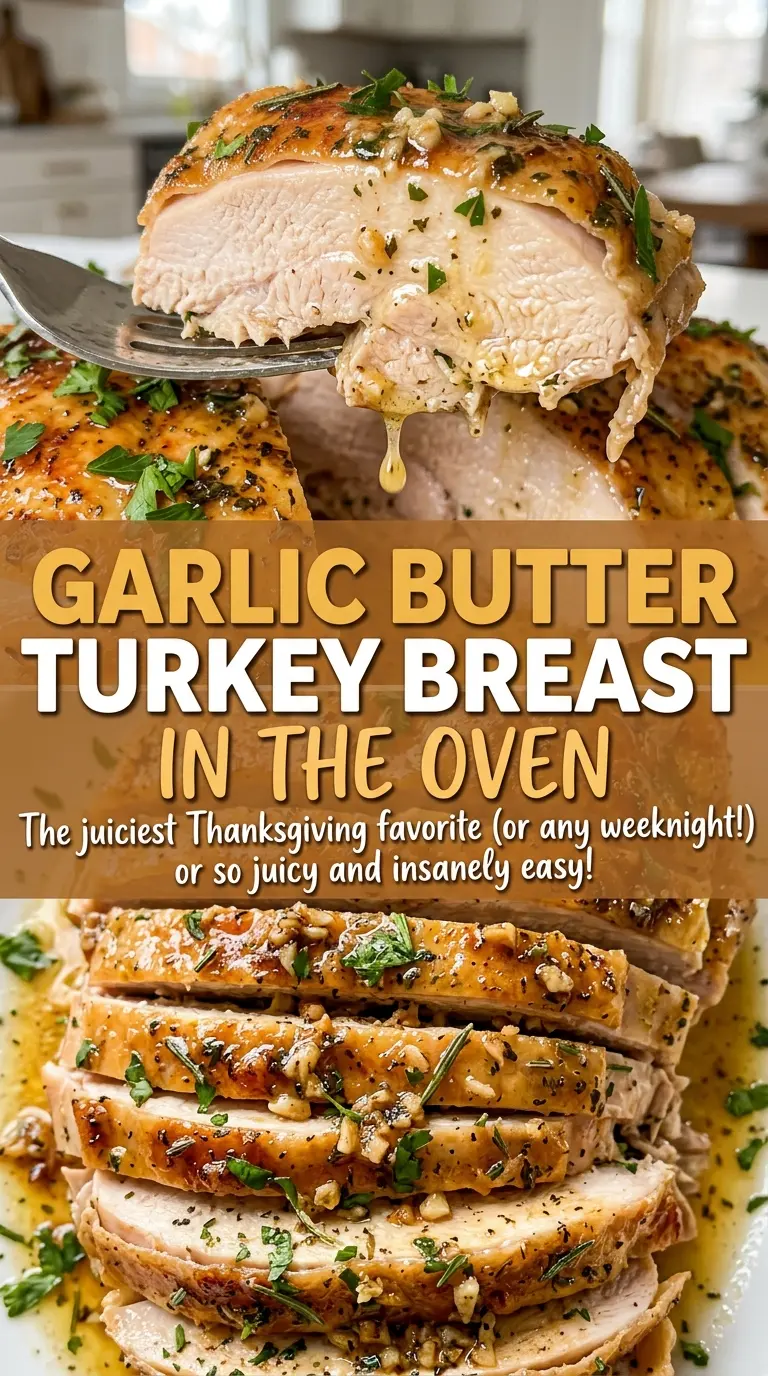
When the turkey comes out of the oven, the skin should be golden and the butter and herb aroma should be right there as you lift it from the pan. I dry the breast well before adding the garlic butter; damp skin makes it harder for that butter to cling, and the exterior won’t brown as neatly. This garlic butter turkey breast is a straightforward way to roast a bone-in breast without losing the moisture that makes each slice worth carving.
The butter goes in two places: beneath the loosened skin and across the outside. That puts the garlic, rosemary, and thyme right against the meat while also seasoning the skin. An onion bed and a little broth sit underneath, so the turkey has a flavorful base as it roasts. Once carved, the breast is tender with savory herb butter in every slice.
Kitchen Note
Softened butter is much easier to spread beneath the skin than cold butter, and it stays in place better than melted butter. Take care when loosening the skin so it doesn’t tear.
Save this garlic butter turkey breast for a roast with golden skin, fresh herbs, and an easy onion-and-broth pan base.
Why the Broth Belongs Around the Onions, Not on the Turkey
The turkey skin and the liquid in the roasting pan have different jobs. The skin needs to be dry before the butter goes on, while the broth belongs beneath the breast, around the onion quarters. Pouring broth over the turkey would wet the surface you’re trying to roast until golden.
The onions make a simple bed for the breast in the 9×13-inch pan. They lift the turkey slightly from the bottom, and the broth sits around them rather than coating the skin. As the turkey cooks, the onions soften in the pan liquid and the garlic-herb butter seasons the meat from above and beneath its skin. Keeping those roles separate helps you get savory pan juices without sacrificing the browned exterior.
This setup also gives you a useful visual check before the pan goes into the oven: the breast sits skin-side up on the onions, and the broth is visible around the onion pieces. If the skin looks wet after handling the turkey, pat it dry again before applying the butter mixture.
What the Butter, Herbs, and Pan Base Each Bring
- Bone-in, skin-on turkey breast — The bone and skin are part of this roast’s structure and texture, and the skin gives the butter a surface to season and brown. Choose a fully thawed breast in the listed size range; the skin should be intact enough to loosen gently.
- Unsalted butter — Softened butter carries the garlic and herbs and spreads beneath the skin without running off. Unsalted butter lets the listed kosher salt season the turkey without the extra, hard-to-measure salt found in salted butter.
- Fresh rosemary and thyme — These herbs give the butter its savory, woodsy aroma. Chopping them finely helps distribute them through the butter instead of leaving large pieces in one spot. Fresh herbs are the ones used here; dried herbs won’t have the same texture or fresh flavor.
- Fresh garlic — Minced garlic disperses through the butter and seasons both the meat and skin. Chop it finely so larger pieces don’t collect in a clump beneath the skin.
- Yellow onion and low-sodium chicken broth — Quartered onion forms the pan bed, while low-sodium broth adds a savory liquid without making the overall seasoning harder to control. The broth goes around the onions, not over the turkey.
- Kosher salt and black pepper — These season the butter mixture directly, so it’s easy to distribute them over the breast along with the aromatics. Keep the salt measurement as listed, especially when choosing unsalted butter.
Roasting the Breast for Golden Skin and Juicy Slices
Build the Onion Bed
Set a rack in the center of the oven and heat it to 350°F. Arrange the quartered onion in a 9×13-inch roasting pan, then pour the chicken broth around the onion pieces. Keep the liquid in the bottom of the pan rather than splashing it onto the skin. This gives you the pan setup you need before the turkey goes in.
Dry the Turkey and Mix the Butter
Remove the fully thawed turkey breast from its packaging and discard any neck or giblet packet. Pat the skin thoroughly dry with paper towels; if it stays damp, the butter won’t spread as neatly over the surface. Stir the softened butter with the minced garlic, chopped rosemary, chopped thyme, kosher salt, and black pepper in a small bowl. The mixture should be soft enough to spread, not liquid.
Season Beneath and Over the Skin
Carefully loosen the skin over the breast with your fingers, working gently so you don’t puncture or tear it. Spread some of the butter mixture beneath the skin, then use the rest over the outside of the breast. Set the turkey skin-side up on the onions. If the skin pulls back while you’re working, ease it into place rather than tugging hard.
Roast, Check, and Rest
Roast for 1 1/2 to 2 1/4 hours, tenting the turkey loosely with foil if the skin browns too quickly. Check the thickest part of the breast with a thermometer, taking care not to touch bone; it should read 165°F, and the skin should be golden. Transfer the turkey to a cutting board and tent it loosely with foil. Rest it for 20 minutes before carving so the meat has time to settle and the slices are easier to cut.
Small Adjustments That Keep This Roast True to Its Strengths
A More Herb-Forward Outer Layer
Use the same full butter mixture, but spread a little more of it over the skin and a little less beneath it, while still getting butter under the skin. The rosemary and thyme will be more prominent on the browned exterior, though you’ll give up some of the direct herb-butter contact with the meat.
A Gentler Garlic Presence
For milder garlic in the finished slices, keep the minced garlic in the butter mixture but spread more of that mixture over the outside of the skin and less beneath it. The garlic flavor will sit more on the surface, while the meat gets a subtler taste from the butter and herbs underneath.
Storage and Reheating
- Refrigerator: Refrigerate leftover turkey within two hours and use it within 3 to 4 days. The skin will soften once chilled, but the sliced meat stays tender when stored covered.
- Freezer: Freeze carved turkey in airtight portions for up to 3 months. Thaw it in the refrigerator before reheating for more even warming.
- Reheating: Put slices in a covered oven-safe dish with a small splash of chicken broth and warm at 325°F until the center reaches 165°F. Keep the dish covered; reheating uncovered can dry out the lean breast meat.
Questions That Come Up Before the Turkey Goes in the Oven
Garlic Butter Turkey Breast in the Oven
Ingredients
Equipment
Method
- Set a rack in the center of the oven.
- Preheat the oven to 350°F.
- Arrange the onion quarters in a 9x13-inch roasting pan and pour the broth around them.
- Remove the turkey breast from its packaging and discard any neck or giblet packet.
- Pat the turkey dry with paper towels.
- In a small bowl, mix the butter, garlic, rosemary, thyme, salt, and pepper.
- Carefully loosen the skin over the breast and spread the butter mixture under the skin and over the outside.
- Set the turkey skin-side up on the onions.
- Roast for 1 1/2 to 2 1/4 hours, tenting loosely with foil if the skin browns too quickly, until the skin is golden and a thermometer inserted into the thickest part without touching bone reads 165°F.
- Transfer the turkey to a cutting board and tent loosely with foil.
- Rest for 20 minutes before carving.