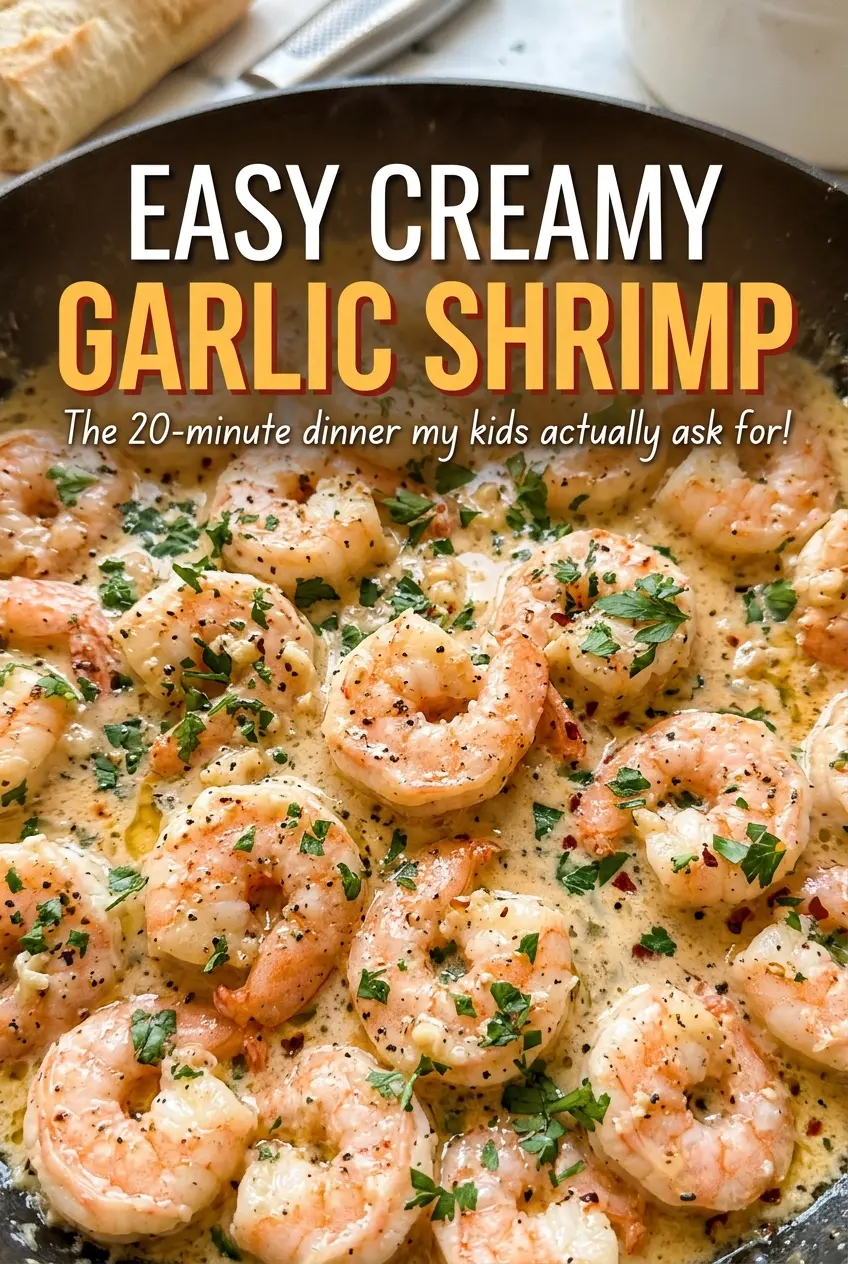
Shrimp turn from pearly to opaque in a blink, and they keep cooking if they sit in a hot skillet. I pull them out as soon as they reach 145°F, then let them finish warming in the cream sauce. That small timing choice keeps Easy Creamy Garlic Shrimp tender instead of rubbery.
The sauce comes together in the same skillet, so the butter picks up the little bits left from searing the shrimp. Heavy cream simmers until it thickens slightly, then finely grated Parmesan melts right into it. A squeeze of lemon and fresh parsley bring a bright finish to the rich sauce, which is ready to spoon over every shrimp.
Kitchen Note
Cook the shrimp in two batches in the 12-inch skillet. If you crowd them together, they steam rather than sear, and you lose the quick, clean cook that keeps them tender.
Save Easy Creamy Garlic Shrimp for a fast skillet dinner with tender shrimp and a Parmesan cream sauce finished with lemon.
Why the Cream Needs to Thicken Before the Parmesan Goes In
There’s a reason the Parmesan waits until the cream has simmered for a few minutes. The cream needs a little time to reduce on its own; that gives the sauce body before the cheese melts into it. Add the cheese to a thin base and it can settle into a heavier layer instead of making a smooth coating for the shrimp.
Keep the simmer gentle, not rolling. Heavy cream is forgiving, but a hard boil can make a dairy sauce look greasy at the edges, and cheese doesn’t melt as evenly when the pan is too hot. Stir the cream now and then as it cooks, watching for it to cling lightly to a spoon. Once the Parmesan disappears into the sauce, it should look glossy and thick enough to coat the shrimp without turning pasty.
This order also gives you a useful visual cue instead of relying on the clock alone. The cream should look slightly thickened before the cheese goes in; the Parmesan then finishes the sauce’s texture as it melts. If the pan looks too reduced before the cheese is added, take it off the heat briefly rather than letting the cream bubble hard.
Heavy Cream and Finely Grated Parmesan Build the Sauce
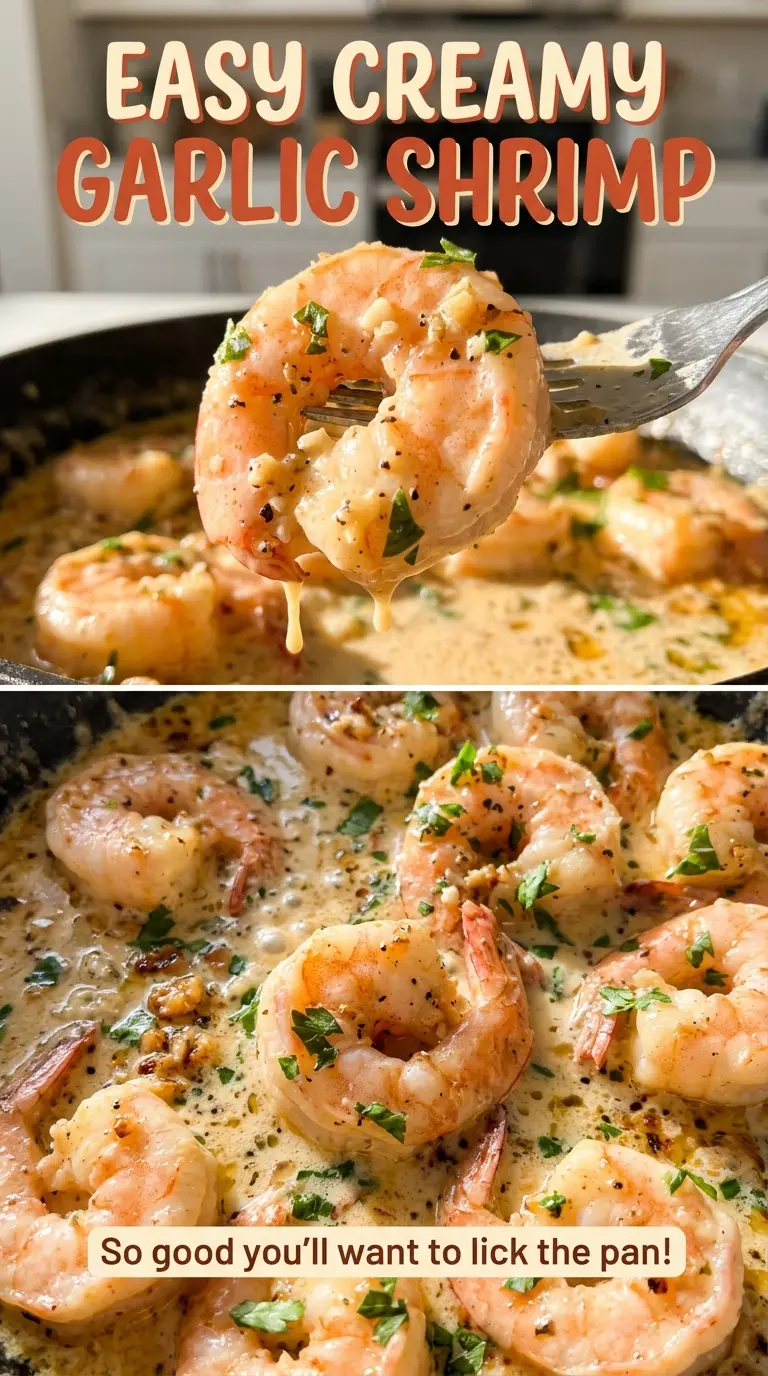
- Large shrimp — Their size gives you enough time to sear each side without the centers turning tough. Fresh or frozen shrimp work; thaw frozen shrimp in the refrigerator and pat them thoroughly dry before seasoning.
- Heavy cream — Its fat gives the sauce richness and helps it thicken as it simmers. Milk is not an equal swap here; it makes a thinner sauce that won’t have the same silky body.
- Finely grated Parmesan — Fine shreds melt into the cream more smoothly than coarse pieces. Freshly grated cheese is worth the small effort; pre-grated Parmesan may leave a less even texture.
- Garlic and butter — Minced garlic releases its aroma quickly in melted butter, so keep stirring and pull the pan along as soon as it smells fragrant. The butter also carries the garlic flavor through the cream.
- Olive oil — Use it for the shrimp sear, where the skillet is over medium-high heat. The butter comes later, after the heat is reduced, so the garlic can cook gently without scorching.
- Lemon juice and parsley — Lemon cuts through the cream’s richness, while fresh parsley adds a clean, herbal finish. Chopped parsley is best stirred in at the end so its color and fresh taste stay noticeable.
Sear the Shrimp First, Then Finish Them in the Cream
Dry and Season for a Better Sear
Blot the peeled, deveined shrimp well with paper towels before adding the kosher salt and black pepper. Moisture on the surface makes it harder for the shrimp to sear cleanly in the hot oil. Keep the seasoned shrimp close by so they go into the skillet soon after the oil heats.
Cook Just Until Opaque
Heat the olive oil in a 12-inch skillet over medium-high heat, then cook the shrimp in two batches. Give each side 1 to 2 minutes, looking for flesh that has turned opaque rather than translucent. The thickest part should reach 145°F; transfer each batch to a plate as soon as it does. Don’t wait for the shrimp to curl tightly, which is a sign they’re cooking past tender.
Let the Garlic Turn Fragrant, Not Brown
Reduce the heat to medium and melt the butter in the same skillet. Add the minced garlic and stir for about 30 seconds, just until the aroma rises. Garlic that browns will taste bitter in the cream, so keep it moving and don’t step away during this quick stage.
Simmer the Cream Before Melting the Cheese
Pour in the heavy cream and bring it to a gentle simmer. Cook for 3 to 4 minutes, stirring occasionally, until it looks slightly thickened; it should bubble softly rather than boil vigorously. Stir in the finely grated Parmesan and keep stirring until it melts into the sauce. If the cream is bubbling hard, lower the heat before adding the cheese.
Warm the Shrimp and Finish Bright
Return the shrimp and any juices from the plate to the skillet. Cook for 1 to 2 minutes, just until the shrimp are heated through, then stir in the lemon juice and chopped parsley. The sauce should coat the shrimp, with a little lemon brightness cutting through the cream. Serve while it’s hot and glossy.
Three Small Changes That Shift the Shrimp and Sauce
A pepper-forward cream sauce
Divide the measured black pepper, seasoning the shrimp with some and stirring the rest into the cream before adding Parmesan. The pepper comes through the sauce more clearly, while keeping the total amount the same preserves the intended seasoning.
A fresh parsley finish
Divide the chopped parsley and stir half into the skillet with the lemon juice. Scatter the rest over the shrimp at serving time for a fresher herbal aroma and a little green color on top.
A lower-lactose version
Replace the heavy cream with lactose-free heavy cream, using the same quantity. Parmesan is naturally low in lactose, but this is still a dairy dish and isn’t suitable for a milk allergy.
Storage and Reheating
- Refrigerator: Store leftovers in an airtight container for up to 3 days. The sauce will thicken as it chills.
- Freezer: Freezing isn’t recommended; the cream sauce can separate as it thaws, and the shrimp may turn tough.
- Reheating: Warm gently in a covered skillet over low heat, stirring the sauce until hot throughout. Reheat leftovers to 165°F, and don’t let the sauce boil or the shrimp can toughen.
Questions That Come Up While Making Creamy Garlic Shrimp
Easy Creamy Garlic Shrimp
Ingredients
Equipment
Method
- Pat the shrimp dry with paper towels, then season with the salt and pepper.
- Heat the olive oil in a 12-inch skillet over medium-high heat.
- Cook the shrimp in two batches for 1 to 2 minutes per side, until opaque and 145°F, then transfer to a plate.
- Reduce the heat to medium and melt the butter in the skillet.
- Add the garlic and cook for about 30 seconds, stirring, until fragrant.
- Pour in the heavy cream and bring it to a gentle simmer; cook for 3 to 4 minutes, stirring occasionally, until slightly thickened.
- Stir in the Parmesan until melted.
- Return the shrimp and any juices to the skillet and cook for 1 to 2 minutes, until heated through.
- Stir in the lemon juice and parsley, then serve.