Flaky baked salmon, warm seasoned rice, and crisp toppings give this sushi bowl the same satisfaction as a good roll, just without the fuss of rolling mats or carefully sealing nori. The salmon picks up a savory-sweet glaze in the oven, then gets flaked over rice that’s lightly seasoned so every bite tastes balanced, not heavy. The creamy spicy mayo pulls everything together and gives the bowl that familiar sushi-shop finish.
What makes this version work is the layering. The rice gets vinegar and a little sugar while it’s still warm, which helps the seasoning disappear into the grains instead of sitting on the surface. The salmon is baked just until it flakes, not dried out, so it stays tender enough to mix into the bowl or leave in bigger pieces if you like more texture. The cold toppings matter too — avocado, cucumber, and shredded carrots keep the bowl from tasting flat.
Below, I’ve included the small details that keep the rice from turning mushy, plus the best way to time the spicy mayo so everything’s ready at once. If you’ve ever wanted sushi flavors on a weeknight without extra work, this bowl is one worth keeping around.
The salmon stayed so tender and the rice soaked up the vinegar just enough without getting soggy. I’ve made this twice in one week and the spicy mayo is what my kids keep asking for.
Save this baked salmon sushi bowl for the nights when you want sushi flavors, creamy spicy mayo, and fast cleanup in one bowl.
The Trick to Keeping Sushi Bowl Rice From Turning Dense
The rice is where this bowl either lands or falls apart. Sushi rice should be warm when you season it, but not hot enough to steam itself into a gummy mass. If you stir in the vinegar mixture while the grains are still loose and fluffy, the seasoning coats each grain instead of clumping at the bottom of the bowl.
The other mistake is packing the rice into the bowl like you’re building a dome. That compacts the grains and makes the whole bowl eat heavy. Spoon it in gently, then let the toppings sit on top so the textures stay separate until the last bite.
What Each Ingredient Is Doing in This Bowl
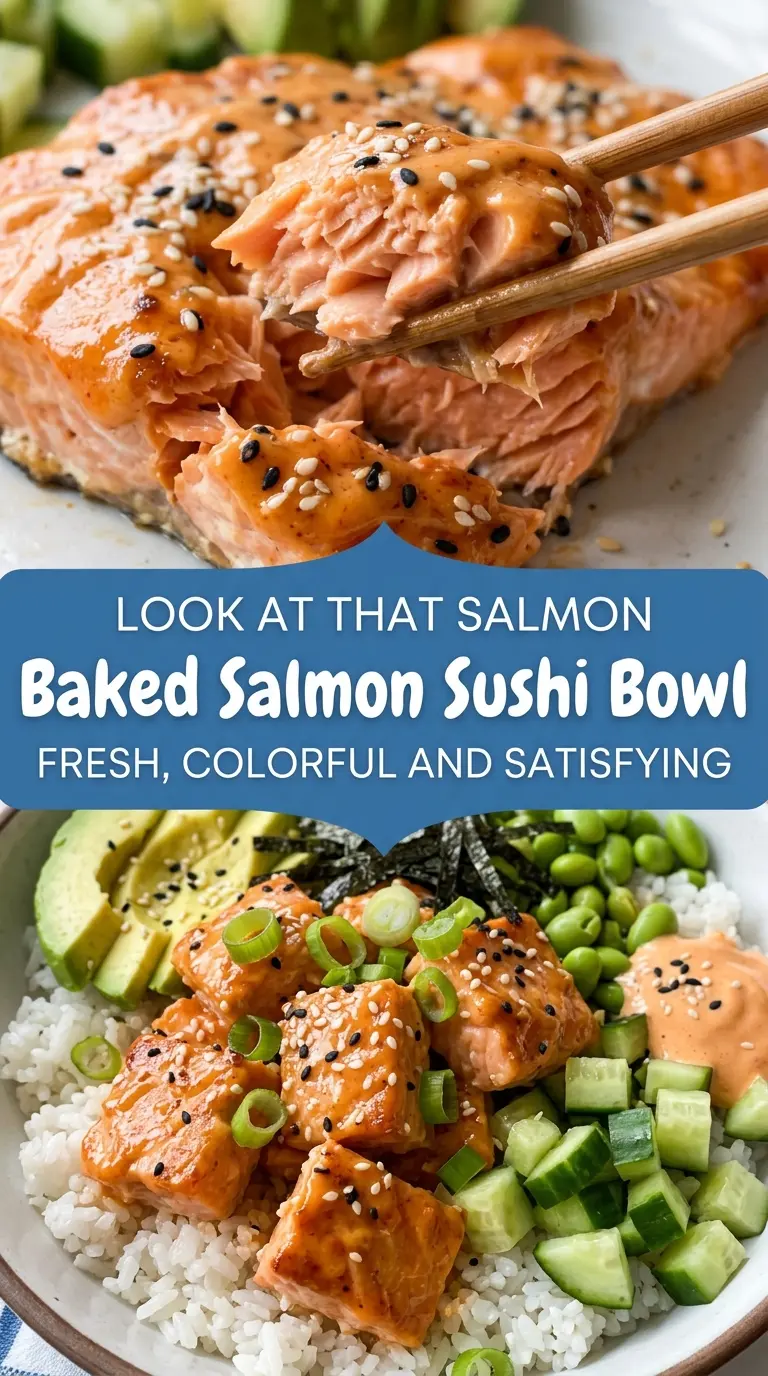
- Salmon — A fillet with decent fat keeps the bowl tender and rich after baking. Skin-on or skinless both work, but if you use frozen salmon, thaw it completely and pat it dry so the glaze sticks instead of sliding off.
- Sushi rice — This is the backbone of the bowl. Short-grain rice gives you the sticky, glossy texture that belongs here; long-grain rice turns the whole dish looser and drier.
- Rice vinegar and sugar — These season the rice with the classic sushi flavor. The sugar doesn’t make it sweet; it rounds out the sharpness and helps the rice taste finished.
- Sriracha and mayonnaise — The mayo cools the heat and gives you that creamy drizzle that binds everything together. If you want a lighter version, use half mayo and half Greek yogurt, but the texture will be a little less silky.
- Nori, cucumber, avocado, carrots, and green onions — These toppings bring crunch, freshness, and contrast. Don’t skip the nori; even a few strips add the briny sushi flavor that makes the bowl taste complete.
Building the Bowl in the Right Order
Season the Rice First
Start with warm rice and stir in the vinegar and sugar while the grains are still separate. The heat helps the seasoning absorb without leaving puddles in the bowl. If the rice has sat too long and stiffened up, splash in a teaspoon of warm water and fluff it before seasoning.
Glaze and Bake the Salmon
Mix the soy sauce, sesame oil, sriracha, and garlic powder into a quick glaze, then brush it over the salmon. Bake just until the fish flakes at the thickest point and the center looks opaque, usually 12 to 15 minutes depending on thickness. Overbaking is the fastest way to lose the silky texture that makes this bowl work.
Whisk the Spicy Mayo Last
Stir the mayo, sriracha, and lime juice together until smooth and pale orange. The lime wakes up the sauce and keeps it from tasting flat. If it seems too thick to drizzle, loosen it with a few drops of water rather than more lime, which can make it sharp.
Assemble Without Crushing the Texture
Spoon the rice into bowls, then add the flaked salmon and arrange the toppings over the top. Keep the avocado and cucumber visible instead of burying them; the contrast is part of what makes each bite interesting. Finish with spicy mayo, sesame seeds, and nori strips right before serving so the seaweed stays crisp enough to notice.
How to Adapt This for Different Nights and Diets
Make It Gluten-Free
Swap the soy sauce for tamari or a certified gluten-free soy sauce. The flavor stays savory and salty, and the rest of the bowl already fits naturally.
Make It Dairy-Free Without Losing the Creamy Finish
The base recipe is already dairy-free if your mayonnaise is. Check the label, then keep the spicy mayo as written. You’ll still get that rich, creamy drizzle without changing the texture of the bowl.
Turn It Into a Lower-Carb Bowl
Replace the sushi rice with cauliflower rice, then season it lightly with a splash of rice vinegar and a pinch of salt. It won’t taste like classic sushi rice, but it gives you the same sweet-salty-crisp balance with a lighter base.
Use What You Have for the Crunchy Toppings
If you’re out of cucumber, use thinly sliced bell pepper or radish for crunch. They won’t taste the same, but they still give you a fresh bite that keeps the bowl from feeling soft all the way through.
Storage and Reheating
- Refrigerator: Store the salmon, rice, and toppings separately for up to 3 days. The avocado is best sliced fresh, and the cucumber can soften if it sits in the bowl too long.
- Freezer: The baked salmon and rice freeze well on their own for up to 2 months. Freeze in airtight containers and keep the fresh toppings and mayo out of the freezer.
- Reheating: Reheat the rice and salmon gently in the microwave with a damp paper towel over the top so they don’t dry out. Add the cold toppings after reheating; if you warm the avocado or cucumber, the bowl loses the contrast that makes it good.
Answers to the Questions Worth Asking
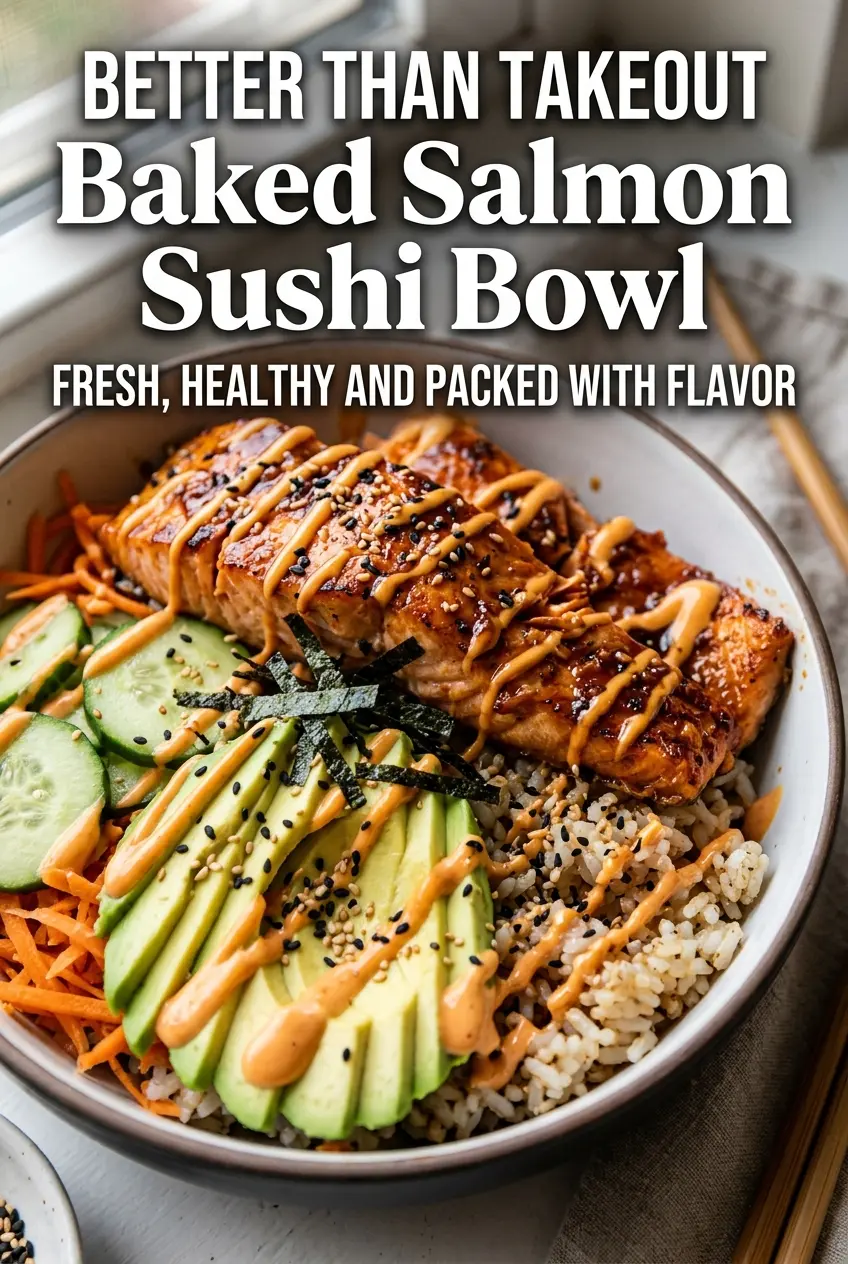
Easy Baked Salmon Sushi Bowl
Ingredients
Equipment
Method
- Preheat the oven to 400°F (205°C) and line a sheet pan for easy cleanup.
- Place the salmon fillet on the lined baking sheet in a single layer.
- Mix soy sauce, sesame oil, sriracha, and garlic powder until combined.
- Brush the soy sauce mixture over the salmon so the surface is evenly coated.
- Bake for 12–15 minutes at 400°F (205°C) until the salmon flakes easily when pressed with a fork.
- In a bowl, combine rice vinegar and sugar with the warm cooked sushi rice and stir to coat.
- In a small bowl, mix mayonnaise, sriracha, and lime juice until smooth to make spicy mayo.
- Flake the cooked salmon into bite-sized pieces while it is still warm.
- Divide the seasoned rice among serving bowls.
- Top each bowl with salmon, avocado, cucumber, shredded carrots, nori strips, and green onions.
- Drizzle generously with spicy mayo.
- Sprinkle sesame seeds over the top and serve right away.