Creamy morel mushroom risotto lands with the kind of quiet richness that makes people go back for another spoonful before they’ve finished the first bowl. The rice stays tender with a little bite in the center, the morels bring that deep woodland flavor you can’t fake, and the Parmesan-butter finish gives everything a glossy, velvety coat. It feels restaurant-level without asking for anything fancy beyond a little patience at the stove.
What makes this version work is the balance between the earthy mushrooms and the steady addition of warm broth. Morels need enough time to release their flavor, but not so much heat that they turn leathery. The rice should absorb liquid gradually, not drown in it, and the final stir of butter and Parmesan happens off the heat so the risotto stays silky instead of turning grainy.
Below, I’ve included the one texture cue that tells you when to stop stirring, plus the swaps that still keep the dish grounded in that same creamy, mushroomy comfort.
The morels had so much flavor, and the risotto turned out creamy without getting mushy. I followed the broth one ladle at a time and the texture was spot on — my husband said it tasted like a nice restaurant.
Save this creamy morel mushroom risotto for the night you want something earthy, silky, and a little special without leaving the stove for more than a few minutes at a time.
The Reason Morel Risotto Stays Creamy Instead of Turning Gluey
Risotto goes wrong when the rice is rushed. Dumping in all the broth at once sounds efficient, but it washes away the slow release of starch that gives the dish its body. The goal is not to boil the rice in liquid. It’s to coax it, one ladle at a time, until the grains thicken the broth into a sauce that clings without turning pasty.
Morels bring their own challenge. They hold flavor beautifully, but only if they’re cleaned well and cooked long enough to lose any grit and let the pan dry out a little before the rice goes in. If you crowd the pan or add them too early with too much liquid, they can go soggy and mute the whole dish. The mushroom flavor should read as earthy and concentrated, not watery.
The last mistake happens at the finish. Butter and Parmesan belong off the heat so the emulsion stays smooth. If the pan is too hot, the cheese tightens and the risotto starts looking broken instead of glossy.
What Each Ingredient Is Actually Doing in This Dish
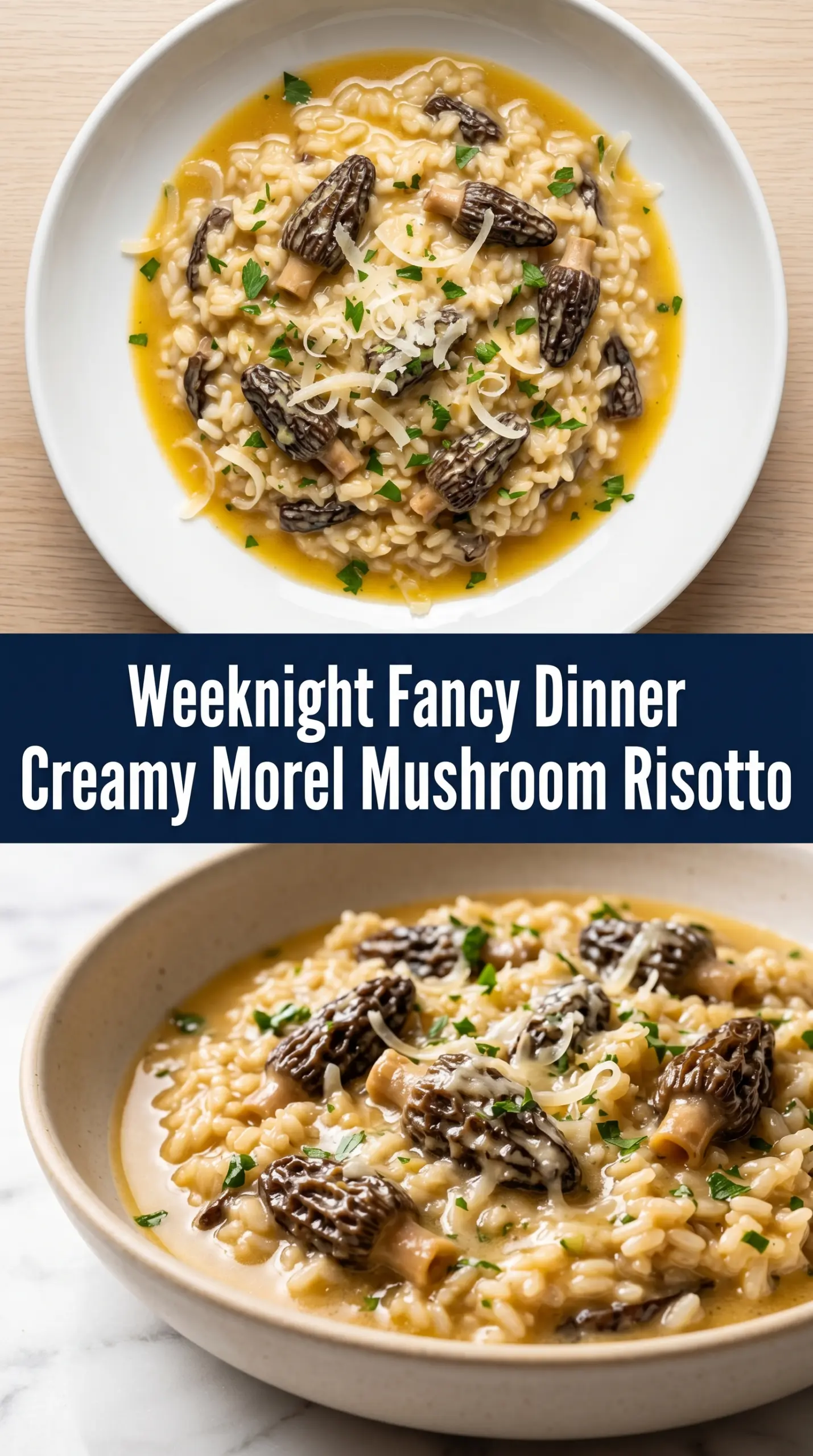
- Morel mushrooms — These are the point of the dish. Dried morels give the deepest flavor, and their soaking liquid adds a layer of mushroom intensity if you strain it well through a fine sieve. Fresh morels work too, but clean them carefully because grit can hide in the folds.
- Arborio rice — This is what gives risotto its signature texture. You need a short-grain rice with enough starch to turn the broth creamy while the center stays slightly firm. Long-grain rice won’t thicken the same way.
- Warm broth — Cold stock drags the temperature down every time you add it, which slows the cooking and can leave the rice uneven. Vegetable broth keeps the dish vegetarian; chicken broth adds a little more depth. Either way, keep it hot on the back burner.
- Dry white wine — The wine sharpens the richness and gives the risotto a cleaner finish. Choose one you’d actually drink. If you skip it, add a small splash of broth with a few drops of lemon juice at the same point to replace some of that brightness.
- Parmesan and butter — These finish the dish and turn the starch-coated rice into something silky. Use freshly grated Parmesan if you can, since pre-grated cheese can melt less smoothly. Stir them in off the heat so the texture stays glossy instead of grainy.
The 20 Minutes That Matter Most
Soaking and Straining the Morels
If you’re using dried morels, soak them in warm water until they soften and expand, then lift them out gently so the grit stays behind in the bowl. Strain the soaking liquid through a fine mesh sieve or a coffee filter if you have one, because a single grain of sand will ruin the whole pan. That liquid is worth saving — add it to the broth for a deeper mushroom taste.
Building the Base Without Browning the Rice
Cook the onion slowly until it turns soft and translucent, then add the garlic and thyme just long enough to smell fragrant. The morels go in next and should sizzle lightly as they lose moisture and pick up a little color. Stir in the rice for a couple of minutes so every grain gets coated in fat; that step helps the grains stay separate while the starch works in the pot.
Adding Broth the Way Risotto Needs It
Pour in the wine first and let it disappear before any broth goes in. Then add the warm broth in small ladlefuls, stirring often and waiting until the pan looks almost dry before adding more. If the rice is still hard in the center after 20 minutes, keep going — risotto should be creamy and loose, not soupy, and it should still have a little chew when you bite it.
Finishing Off Heat for a Silky Texture
Pull the pan from the burner before adding the remaining butter and Parmesan. The residual heat is enough to melt everything without tightening the cheese. If the risotto seems too thick, loosen it with a splash of hot broth and stir until it flows slowly off the spoon.
How to Adapt This for Different Tables and Different Pantries
Make It Vegetarian Without Losing Depth
Use good vegetable broth and keep the mushroom soaking liquid if you’re using dried morels. That combination replaces the savory backbone you’d normally get from chicken broth, and the risotto still tastes full and earthy instead of flat.
How to Make It Dairy-Free
Swap the butter for olive oil and finish with a spoonful of olive oil plus a sprinkle of nutritional yeast or a dairy-free Parmesan-style cheese. The risotto won’t have the same rich dairy finish, but it will still be creamy if you stir in enough starch from the rice and don’t rush the broth.
What to Use When You Only Have Fresh Mushrooms
If you can’t get morels, use cremini or a mix of cremini and shiitake for a deeper mushroom note. You’ll lose the nutty, almost wild edge that morels bring, so add a tiny splash more white wine and extra thyme to keep the flavor layered.
Storage and Reheating
- Refrigerator: Store leftovers in an airtight container for up to 3 days. The rice will firm up as it chills, which is normal.
- Freezer: Risotto doesn’t freeze well once it’s fully finished because the dairy and starch separate on thawing. If you need to plan ahead, freeze the cooked mushroom base separately and finish the rice fresh.
- Reheating: Warm it gently on the stove with a splash of broth or water over low heat, stirring until it loosens again. High heat is the fastest way to make it dry and tight, and adding liquid after it’s already scorching won’t bring back the creamy texture as well.
Questions I Get Asked About This Recipe
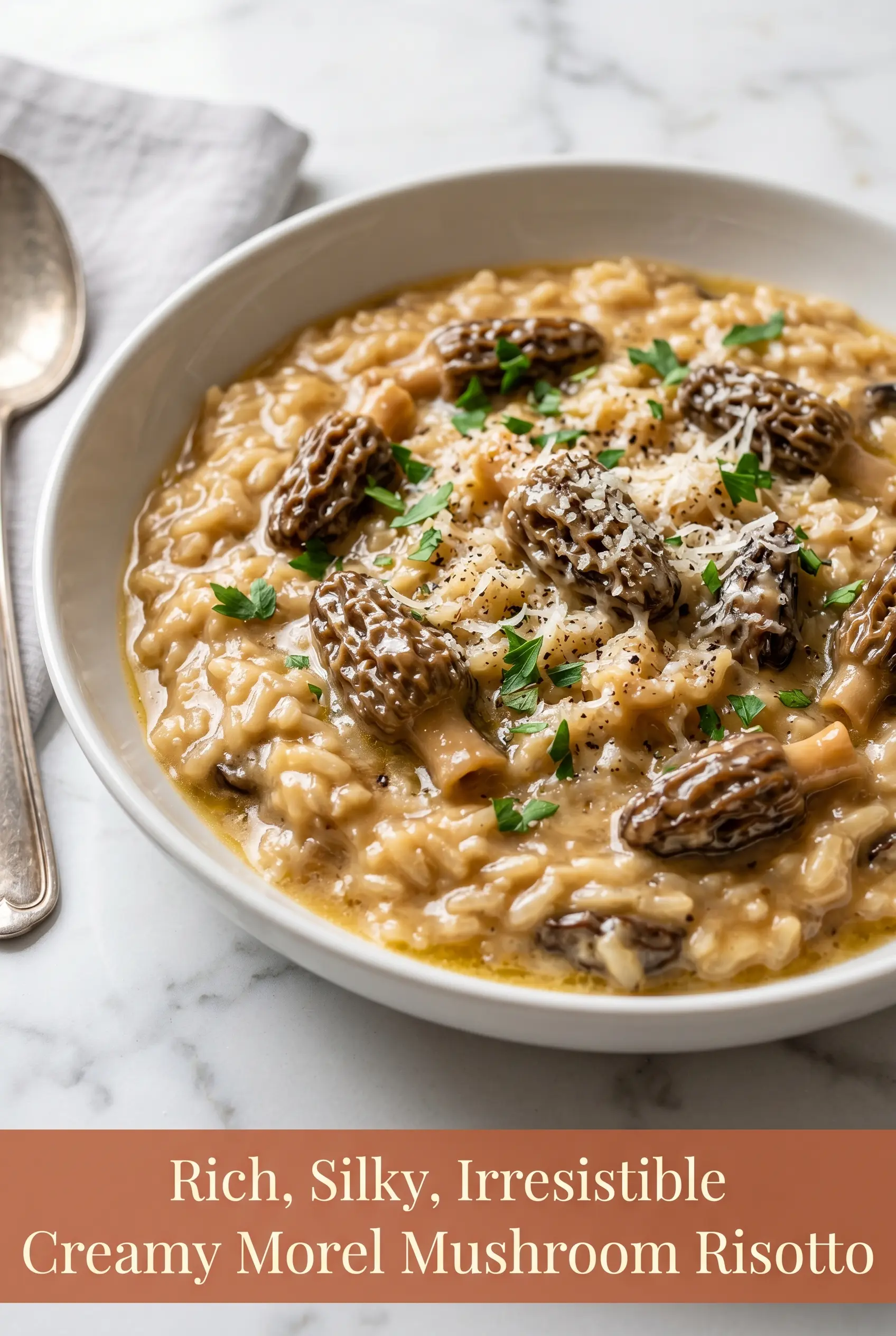
Creamy Morel Mushroom Risotto
Ingredients
Equipment
Method
- Soak dried morels in 1 cup warm water for 20 minutes, then drain and reserve the liquid, slicing the morels into halves.
- Strain the reserved soaking liquid through a fine mesh sieve, then add it to the warmed broth so every ladle carries morel flavor.
- In a large saucepan or Dutch oven, heat 1 tbsp butter and 2 tbsp olive oil over medium heat until shimmering.
- Add the diced onion and cook for 4–5 minutes, stirring frequently, until softened and translucent.
- Add the minced garlic and fresh thyme leaves; cook for 1 minute until fragrant.
- Add the morel mushrooms and sauté for 3–4 minutes until lightly golden and tender, then season with a pinch of salt.
- Add the Arborio rice and stir for 2 minutes until the edges are slightly translucent.
- Pour in the dry white wine and stir constantly until fully absorbed, about 2–3 minutes.
- Add warm broth one ladle at a time (about 1/2 cup), stirring constantly and waiting for each addition to absorb before adding the next, continuing for 20–22 minutes until rice is al dente and creamy.
- Remove from heat, then stir in the remaining 2 tbsp butter and the Parmesan cheese until fully melted and glossy.
- Taste and adjust with salt and black pepper, then serve immediately in warm bowls with chopped parsley and an extra grate of Parmesan.