Seared steak bites tucked into a silky garlic Parmesan sauce and twirled with sturdy pasta make this the kind of dinner that disappears fast. The steak stays tender, the sauce clings to every ridge of pasta, and the whole dish lands somewhere between comforting and a little bit special without asking much from you once the pan gets hot.
What makes this version work is the order. The steak gets browned first, then the same skillet builds the sauce, which means every bit of flavor left behind in the pan gets folded back into dinner. Freshly grated Parmesan matters here because pre-shredded cheese often melts grainy, and heavy cream gives the sauce enough body to coat the pasta without turning gluey. The reserved pasta water is there for a reason too — it loosens the sauce just enough to help it settle into the pasta instead of sitting on top of it.
Below you’ll find the little details that keep the steak from overcooking and the sauce from breaking. A few small moves make the difference between a decent pasta and one you’ll want to make again next week.
The steak stayed tender, and the Parmesan sauce turned out smooth instead of gritty. I added a splash of pasta water at the end and it coated the rigatoni perfectly.
Creamy Garlic Parmesan Steak Pasta is the kind of skillet dinner worth keeping close for nights when you want rich sauce, tender steak, and almost no leftovers.
The Secret to Keeping the Steak Tender While the Sauce Comes Together
Steak pasta falls apart when the meat cooks too long in the sauce or when it gets sliced too small before it ever hits the pan. Bite-sized pieces are the sweet spot here, but they still need a hard sear and a quick exit. The goal is browned edges and a warm center, not a gray cube that turns chewy after it goes back into the skillet.
The sauce also needs restraint. Garlic only needs about 30 seconds in butter before the cream goes in; any longer and it can turn sharp or bitter. Once the cream is simmering, the Parmesan goes in off a gentle heat so it melts into the liquid instead of clumping. If the sauce looks too tight, that reserved pasta water is the fix because the starch helps the sauce loosen without thinning the flavor.
What Each Ingredient Is Doing in This Dish
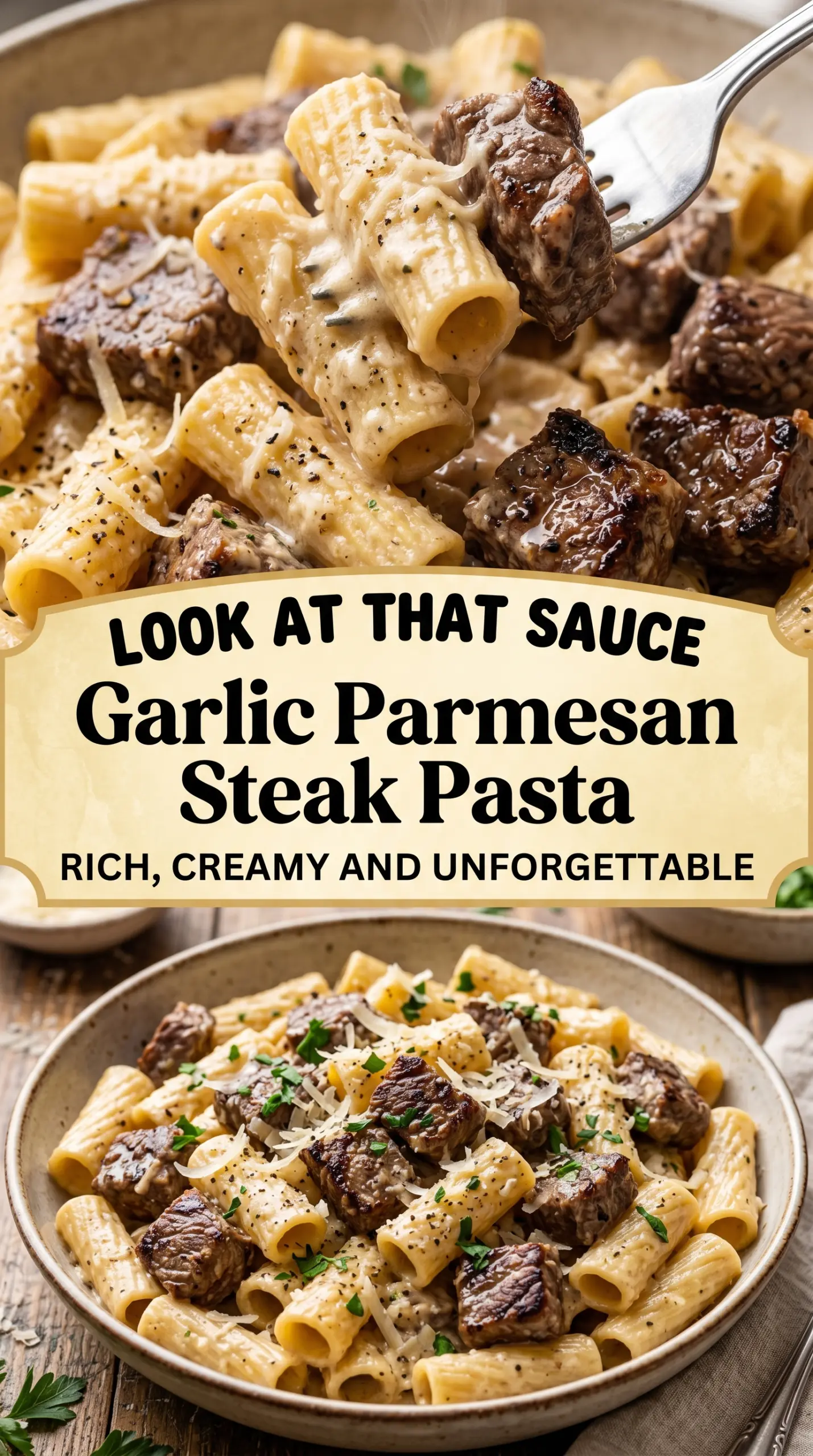
- Sirloin steak — Sirloin stays tender when it’s cut into small pieces and seared quickly. Ribeye works too if you want more richness, while flank steak can stand in if you slice it against the grain and keep the cook time short.
- Heavy cream — This gives the sauce body and keeps it from splitting when the cheese goes in. Half-and-half will work in a pinch, but the sauce will be thinner and need a little more pasta water management.
- Freshly grated Parmesan — This is the ingredient you don’t want to shortcut. Fresh Parmesan melts smoothly; the bagged kind often contains anti-caking agents that can leave the sauce grainy or stringy.
- Rigatoni or penne — You want a pasta with enough structure to hold onto the sauce and catch the steak bits. Long pasta works, but it won’t trap the sauce the same way.
- Reserved pasta water — This is not just a backup liquid. The starch helps the sauce cling and gives you control over the final texture right at the end.
Getting the Sear, Sauce, and Finish in the Right Order
Searing the Steak First
Heat the skillet until the oil looks thin and shimmery, then add the seasoned steak in a single layer. If the pan looks crowded, work in batches so the meat browns instead of steaming. Two to three minutes per side is enough for bite-sized pieces; pull them once the outside is deeply browned and the center is still just a little pink. Let them sit on a plate while you build the sauce.
Building the Garlic Parmesan Base
Drop the butter into the same pan and scrape up the browned bits with a wooden spoon. Those stuck-on pieces are carrying a lot of the steak flavor. Add the garlic and stir just until it smells fragrant, then pour in the cream and Italian seasoning. Keep the heat at a steady simmer, not a hard boil, or the cream can take on a greasy look.
Melting the Cheese Without Graininess
Take the pan down to low before adding the Parmesan. Stir it in gradually so it disappears into the cream instead of forming clumps. If the sauce tightens too fast, add a splash of pasta water and stir until it turns glossy again. This is the point where people usually rush, and rushing is how you end up with a sauce that feels heavy instead of silky.
Bringing Everything Together
Toss the drained pasta in the sauce first so every piece gets coated, then fold the steak back in at the end. That keeps the meat from overcooking while the pasta absorbs the sauce. Finish with parsley and another shower of Parmesan. If the sauce looks a little loose at first, it will tighten as it sits for a minute on the plate.
How to Adapt This for Different Diets and Different Fridges
Dairy-Free Version That Still Feels Rich
Use a full-fat unsweetened oat or cashew cream and swap in a dairy-free Parmesan-style cheese that melts well. The sauce will taste a little less sharp and a little more mellow, but the texture can still be creamy if you keep the heat low and add the cheese slowly.
Gluten-Free Pasta That Won’t Fall Apart
Choose a sturdy gluten-free rigatoni or penne and cook it just to al dente, because gluten-free pasta goes soft fast once it sits in hot sauce. Reserve the pasta water if your brand gives you a starchy pot, but if it doesn’t, a splash of plain hot water can still help loosen the sauce.
Make It Spicier Without Overpowering the Cream
Keep the red pepper flakes in the sauce, then finish with a pinch on top. That gives you warmth in the background instead of a blunt burn that covers up the garlic and Parmesan. If you want more heat, add a small spoonful of Calabrian chili paste with the garlic.
Storage and Reheating
- Refrigerator: Store leftovers in an airtight container for up to 3 days. The sauce will thicken as it chills.
- Freezer: Freezing isn’t ideal because cream sauces can separate after thawing, and the pasta softens. If you do freeze it, expect a looser texture and reheat gently.
- Reheating: Warm it over low heat on the stove with a splash of cream, milk, or water. High heat is the mistake here; it can break the sauce and turn the steak tough.
Answers to the Questions Worth Asking
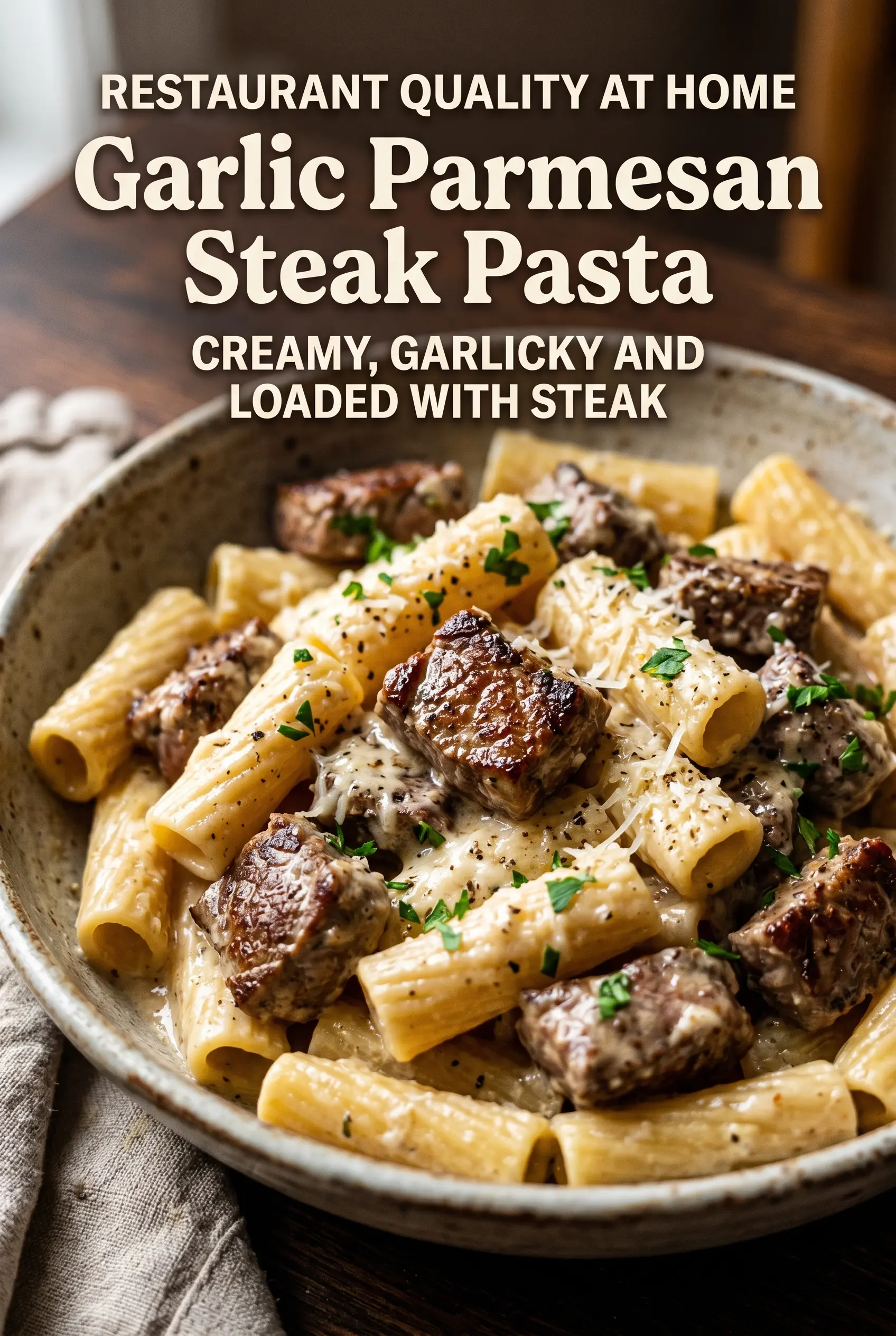
Creamy Garlic Parmesan Steak Pasta
Ingredients
Equipment
Method
- Cook the rigatoni or penne according to package directions until al dente, then reserve 1/2 cup pasta water.
- Set the pasta aside so it can be tossed quickly with the sauce.
- Season the sirloin steak pieces with salt, black pepper, and garlic powder.
- Heat olive oil in a large skillet over medium-high heat until shimmering.
- Sear the steak bites for 2–3 minutes per side until browned, then remove and set aside.
- In the same skillet, melt the butter over medium heat and sauté the minced garlic for 30 seconds until fragrant.
- Add the heavy cream and Italian seasoning, then simmer for 3–4 minutes to slightly thicken.
- Stir in the Parmesan cheese until smooth and creamy, then keep the heat gentle.
- Add the cooked pasta to the skillet and toss to coat thoroughly in the sauce.
- Return the steak bites to the skillet and toss again to warm through.
- Add reserved pasta water if needed to loosen the sauce to a glossy, clingy consistency.
- Garnish with fresh parsley and extra Parmesan cheese before serving.