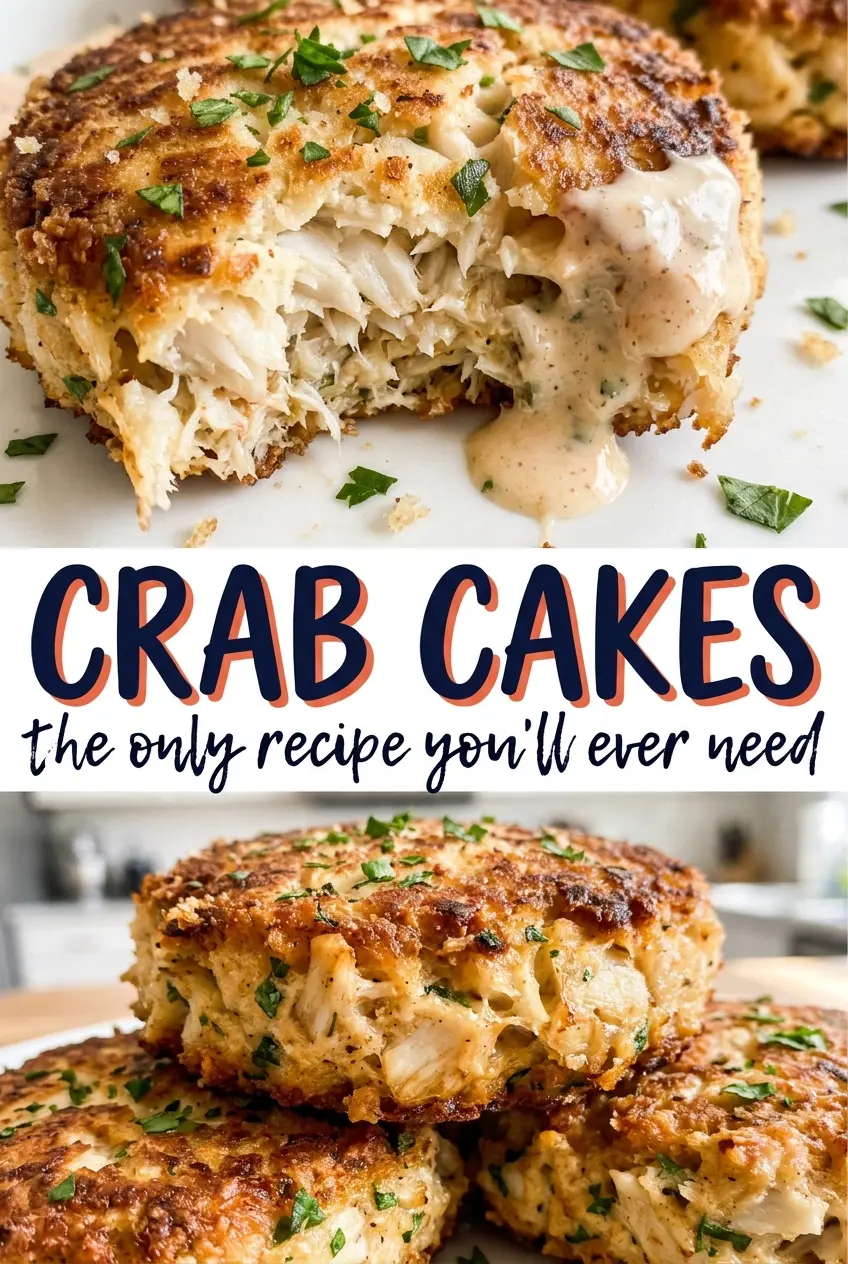
The first crab cake should give a quiet sizzle when it meets the skillet. A few minutes later, the underside turns deeply golden, but the cake is still delicate enough to break if you rush the flip. These crab cakes are built to stay tender and full of distinct crabmeat, with just enough panko to help the patties hold together.
I whisk the creamy, tangy binder first, then fold in the panko and crab gently. That order keeps the seasoning evenly distributed without crushing the lump meat into a paste. A short rest in the refrigerator firms the patties before they hit the hot butter and oil, so the outside can crisp while the centers stay moist. The finished cakes have a crisp shell and generous, sweet pieces of crab in every bite.
Kitchen Note
Give the shaped patties their full 30 minutes in the refrigerator. They feel firmer when you lift them, which makes turning them in the skillet less nerve-racking.
Save these golden crab cakes for a dinner when you want crisp edges and big, tender pieces of lump crab.
Why These Crab Cakes Need More Crab Than Breadcrumb
Crab cakes can turn bready when the crumbs become the main structure instead of a light binder. Here, the panko supports a full pound of lump crabmeat, but it doesn’t take over the bite. You should still see recognizable pieces of crab throughout the mixture, not a uniform paste.
The texture depends as much on how you combine everything as on the ingredient balance. Whisk the mayonnaise, egg, mustard, Worcestershire, Old Bay, lemon juice, and parsley until smooth before anything delicate goes into the bowl. Fold in the panko, then add the crab with a light hand. If you stir hard or keep working the mixture until every lump disappears, the cakes lose the generous, flaky texture that makes lump crab worth choosing. Leave some variation in the mixture; the patties don’t need to look perfectly smooth to cook evenly.
The Ingredients That Keep the Crab in the Lead
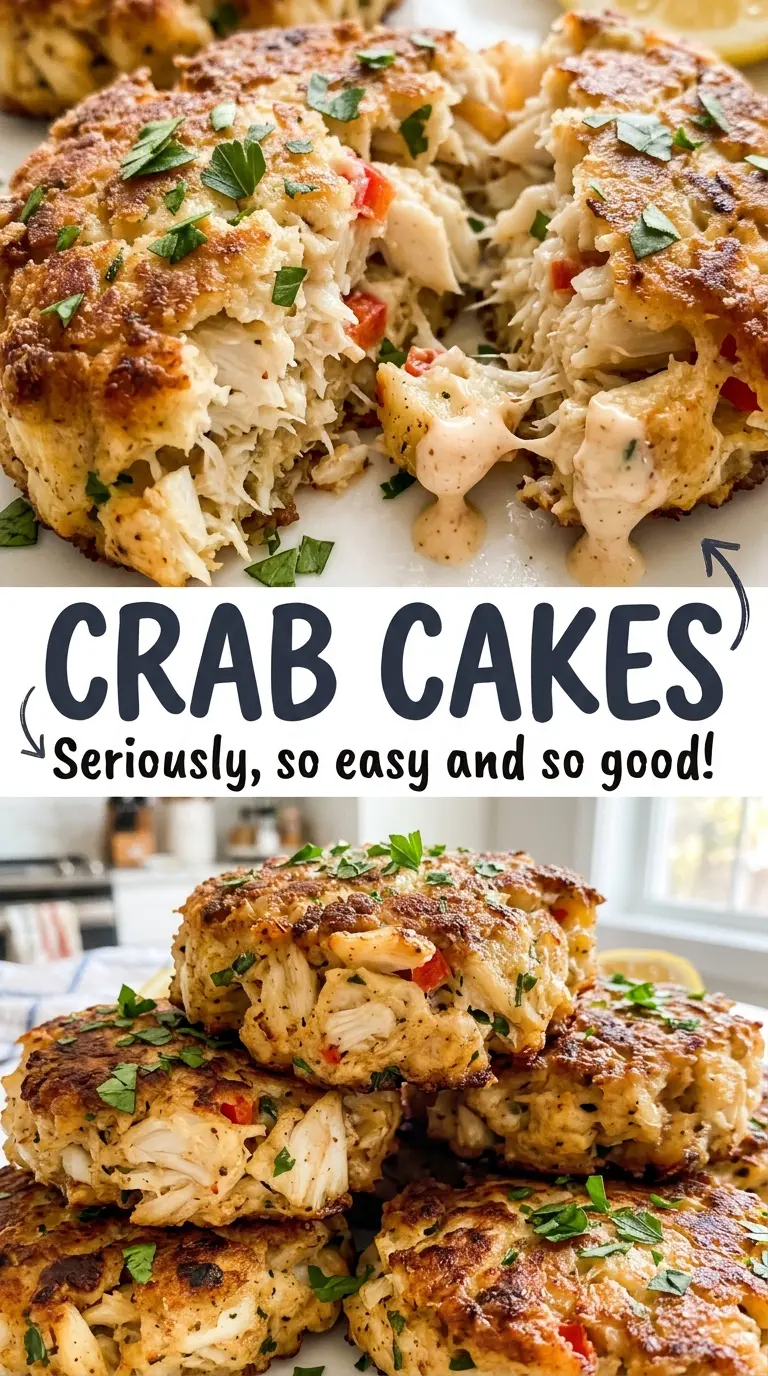
- Lump crabmeat — The large pieces give these cakes their signature flaky texture, so take a moment to pick through for shell fragments. Drain it if it’s carrying excess liquid; too much moisture makes a loose mixture harder to shape.
- Mayonnaise and egg — Together they give the crab and crumbs enough moisture and binding power to form patties without turning the mixture dry. Use fresh mayonnaise and a large egg, as called for, rather than reducing the binder.
- Panko breadcrumbs — Their light, airy flakes bind without making the cakes feel dense. A fine, heavy breadcrumb tends to make a tighter mixture, while panko keeps the texture more open.
- Old Bay, Dijon, Worcestershire, lemon, and parsley — Each adds a different layer: savory spice, sharpness, acidity, and a fresh herbal note. Fresh lemon juice and parsley bring a brighter taste, while the pantry seasonings are handy to keep on hand.
- Neutral oil and unsalted butter — The oil helps with skillet cooking, while butter adds a rounded, browned flavor to the crust. Keep the heat at medium so the butter can brown the cakes without scorching before the centers are hot.
From Loose Mixture to Deep-Golden Crab Cakes
Whisk the Seasoned Binder
In a medium bowl, whisk the mayonnaise, egg, Dijon mustard, Worcestershire sauce, Old Bay, lemon juice, and chopped parsley until the mixture looks smooth. Break up any streaks of egg so the seasoning is spread throughout the binder. This gives every patty a consistent flavor without needing to stir the crab mixture repeatedly later. Set the panko and crab nearby before you start folding.
Fold Without Crushing the Crab
Fold the panko into the binder first, then gently fold in the crabmeat. Use a broad spatula and turn the mixture over itself instead of beating it around the bowl. Stop once the crumbs and binder are distributed; a few uneven-looking spots are fine. If the crab is wet, drain it before folding so the mixture stays shapeable.
Shape Even Patties and Chill
Shape the mixture into eight patties, each about 3 inches wide and 3/4 inch thick, and arrange them on a plate. Keep the thickness consistent so the cakes brown at about the same pace. Refrigerate them for 30 minutes before cooking. If a patty cracks slightly as you shape it, press it back together gently rather than compacting the whole cake.
Sear in Two Batches
Heat 1 tablespoon of the oil and 1 tablespoon of the butter in a 12-inch skillet over medium heat. Cook four cakes for 3 to 4 minutes per side, until deeply golden and the centers reach 160°F, then transfer them to a plate. Add the remaining oil and butter and cook the other four the same way. Let all the cakes rest for 2 minutes before serving; if the butter starts smoking or the crust darkens too fast, lower the heat.
Smart Swaps for Different Crab Cakes
Gluten-Free Crab Cakes
Replace the panko with the same volume of gluten-free panko. It keeps the light, crisp crumb structure close to the original; choose a coarse style rather than a finely ground breadcrumb for a less compact cake.
Dairy-Free Skillet Cakes
Use neutral oil in place of the butter, keeping the same amount and dividing it between the two batches. The crust will still brown, though it won’t have the buttery flavor. Stay with medium heat and watch the cakes as they color.
A More Budget-Friendly Crab Cake
Use backfin crabmeat instead of lump, keeping the same amount and checking it for shells. The pieces will be smaller, so the cakes won’t have quite the same large, distinct flakes, but the seasoning and crisp skillet crust still work well.
Storage and Reheating
- Refrigerator: Refrigerate cooked cakes within 2 hours in an airtight container and use them within 3 to 4 days. The crust softens in storage.
- Freezer: Freeze fully cooled cakes in a single layer until firm, then wrap or pack them airtight with parchment between layers. For best quality, use within 2 to 3 months.
- Reheating: Thaw frozen cooked cakes in the refrigerator, then warm them on a baking sheet in a 350°F oven until the centers reach 165°F. Avoid microwaving if you want to keep the outside from turning soft.
Questions That Come Up Before the First Flip
Crab Cakes
Ingredients
Equipment
Method
- In a medium bowl, whisk together the mayonnaise, egg, Dijon mustard, Worcestershire sauce, Old Bay, lemon juice, and parsley.
- Fold in the panko, then gently fold in the crabmeat, taking care not to break up the lumps.
- Shape the mixture into 8 patties about 3 inches wide and 3/4 inch thick, and arrange them on a plate.
- Refrigerate the patties for 30 minutes.
- Heat 1 tablespoon oil and 1 tablespoon butter in a 12-inch skillet over medium heat.
- Cook 4 crab cakes for 3 to 4 minutes per side, until deeply golden and the centers reach 160°F; transfer to a plate.
- Add the remaining oil and butter to the skillet, then cook the remaining crab cakes for 3 to 4 minutes per side, until deeply golden and the centers reach 160°F.
- Let all the cakes rest for 2 minutes before serving.