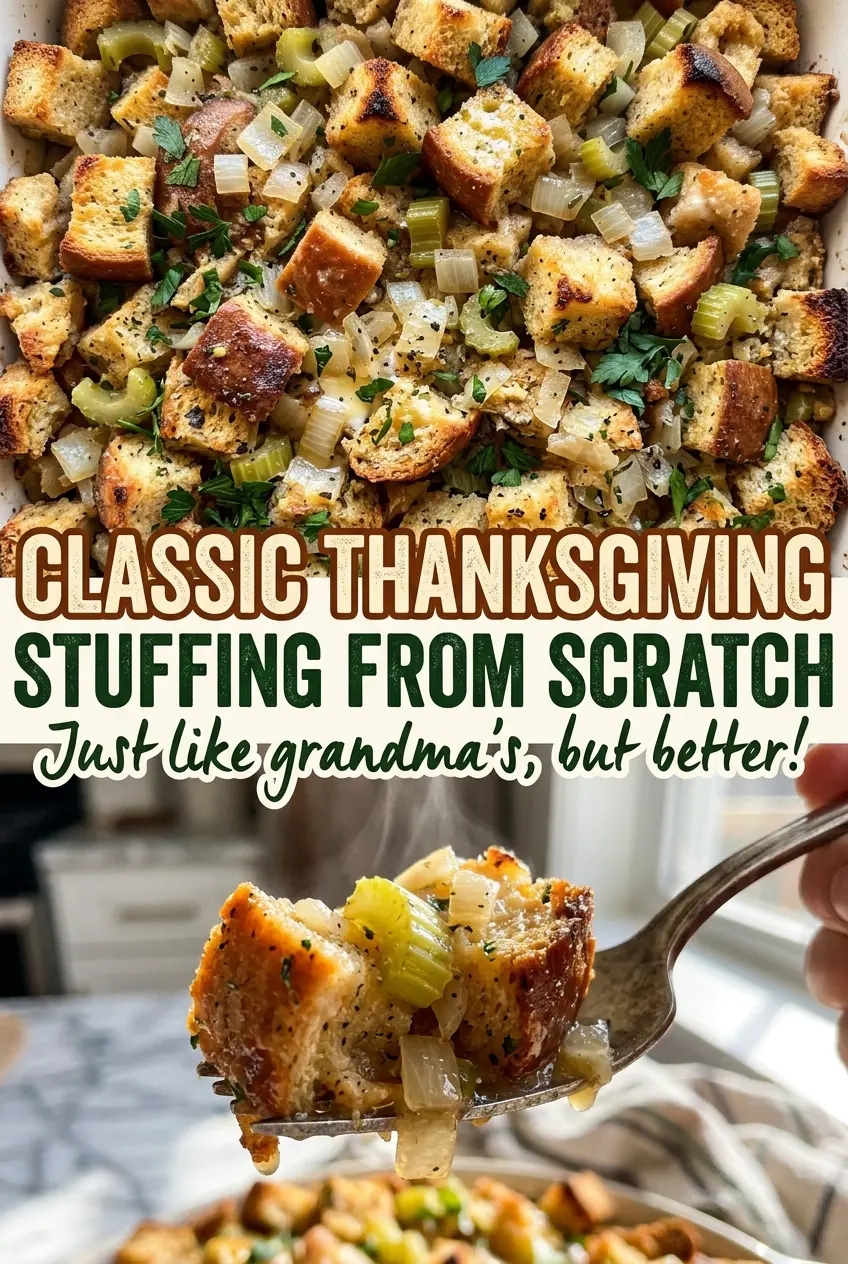
The bread cubes should feel dry and crisp before they meet the broth; if they still bend, the finished stuffing can turn heavy instead of holding its shape. I learned to give them the oven time they need rather than hoping the casserole will fix damp bread. That’s the small difference that makes this classic Thanksgiving stuffing from scratch tender in the middle, with a golden top and distinct pieces of bread.
The vegetables cook gently in butter until the onion and celery are tender, then the herbs go straight into the warm pan. I toss that mixture with the bread before adding the broth and eggs, so the savory vegetables are spread through the dish instead of sitting in one spot. The cubes should be evenly moistened, not swimming. After a covered bake and a short uncovered finish, the stuffing comes out fragrant, set, and ready for the table.
Kitchen Note
Give the casserole its full 10-minute rest before serving. The center settles as it rests, which makes it easier to scoop without the tender bread collapsing into a heap.
Save this classic Thanksgiving stuffing from scratch for its buttery herbs, tender center, and golden top.
Why Dry Bread Cubes Keep Stuffing From Turning Heavy
Stuffing has to absorb enough broth and egg to bind, but the bread still needs some structure left when it reaches the baking dish. Bread that is merely soft or a little stale hasn’t necessarily lost enough moisture. Drying the cubes until they’re crisp gives them room to take in the liquid without immediately turning to paste.
Size matters, too. Cutting the loaf into 3/4-inch cubes gives the broth a fairly even amount of bread to reach, so you’re less likely to find a few soggy clumps beside dry pieces. Keep the pieces close in size as you cut; a mix of tiny crumbs and oversized chunks won’t moisten evenly. The goal isn’t to make croutons that stay hard after baking. It’s to start with bread dry enough to absorb the savory mixture, then let the covered bake soften the center while the uncovered finish gives the top color.
That balance is why adding extra broth to fix a dry-looking bowl can backfire. The bread needs a moment to take up the liquid as you toss, and the mixture should look evenly damp rather than wet at the bottom.
What the Bread, Herbs, and Eggs Bring to This Stuffing
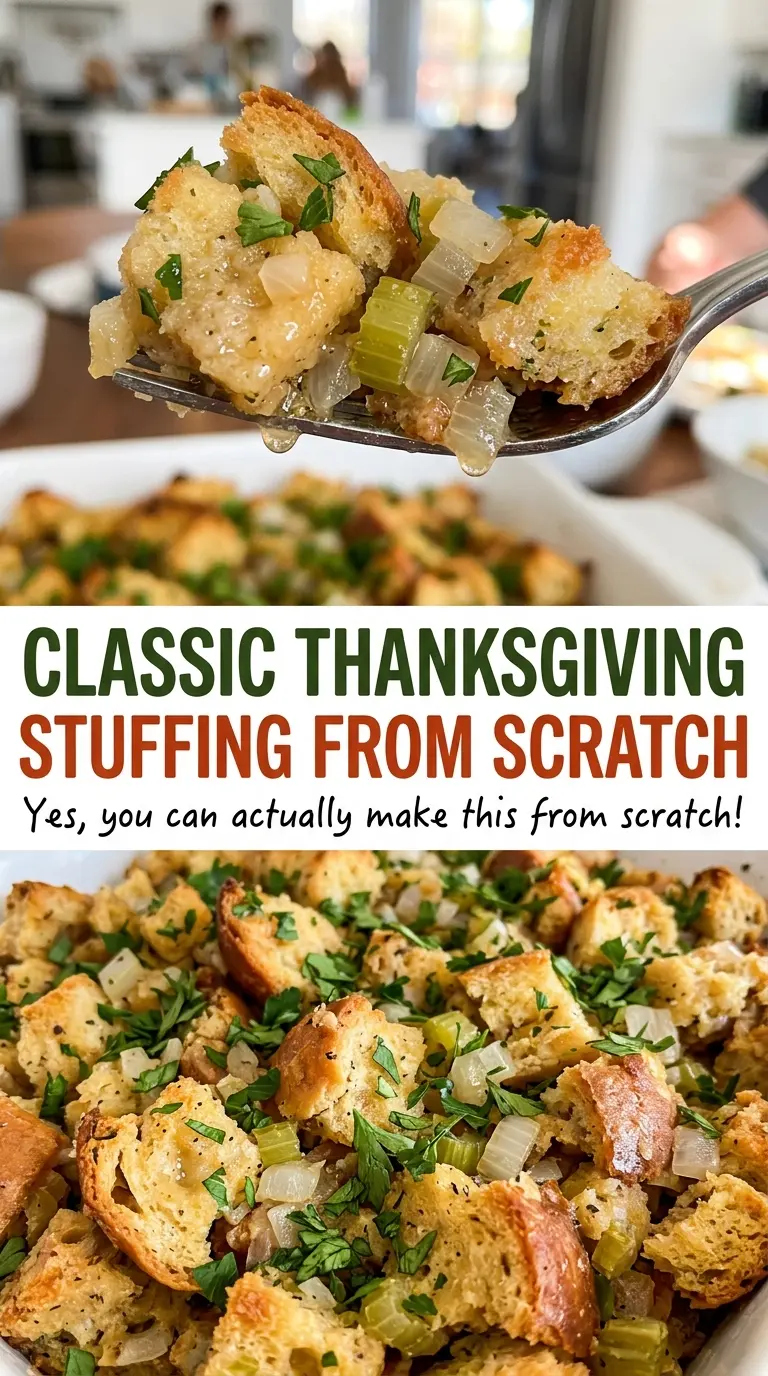
- Sturdy white bread — A loaf sturdy enough to hold clean cubes gives the stuffing a familiar, mild base that lets the herbs and vegetables stand out. A basic bakery or grocery-store loaf is fine; what matters most is cutting it evenly and drying it well.
- Unsalted butter — Butter carries the onion, celery, and herbs through the dish and gives the vegetables a gentle richness. Unsalted butter also leaves the seasoning easier to control alongside the low-sodium broth.
- Onion and celery — These finely chopped vegetables make the savory base, and cooking them until tender keeps their texture from feeling raw in the baked stuffing. Cut them small and close in size so they soften together.
- Parsley, sage, and thyme — Fresh parsley brings a green note, while dried sage and thyme give the stuffing its familiar, earthy Thanksgiving character. Keep the dried herbs in the amounts called for; too much sage can quickly dominate the mild bread.
- Low-sodium chicken broth and eggs — Broth moistens the bread, and the eggs help the mixture set as it bakes. Low-sodium broth lets the butter, herbs, and seasoning stay distinct instead of making the whole pan taste overly salty.
Dry, Moisten, Then Bake for a Crisp Top
Dry the cubes until they’re crisp
Heat the oven to 300°F and spread the bread cubes in a single layer across 2 rimmed baking sheets. Bake for 25–35 minutes, stirring the cubes and rotating the sheets halfway through. They should feel dry and crisp, not soft in the center; pieces that still bend need more time. Transfer them to a large bowl once they’re ready.
Soften the vegetables in butter
Grease a 9×13-inch baking dish with 1 tablespoon of butter. Melt the remaining 7 tablespoons in a 12-inch skillet over medium heat, then add the onion, celery, kosher salt, and black pepper. Cook for 8–10 minutes, stirring often, until the vegetables are tender; if they’re still firm, give them more time rather than turning the heat up and browning them. Stir in the parsley, sage, and thyme.
Whisk the binder and coat the bread
Whisk the chicken broth and eggs together in a medium bowl until combined. Add the cooked vegetables and broth mixture to the bread, then toss gently until the pieces are evenly moistened. Avoid crushing the cubes as you mix, because you want the bread to stay in pieces. Stop when the moisture is distributed and there’s no liquid pooling in the bowl.
Bake covered, then uncover for color
Heat the oven to 350°F and transfer the stuffing to the prepared baking dish. Cover it tightly with foil and bake for 30 minutes; the covered time gives the center a chance to cook through without drying the exposed surface. Uncover and bake for 20–25 minutes, until the top is golden and the center reaches 160°F. Let it rest for 10 minutes before serving.
Three Useful Swaps for Different Tables
Make it gluten-free with a sturdy GF loaf
Replace the white bread with a 1-pound loaf of sturdy gluten-free white bread and cut it into the same size cubes. Gluten-free bread can crumble more easily, so toss gently; the flavor stays familiar, though the finished texture may be a little less springy.
Use vegetable broth for a vegetarian pan
Swap the low-sodium chicken broth for the same amount of low-sodium vegetable broth. The stuffing keeps its savory, herby character, with a slightly different broth flavor; check that the broth is vegetarian if that matters for your table.
Use plant-based butter to avoid dairy
Replace the unsalted butter with an equal amount of unsalted stick-style plant-based butter. It works for sautéing the vegetables and greasing the dish, though the flavor may be less rich than with dairy butter. The eggs remain in the recipe, so this change makes it dairy-free, not vegan.
Storage and Reheating
- Refrigerator: Refrigerate leftovers in a covered container for 3–4 days. The bread softens as it sits, so the top won’t stay as crisp.
- Freezer: Freeze cooled portions in an airtight container for up to 1 month for the best texture. Thaw in the refrigerator before reheating.
- Reheating: Cover and reheat in a 350°F oven until the center reaches 165°F, or microwave individual portions until hot throughout. Don’t reheat uncovered for the whole time; the exposed bread can dry out before the middle is hot.
Questions That Come Up While Making Thanksgiving Stuffing
Classic Thanksgiving Stuffing from Scratch
Ingredients
Equipment
Method
- Heat the oven to 300°F.
- Spread the bread cubes in a single layer on 2 rimmed baking sheets.
- Bake for 25–35 minutes, stirring the cubes and rotating the sheets halfway through, until the bread is dry and crisp; transfer to a large bowl.
- Grease a 9x13-inch baking dish with 1 tablespoon of the butter.
- Melt the remaining 7 tablespoons butter in a 12-inch skillet over medium heat.
- Add the onion, celery, salt, and pepper and cook for 8–10 minutes, stirring often, until tender.
- Stir in the parsley, sage, and thyme.
- Whisk the chicken broth and eggs together in a medium bowl until combined.
- Add the vegetable mixture and broth mixture to the bread and toss gently until evenly moistened, with no liquid pooling.
- Heat the oven to 350°F.
- Transfer the stuffing to the prepared baking dish, cover tightly with foil, and bake for 30 minutes.
- Uncover and bake for 20–25 minutes, until the top is golden and the center reaches 160°F.
- Rest for 10 minutes before serving.