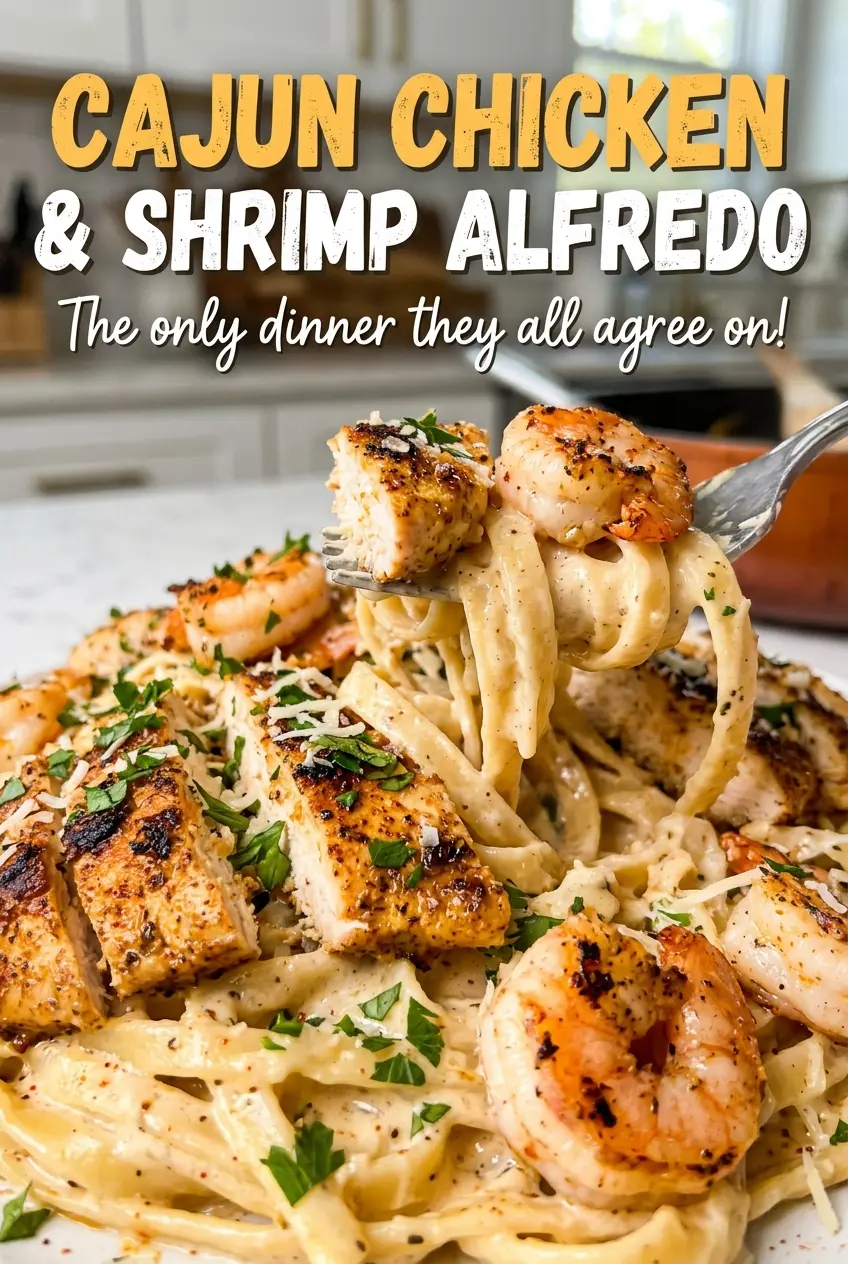
The chicken gets a golden edge in the skillet, and a minute later the shrimp cooks in the same pan while those browned bits are still there. That quick sequence is what makes Cajun Chicken and Shrimp Alfredo feel generous without turning the kitchen into a pile of dishes. The Cajun seasoning gives both proteins a warm, savory kick, while the fettuccine and cream bring everything back into balance.
I used to think the sauce needed to be thick in the pan before the pasta went in. It doesn’t. A gentle simmer gives the cream a little body, and finely grated Parmesan melts in off the heat. Then the pasta water helps the sauce cling instead of sitting in a heavy puddle at the bottom of the bowl. Every forkful comes up creamy, with chicken and shrimp tucked through the noodles.
Kitchen Note
Keep the skillet between the proteins and the sauce. Those browned bits from the chicken and shrimp are part of the base, and wiping the pan clean loses that savory depth.
Save this Cajun Chicken and Shrimp Alfredo for a creamy, Cajun-seasoned pasta night with two tender proteins in every serving.
Why the Cajun Seasoning Is Split Between the Chicken and Shrimp
Chicken and shrimp don’t cook at the same pace, and they don’t need the same time in the skillet. Seasoning each one separately lets the Cajun flavor land on both proteins instead of getting concentrated on whichever ingredient happens to be in the pan first. The chicken gets the larger share because it has more surface area and cooks longer; the shrimp gets its portion just before a fast sear.
That split also keeps the seasoning from disappearing into the cream. The finished Alfredo should taste creamy first, with a distinct Cajun warmth in the chicken and shrimp—not like a bowl of sauce that’s been overwhelmed with spice. Cajun blends differ in salt and heat, so the brand you use will shape the final balance. Keeping the seasoning in its measured portions gives you a reliable starting point without masking the Parmesan.
Both proteins finish in the sauce, but they don’t cook there. Taking them out while the cream simmers means the chicken stays juicy and the shrimp doesn’t spend extra minutes tightening up. The skillet gets to build the Alfredo without either one overcooking.
The Cream and Parmesan Are Doing Two Different Jobs
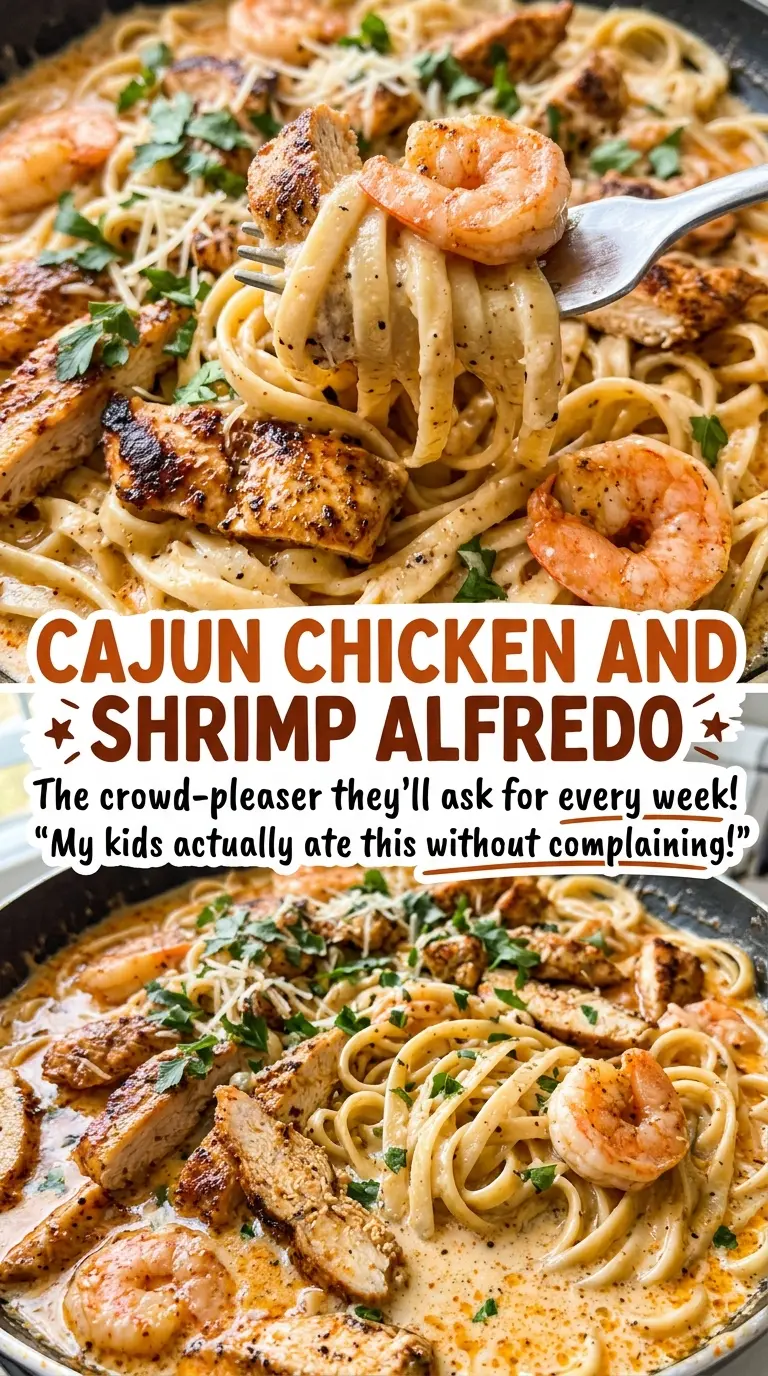
- Heavy cream — It gives the sauce its body and richness as it simmers. Milk is not a like-for-like replacement here; it makes a thinner sauce that won’t coat the fettuccine the same way.
- Finely grated Parmesan — The fine texture helps the cheese melt into the cream rather than leaving little clumps. A wedge grated just before cooking is a good choice, though a finely grated packaged Parmesan works when that’s what you have. Coarse shreds take longer to melt smoothly.
- Cajun seasoning — This is the source of the dish’s savory heat, so its salt level and spice blend matter. Use the seasoning you know you enjoy; there isn’t a useful one-ingredient substitute for a prepared Cajun blend in this ingredient list.
- Chicken breast — Cutting it into even strips gives the pieces a similar window to brown and cook through. Patting the surface dry before seasoning helps it brown instead of releasing moisture into the skillet.
- Large shrimp — Peeled and deveined shrimp keep the prep straightforward and cook quickly. If buying frozen shrimp, thaw them fully and pat them dry before seasoning so excess water doesn’t interfere with the sear.
- Fettuccine — Its broad ribbons give the cream sauce plenty of surface to cling to. Another pasta shape can work, but pick one with enough surface and ridges to hold the sauce rather than a delicate, very thin noodle.
- Garlic and unsalted butter — The butter carries the garlic into the sauce, while unsalted butter leaves the seasoning level easier to control. Freshly minced garlic gives the skillet a brighter aroma than jarred garlic.
Building the Alfredo Without Overcooking the Proteins
Get the Fettuccine to Al Dente
Bring the water to a boil, add the kosher salt, then cook the fettuccine according to the package directions until al dente. Bite a noodle near the end of its cooking time; it should be tender but still have a little firmness at the center. Before draining, reserve half a cup of pasta water. That starchy water is useful for adjusting the sauce later, so set it aside before the pot goes to the sink.
Brown the Chicken in One Layer
Pat the chicken dry and season it with two teaspoons of Cajun seasoning. Heat the olive oil in a 12-inch skillet over medium-high heat, then arrange the strips in a single layer so they brown rather than steam. Turn them occasionally as they cook for 5–7 minutes. Move the chicken to a plate once it’s browned and reaches 165°F.
Give the Shrimp a Short, Hot Cook
Season the shrimp with the remaining teaspoon of Cajun seasoning, then place them in the same skillet. Cook for 1–2 minutes per side, watching for the flesh to turn opaque and the centers to reach 145°F. Shrimp cook quickly, so don’t wait for them to curl into tight little rounds; that’s a sign they’ve stayed in the heat too long. Transfer them to the plate with the chicken.
Simmer the Cream, Then Finish Off the Heat
Reduce the skillet heat to medium and melt the butter. Stir in the minced garlic for 30 seconds, just until fragrant, then add the heavy cream and bring it to a gentle simmer. Cook for 3–4 minutes, stirring occasionally, until the cream looks slightly thickened; a hard boil can make the sauce reduce too quickly. Take the skillet off the heat before stirring in the Parmesan, then add the pasta, chicken, and shrimp and toss until coated. Add reserved pasta water a splash at a time until the sauce clings to the noodles.
Three Smart Ways to Adapt This Cajun Alfredo
Make It Gluten-Free
Use the same weight of gluten-free fettuccine in place of regular fettuccine and cook it according to its package directions. Save some of its cooking water before draining; gluten-free pasta can have a different texture, but the cream, Parmesan, chicken, and shrimp stay unchanged.
Make It Chicken-Forward
Leave out the shrimp when you want a chicken-only Alfredo. Season the chicken with the full tablespoon of Cajun seasoning and cook it as usual; the dish loses the shrimp’s quick, delicate bite but keeps the browned chicken and creamy sauce.
Let Shrimp Take the Lead
For a shrimp-only version, omit the chicken and season the shrimp with the full tablespoon of Cajun seasoning. Keep the quick cook and transfer the shrimp out of the skillet before making the sauce. You’ll get a lighter-feeling plate with the same creamy finish.
Storage and Reheating
- Refrigerator: Refrigerate leftovers within 2 hours and use them within 3–4 days. The fettuccine will absorb some sauce as it sits.
- Freezer: Freeze airtight portions for up to 2 months. The cream sauce may separate and the pasta will soften after thawing, so the texture won’t be as smooth as freshly made.
- Reheating: Warm gently in a skillet over low heat, stirring often and adding a small splash of water if the sauce has tightened. Avoid a hard boil; high heat can make the cream sauce separate.
Questions That Come Up While Making Cajun Chicken and Shrimp Alfredo
Cajun Chicken and Shrimp Alfredo
Ingredients
Equipment
Method
- Bring 4 quarts water to a boil in a large pot.
- Add 1 tablespoon kosher salt to the boiling water.
- Add 12 ounces fettuccine and cook according to the package directions until al dente.
- Reserve 1/2 cup pasta water.
- Drain the pasta.
- Pat the chicken dry.
- Season the chicken with 2 teaspoons Cajun seasoning.
- Heat the olive oil in a 12-inch skillet over medium-high heat.
- Cook the chicken in a single layer, turning occasionally, for 5–7 minutes, until browned and it reaches 165°F.
- Transfer the chicken to a plate.
- Season the shrimp with the remaining 1 teaspoon Cajun seasoning.
- Cook the shrimp in the same skillet for 1–2 minutes per side, until opaque and 145°F.
- Transfer the shrimp to the plate with the chicken.
- Reduce the heat to medium and melt the butter in the skillet.
- Add the garlic and cook for 30 seconds, stirring, until fragrant.
- Stir in the heavy cream and bring to a gentle simmer.
- Cook for 3–4 minutes, stirring occasionally, until slightly thickened.
- Remove the skillet from the heat and stir in the Parmesan until melted.
- Add the pasta, chicken, and shrimp and toss to coat.
- Add reserved pasta water a splash at a time until the sauce coats the pasta.