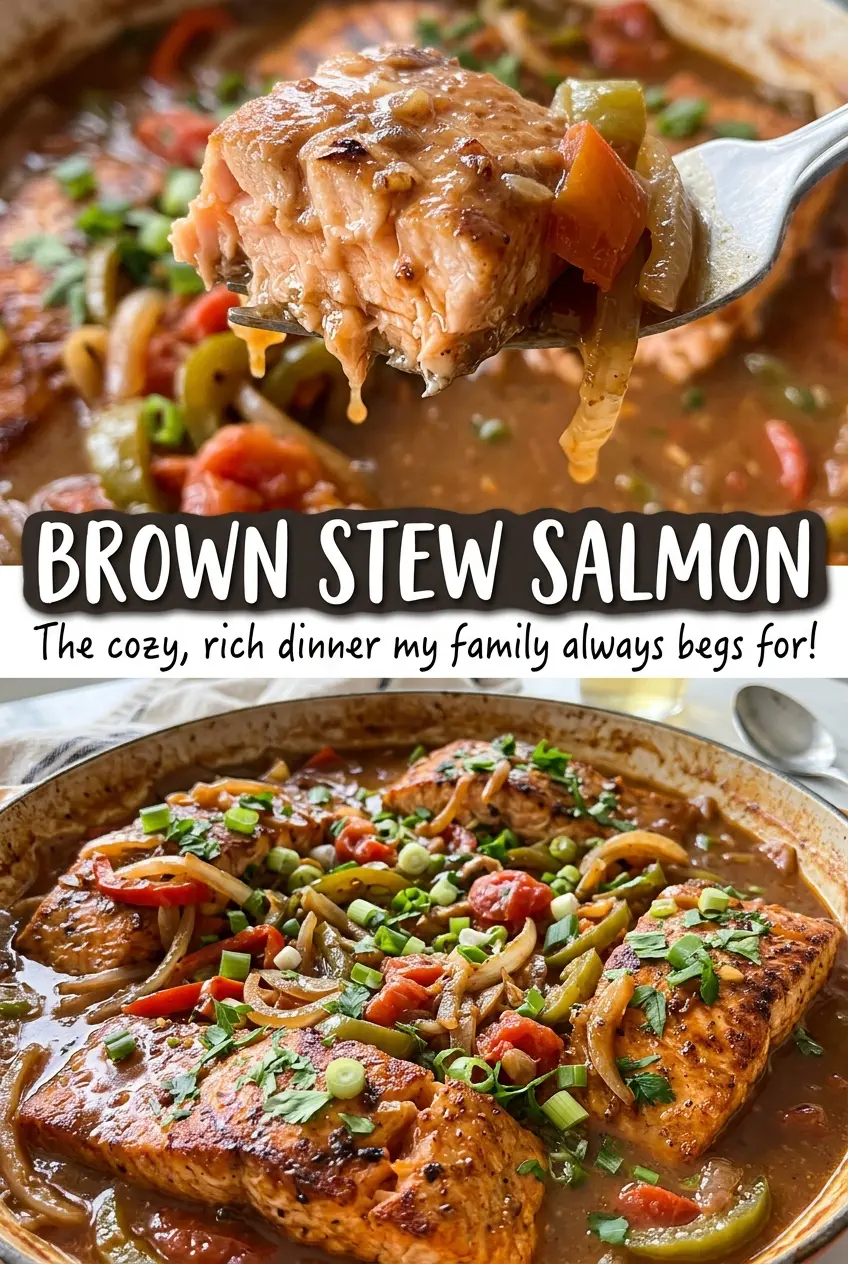
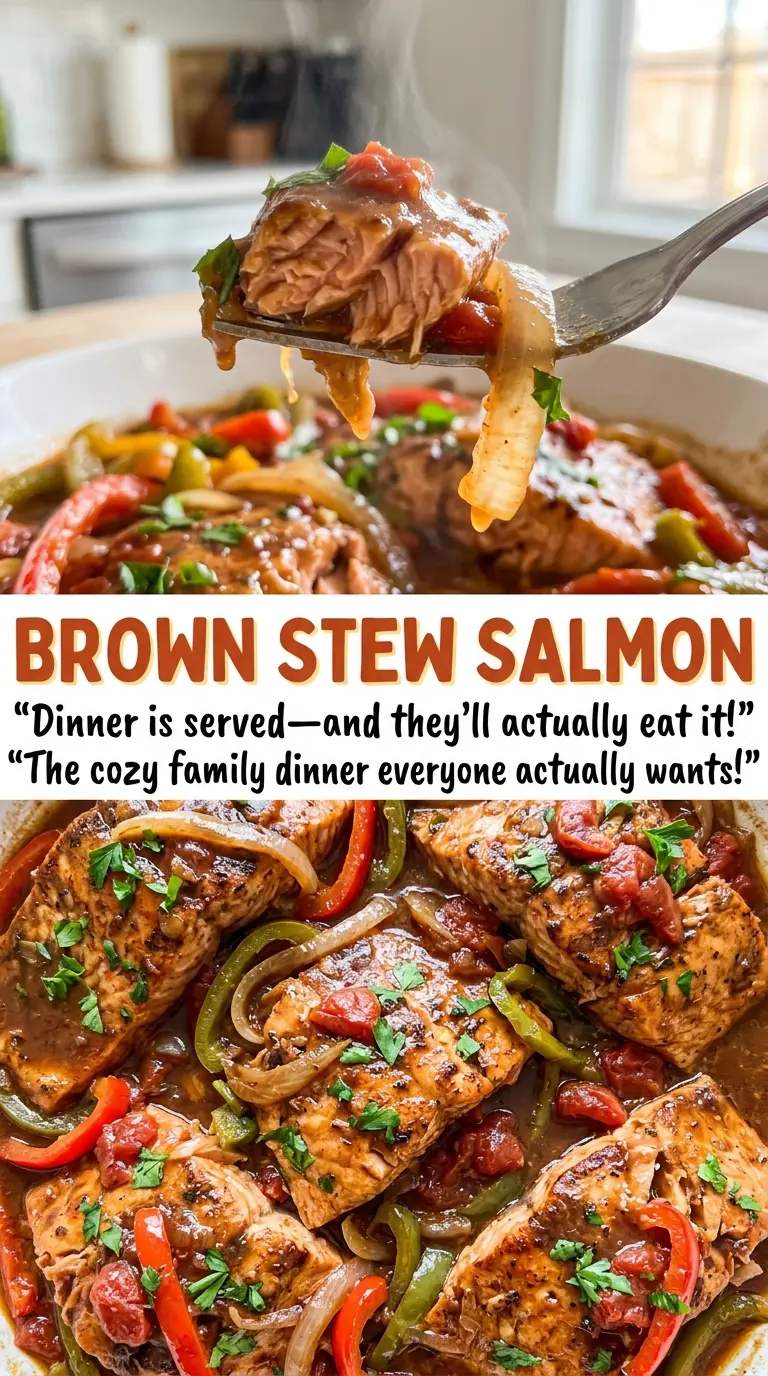
The oil gives a quick hiss when the salmon hits the skillet, and the edges start to turn opaque before the centers are cooked through. That’s exactly where I want them: browned on the outside, then finished gently in the sauce. Brown Stew Salmon brings together tender fish, tomato, thyme, and a savory broth-based gravy, with a Scotch bonnet adding its unmistakable warmth.
I cook the salmon first, then use the same skillet for the vegetables and sauce. That order keeps the fish from overcooking while the onion, bell pepper, scallions, and garlic have time to soften. A little ketchup rounds out the tomato, and browning sauce gives the liquid its deeper color. The finished sauce should taste savory with a gentle sweet-tart edge, ready to spoon over the salmon.
The Scotch bonnet seasons the sauce while it simmers, but you don’t have to bite into a piece of pepper to get its heat. Keep the pepper whole and remove it before serving. Each piece of salmon comes to the table coated in warm, fragrant sauce, with softened vegetables tucked around it.
Kitchen Note
Keep the Scotch bonnet whole rather than chopping it into the sauce. Slitting it once lets its heat infuse the broth, and lifting it out before serving keeps the pepper itself off the plate.
Save Brown Stew Salmon for a cozy dinner with tender fish, thyme, and a rich pepper-flecked sauce.
Why the Salmon Needs a Sear Before It Simmer
It can seem easier to cook the fish right in the sauce from the start, but that gives you less control over both the salmon and the vegetables. Salmon needs only a short sear to pick up color; it doesn’t need to cook through in that first pass. Moving it to a plate makes room for the aromatics to soften in the same skillet, where they can pick up the flavor left behind by the fish.
That pause also matters because the salmon finishes covered over medium-low heat, surrounded by simmering sauce. The vegetables get their own time in the pan before the fish goes back in, so they aren’t left crunchy while you wait for the center of the salmon to cook. The sequence gives you a sauce with softened vegetables and fish that stays in distinct, tender pieces instead of breaking apart as it cooks.
Keep the stages separate: sear, build the sauce, then return the salmon for its final cook. If you skip the plate and leave the fish in the skillet while the onion and pepper cook, it will spend too long over the heat. The short first sear is there to start the surface, not finish the fish.
What Builds the Savory, Deep-Colored Stew Sauce
- Salmon — Evenly sized pieces cook at a similar pace, so cut the fillets into four portions of roughly the same thickness. Fresh or properly thawed salmon both work; patting the surface dry helps it sear rather than steam. I wouldn’t swap in a different fish without adjusting the cook time, since thinner fillets can finish much sooner.
- Lime and black pepper — Lime brightens the rich fish, while pepper adds a mild savory bite. Freshly squeezed lime has a cleaner aroma, but bottled juice works if that’s what you have. Lemon juice is the closest simple swap; use the same amount and expect a slightly different citrus note.
- Onion, green bell pepper, scallions, and garlic — These aromatics make the sauce taste rounded rather than like broth with tomato stirred in. Slice the onion and pepper thinly so they soften in the brief cooking time; mince the garlic so it disperses instead of leaving large raw-tasting pieces. Red bell pepper can replace green in the same quantity, though it makes the sauce sweeter.
- Fresh thyme and tomato — Thyme brings an earthy, herbal note that holds up beside the salmon and pepper. Use fresh sprigs when possible; dried thyme is more concentrated and can make the sauce taste dusty if you use it freely. A ripe tomato gives the sauce fresh acidity, while a firm one is easier to chop neatly.
- Scotch bonnet — This pepper contributes more than heat; it has a fruity aroma that gives brown stew its distinctive edge. Choose a firm pepper with unbroken skin. A milder pepper will bring less heat and a different fragrance, so it won’t taste quite the same.
- Chicken broth, ketchup, and browning sauce — Broth carries the softened aromatics into a spoonable sauce. Ketchup supplies sweetness and tang, while browning sauce deepens the color and savory character; neither one replaces the other. Browning sauce is worth seeking out for this dish, since ketchup alone won’t create the same dark finish.
How to Sear the Fish, Build the Sauce, and Finish Gently
Season the salmon and give it a short sear
Pat the salmon dry, then coat it with lime juice, kosher salt, and black pepper. Let it stand for 10 minutes while you get the skillet ready. Heat 2 tablespoons of vegetable oil in a 12-inch skillet over medium-high heat, then sear the fish for 3 minutes on the first side and 1 minute on the second. Transfer it to a plate while the center is still undercooked; the covered simmer finishes it later.
Soften the aromatics before adding the tomato
Add the remaining tablespoon of oil to the skillet and lower the heat to medium. Cook the onion, bell pepper, scallions, garlic, and thyme for 4 minutes, stirring often, until the vegetables begin to soften and the garlic smells fragrant. Stir in the chopped tomato and whole Scotch bonnet, then cook for 2 minutes. If the garlic starts to darken before the vegetables soften, keep stirring and lower the heat slightly.
Simmer the sauce around the salmon
Stir in the chicken broth, ketchup, and browning sauce, then bring the mixture to a simmer. Return the salmon to the skillet, cover, and simmer over medium-low heat for 4 to 6 minutes. Check the thickest part of each piece with an instant-read thermometer; it should reach 145°F. Remove the Scotch bonnet before serving, then spoon the sauce and softened vegetables over the fish.
Easy Ways to Adjust the Pepper, Vegetables, or Broth
A gentler pepper kick
For less heat, leave the Scotch bonnet out altogether. You’ll still have the tomato, thyme, and softened aromatics, but the sauce will lose the pepper’s fruity warmth. This is a better choice for heat-sensitive diners than chopping the pepper, which spreads its heat through the sauce.
Use red bell pepper for a sweeter sauce
Replace the green bell pepper with the same amount of thinly sliced red bell pepper. It softens in the same skillet and gives the sauce a sweeter, less grassy note. The stew will still have its savory base, but the pepper flavor will be rounder.
Make it pescatarian with vegetable broth
Use 1 cup of vegetable broth in place of the chicken broth. It keeps the sauce moist and spoonable while making the dish pescatarian; the result is a little lighter in savory depth, so keep the thyme and browned salmon in the pan to carry the flavor.
Storage and Reheating
- Refrigerator: Store the salmon and sauce in an airtight container for 3 to 4 days. The fish will be less delicate after chilling, and the vegetables will soften further.
- Freezer: It freezes, though the salmon may turn drier and flakier and the vegetables softer after thawing. Freeze the fish with plenty of sauce in a sealed freezer-safe container for up to 2 to 3 months.
- Reheating: Warm it covered in a skillet over low heat with a small splash of broth, just until hot; reheat leftovers to 165°F. Avoid a hard boil or high heat, which can dry out the salmon and break it into flakes.
Questions That Come Up When Cooking Brown Stew Salmon
Brown Stew Salmon
Ingredients
Equipment
Method
- Pat the salmon dry and coat it with the lime juice, salt, and black pepper.
- Let the salmon stand for 10 minutes.
- Heat 2 tablespoons of the oil in a 12-inch skillet over medium-high heat.
- Sear the salmon for 3 minutes on the first side and 1 minute on the second side, then transfer it to a plate.
- Add the remaining 1 tablespoon oil to the skillet and cook the onion, bell pepper, scallions, garlic, and thyme over medium heat for 4 minutes, stirring often.
- Stir in the tomato and Scotch bonnet and cook for 2 minutes.
- Add the chicken broth, ketchup, and browning sauce, then bring the sauce to a simmer.
- Return the salmon to the skillet, cover, and simmer over medium-low heat for 4 to 6 minutes, until the thickest part of each piece reaches 145°F.
- Remove the Scotch bonnet before serving.