When the drained potatoes go back into the pot, a steady ribbon of steam rises from them. That’s the moment that decides whether mashed potatoes turn out creamy or waterlogged. I learned not to rush past it when making these brown butter mashed potatoes: a minute or two over low heat dries the surface before the butter and milk go in.
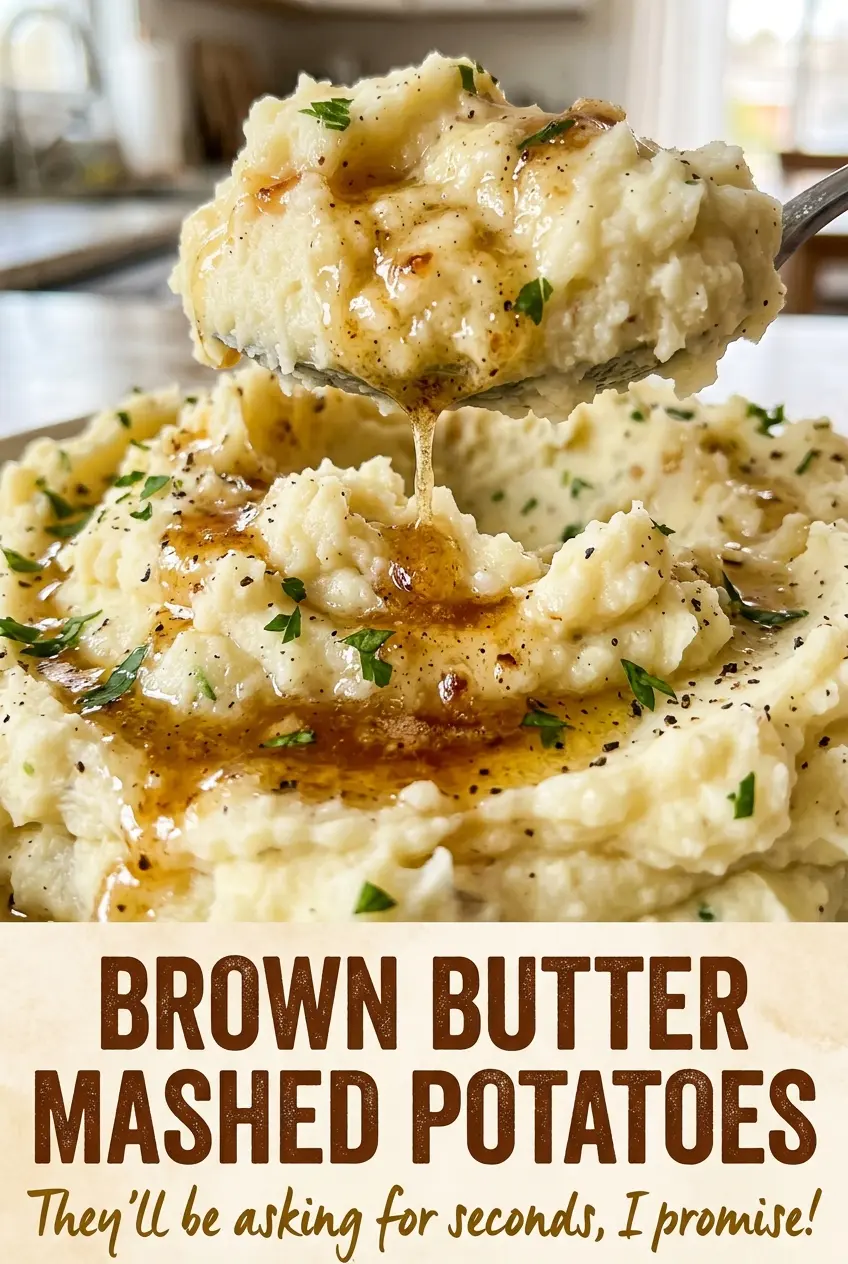
Yukon golds give the mash a naturally creamy texture, and browning the butter brings a warm, nutty note without adding another ingredient. The milk gets warmed separately, too, so it blends in smoothly instead of cooling the potatoes. The finished bowl is soft and creamy, with little browned flecks of butter tucked through every scoop.
Kitchen Note
I keep the butter moving by swirling the saucepan often, especially as it starts to change color. Once it smells nutty, take it off the heat; the hot pan will keep cooking it for a little while.
Save these brown butter mashed potatoes for a cozy dinner table: creamy Yukon golds with the nutty flavor of browned butter.
Why Wet Potatoes Make This Mash Heavy Before Butter Ever Goes In
Potatoes hold onto water after boiling, and that extra moisture doesn’t disappear when you mash them. It dilutes the butter and milk, leaving the finished potatoes loose instead of rich. Putting the drained potatoes back in the warm pot over low heat gives surface moisture a chance to evaporate before you add anything creamy.
Watch for steam rising and potatoes that look dry rather than glossy with water. Keep the heat low and shake the pot gently; you’re drying the potatoes, not trying to brown them. That small pause also gives you a more predictable texture when you start mashing. If you skip it, adding less milk might make the mixture thicker, but it won’t undo the water already clinging to the potatoes.
It’s worth paying attention to this even with Yukon golds, which mash up creamy without much effort. A good mash should feel soft and cohesive, not slick or watery. Drying the potatoes first gives the butter and warm milk room to coat them instead of competing with leftover cooking water.
What Yukon Golds, Brown Butter, and Warm Milk Each Bring

- Yukon gold potatoes — Their texture lands between waxy and starchy, which makes them creamy without turning as fluffy or dry as a higher-starch potato. Choose firm potatoes without soft spots. Russets can work in a pinch, but the mash will be lighter and less naturally creamy.
- Unsalted butter — Browning gives the butter its toasted, nutty character, while starting with unsalted butter lets the divided kosher salt season the potatoes without guessing how salty the butter is. Fresh butter is useful here because its aroma comes through clearly, but there’s no need to buy a specialty brand.
- Whole milk — It loosens the mash while keeping it creamy. Warming it before it goes in helps it blend into the hot potatoes; cold milk can cool the mash and make the mixing feel less even. Half-and-half makes a richer result, though the potatoes will feel heavier.
- Kosher salt and black pepper — Salting the cooking water seasons the potatoes from the start, while the remaining salt goes in with the dairy so you can taste the finished mash as it comes together. Freshly ground black pepper gives a more pronounced aroma, but ordinary ground pepper works well.
How to Cook Off Moisture and Keep the Butter Nutty
Simmer the Potatoes Until a Fork Slips In
Put the peeled, cut Yukon gold potatoes in a 5-quart pot, cover them with cold water by 1 inch, and add 2 teaspoons of kosher salt. Bring the water to a boil over high heat, then lower the heat to a simmer. Cook for 15–20 minutes, until a fork pierces the potatoes easily. If the center still feels firm, give them a little more time rather than trying to mash them undercooked.
Brown the Butter While the Potatoes Cook
Melt the unsalted butter in a small saucepan over medium heat, swirling often as it cooks for 4–6 minutes. Look for golden-brown color and brown flecks, and trust the nutty aroma as your cue that it’s ready. If the butter smells sharp or acrid, it has gone too far; take it off the heat as soon as it reaches that toasted stage. Remove the saucepan from the heat while you finish the potatoes.
Warm the Milk, Then Dry the Drained Potatoes
Warm the whole milk in a microwave-safe measuring cup for 30–45 seconds, stopping when it’s warm but not boiling. Drain the potatoes, return them to the pot over low heat, and shake the pot gently for 1–2 minutes. Rising steam and a dry look on the potato surfaces tell you the leftover water is evaporating. Don’t leave the pot unattended long enough for the potatoes to catch on the bottom.
Mash and Add the Liquids Gradually
Mash the potatoes first, then gradually mix in the brown butter, warm milk, remaining 1 teaspoon of kosher salt, and black pepper. Add the liquid in stages so you can see the texture change and stop once the potatoes are smooth and creamy. If you pour everything in at once, it’s harder to judge how evenly the mash is coming together. Taste before serving and adjust only if needed.
Three Ways to Change the Texture or Make These Potatoes Dairy-Free
A fluffier mash with russet potatoes
Replace the Yukon golds with russet potatoes and prepare them the same way. The result will be lighter and more absorbent, with less of the naturally buttery texture Yukon golds bring. Mash gently and add the warm milk gradually so the potatoes don’t become gluey.
A dairy-free version with plant-based butter
Use plant-based butter made for cooking and unsweetened oat milk in place of the dairy butter and whole milk. Choose an unflavored milk so the potatoes stay savory. Plant-based butter may not develop the same browned milk solids or deep nutty taste, so expect a milder finish.
A slightly more rustic texture
Mash the cooked potatoes just until most of the large pieces are gone, then mix in the brown butter, warm milk, salt, and pepper. The result won’t be as smooth, but it keeps a little more potato texture in each bite. This works best when the pieces are cut evenly so they cook at about the same pace.
Storage and Reheating
- Refrigerator: Store in a covered container for 3–4 days. The mash will firm up as it chills.
- Freezer: Freeze in an airtight container for up to 1 month for the best texture. Thaw overnight in the refrigerator; the potatoes may look a little separated after thawing, but stirring as they warm helps bring them back together.
- Reheating: Warm gently in a saucepan over low heat, stirring often, and add a splash of milk if the potatoes seem dry. Heat leftovers to 165°F. High heat can scorch the bottom before the center is hot.
Questions That Come Up When Making Brown Butter Mashed Potatoes
Brown Butter Mashed Potatoes
Ingredients
Method
- Put the potatoes in a 5-quart pot and cover with cold water by 1 inch; add 2 teaspoons of the salt.
- Bring to a boil over high heat, then reduce the heat and simmer for 15–20 minutes, until the potatoes are easily pierced with a fork.
- While the potatoes cook, melt the butter in a small saucepan over medium heat, swirling the pan often, for 4–6 minutes, until golden brown with brown flecks and a nutty aroma; remove from the heat.
- Warm the milk in a microwave-safe measuring cup for 30–45 seconds, until warm but not boiling.
- Drain the potatoes and return them to the pot over low heat for 1–2 minutes, shaking the pot gently, until the potatoes look dry and steam rises.
- Mash the potatoes.
- Gradually mix in the brown butter, warm milk, remaining 1 teaspoon salt, and black pepper until smooth and creamy.