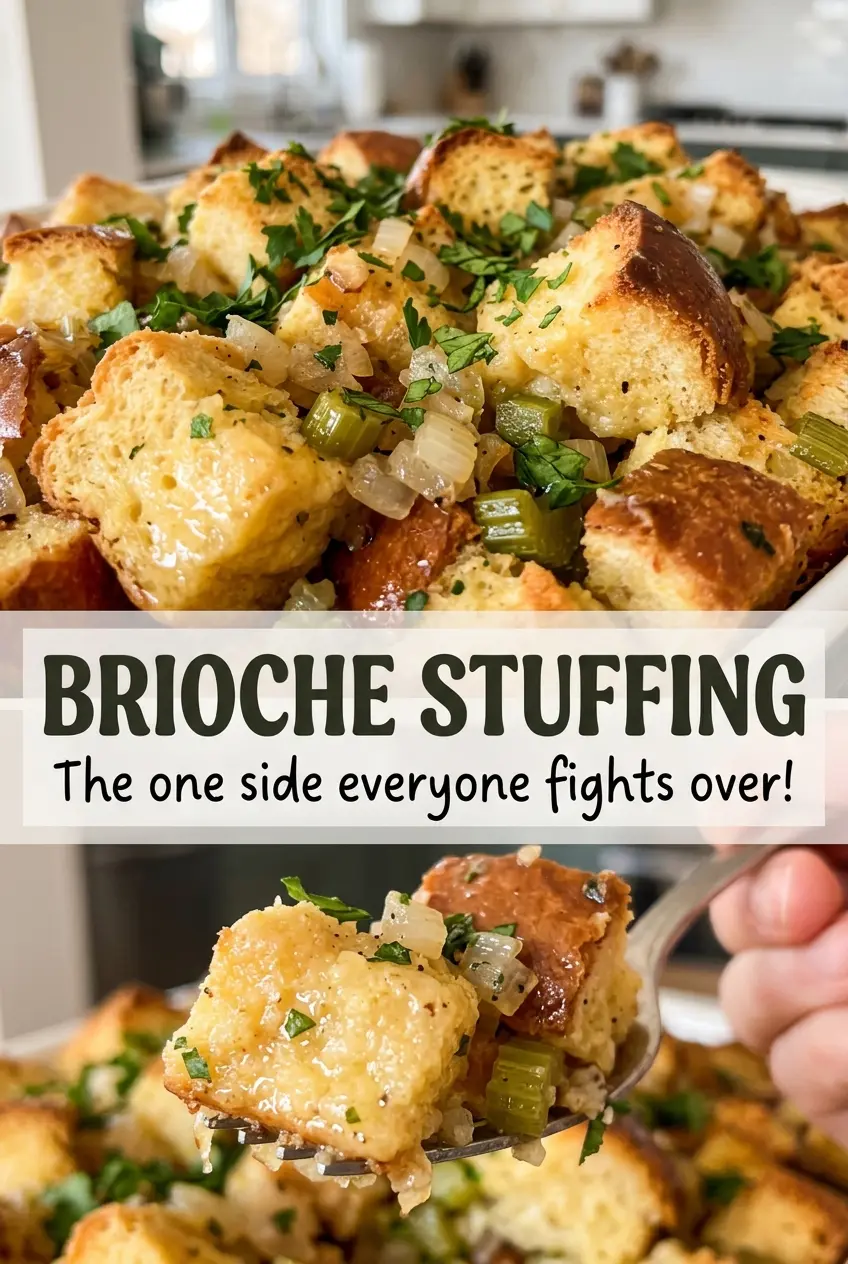
The onion and celery soften together in the skillet, and the dried sage and thyme hit the butter with a warm, woodsy smell. That’s the point when this starts to feel like proper stuffing, even before the bread and broth come together. Brioche stuffing has a softer, richer character than stuffing made with a lean loaf, but it still needs a clear texture: tender through the middle, with a golden top that gives way under the spoon.
I keep the vegetables finely chopped so they tuck into the bread instead of leaving big, wet pockets, and I stir the herbs into the butter while they’re still in the pan. Then the broth and eggs get whisked together before they meet the bread, which makes it easier to moisten the cubes evenly. The result is a buttery casserole-style stuffing with savory herbs, a soft center, and just enough toasted surface to keep each serving from feeling heavy.
Kitchen Note
Give the baked stuffing its full 10-minute rest before scooping. The center settles during that pause, so it serves in soft, cohesive portions instead of falling apart while it’s piping hot.
Save this Brioche Stuffing for its soft, savory center and golden top—an easy-to-serve side with buttery bread and classic herbs.
Why Brioche Has to Dry Before It Meets the Broth
Brioche is tender and rich to begin with, so it behaves differently from a dry, lean bread cube. If the cubes are still soft inside when the broth goes in, they take on liquid quickly and can compress into a heavy center rather than holding a little structure. Drying the bread first gives it room to absorb the broth and egg mixture without collapsing as soon as you toss everything together.
The goal is dry bread, not toast. A pale cube that feels dry through the middle is ready; browned edges add a toasted flavor that can compete with the gentle sage and thyme. Spread the cubes out across two rimmed baking sheets instead of piling them up, then toss and rotate the sheets halfway through so the pieces dry at a more even rate. The extra attention here pays off later: the bread takes up the broth evenly, and the finished casserole has a tender bite instead of a damp, dense patch in the middle.
What Brioche, Eggs, and Broth Each Bring to the Pan
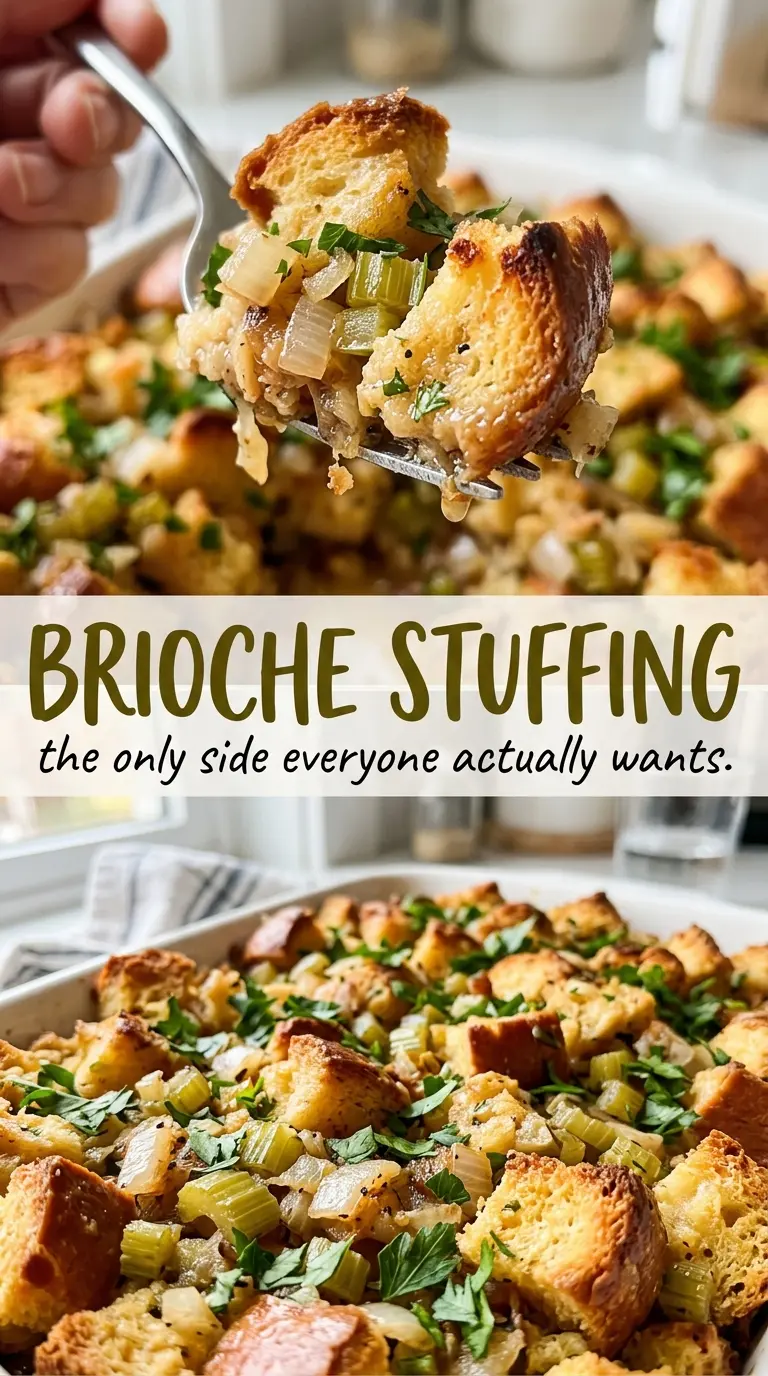
- Brioche — Its soft crumb and buttery taste give this stuffing its character. A bakery loaf and a packaged loaf both work; choose a fresh loaf without worrying about finding a premium brand. I wouldn’t swap in a lean sandwich loaf and expect the same tender, rich result.
- Unsalted butter — Butter carries the onion, celery, and dried herbs as they cook, while keeping the seasoning easier to control. Use a fresh stick from any dependable brand; there’s no need for cultured or European-style butter here.
- Yellow onion and celery — Together they make the savory base and add little pieces of sweetness and crunch throughout the bread. Finely chop both so they soften at the same pace and distribute without dominating individual bites.
- Dried sage and thyme — Dried herbs suit the slow bake and bring concentrated, steady seasoning. Check that they still smell fragrant when rubbed between your fingers; stale herbs won’t give the butter much aroma.
- Low-sodium chicken broth and eggs — The broth supplies savory moisture, and the eggs help the mixture set into portions rather than staying loose. A low-sodium broth gives you more control over the final seasoning, while fresh eggs whisk smoothly into the liquid.
- Fresh parsley — Chopped parsley adds a clean, green note against the buttery bread. Choose crisp leaves without yellowing, and chop them shortly before they go into the bowl.
How to Dry, Season, and Set the Brioche
Dry the cubes without browning them
Heat the oven to 300°F and grease a 9×13-inch baking dish with 1 tablespoon of butter. Spread the 1-inch brioche cubes in a single layer over two rimmed baking sheets, then bake for 25 to 35 minutes. Toss the cubes and rotate the sheets halfway through. Pull them when they feel dry but have not browned; a few damp pieces can make the finished center uneven.
Soften the vegetables and wake up the herbs
Raise the oven temperature to 350°F. Melt the remaining butter in a large skillet over medium heat, then add the finely chopped onion and celery and cook for 8 to 10 minutes, until softened. Stir in the sage, thyme, salt, and pepper, and let them cook for 30 seconds. If the herbs sit in the pan much longer without the bread mixture ready, they can lose some of their fresh aroma, so have the broth and eggs whisked together in a medium bowl.
Moisten evenly, then bake covered and uncovered
Put the toasted brioche in a large bowl and add the cooked vegetables and parsley. Pour in the broth-and-egg mixture and toss until the cubes are evenly moistened, lifting from the bottom so the liquid doesn’t all collect in one spot. Transfer everything to the prepared dish, cover tightly with foil, and bake at 350°F for 30 minutes. Remove the foil and bake for 15 to 20 minutes more, until the top is golden and the center reaches 160°F.
Small Choices That Keep Brioche Stuffing Balanced
Choose the brioche crumb you like
A bakery brioche with a more open crumb gives you a slightly more varied bite, while a packaged loaf tends to make more uniform cubes. Either way, keep the loaf size and cube size the same so the bread dries and absorbs liquid at the expected pace.
Pick a mild or more savory chicken broth
Low-sodium chicken broths vary in how pronounced their roasted flavor tastes. A mild one lets the butter and herbs come forward; a more savory one gives the stuffing a deeper chicken-broth note. Keep the broth low-sodium so the salt in the dish stays balanced.
Storage and Reheating
- Refrigerator: Store covered leftovers for 3 to 4 days. The top will lose its crispness, while the center stays soft.
- Freezer: Freeze portions in an airtight container for up to 2 months for best quality. Thaw in the refrigerator before reheating.
- Reheating: Warm covered in a 325°F oven until the center reaches 165°F, then uncover briefly if you want to refresh the top. Reheating uncovered the whole time can dry the brioche out.
Questions That Come Up Before the Stuffing Goes in the Oven
Brioche Stuffing
Ingredients
Equipment
Method
- Heat the oven to 300°F.
- Grease a 9x13-inch baking dish with 1 tablespoon of the butter.
- Spread the brioche cubes in a single layer over two rimmed baking sheets.
- Bake for 25 to 35 minutes, tossing the cubes and rotating the sheets halfway through, until the bread is dry but not browned.
- Increase the oven temperature to 350°F.
- Melt the remaining 5 tablespoons butter in a large skillet over medium heat.
- Add the onion and celery, and cook for 8 to 10 minutes until softened.
- Stir the sage, thyme, salt, and pepper into the skillet and cook for 30 seconds.
- In a medium bowl, whisk the broth and eggs together.
- Put the toasted bread in a large bowl.
- Add the cooked vegetables and parsley, then pour in the broth mixture and toss until evenly moistened.
- Transfer the mixture to the prepared baking dish and cover tightly with foil.
- Bake at 350°F for 30 minutes.
- Remove the foil and bake for 15 to 20 minutes more, until the top is golden and the center reaches 160°F.
- Let the stuffing rest for 10 minutes before serving.