The first pieces of mahi mahi tell you whether the skillet is ready: the spice coating should sizzle as soon as the fish goes in. If the pan is lukewarm, the fish can sit there releasing moisture instead of getting that dark, fragrant crust. I cook these blackened mahi mahi tacos in two batches, which gives each piece room to sear and keeps the center tender.
The slaw and lime crema bring two different kinds of coolness to the plate. The cabbage has a light vinegar bite, while sour cream, lime juice, and hot sauce make a smooth, tangy drizzle. I like to get both ready before the fish goes into the skillet, then warm the corn tortillas just before serving. Each taco gets a piece of seasoned fish, a loose pile of slaw, and enough crema to run into the edges.

Kitchen Note
Give the slaw its full 10-minute rest before you build the tacos. The vinegar and salt take the raw edge off the cabbage, so it sits neatly on the fish instead of tasting like a pile of plain shreds.
Save these blackened mahi mahi tacos for a night when you want a crisp-spiced fish taco with cool slaw and tangy lime crema.
Why Crowding the Skillet Steams the Fish Instead of Blackening It
Blackened fish needs a hot cooking surface and direct contact with the pan. Put too many pieces in at once and they crowd each other; moisture has less room to escape, and the fish is more likely to soften in its own steam than pick up a darkened coating. Cooking half the mahi at a time keeps the pieces in a single layer, with space around them for the skillet to do its job.
This is also why I heat the skillet before adding the oil and fish. A properly hot pan starts the sear right away, so the outside can take on color while the center cooks through. The spice mixture darkens as it cooks, which is the blackened look you want; a dark coating by itself doesn’t tell you whether the thickest piece is done. Check the thickest pieces for the doneness temperature, and let the thinner ones come off the pan as soon as they’re ready. Working in batches takes a little longer, but each piece gets a better surface.
What Each Layer Adds to These Mahi Mahi Tacos
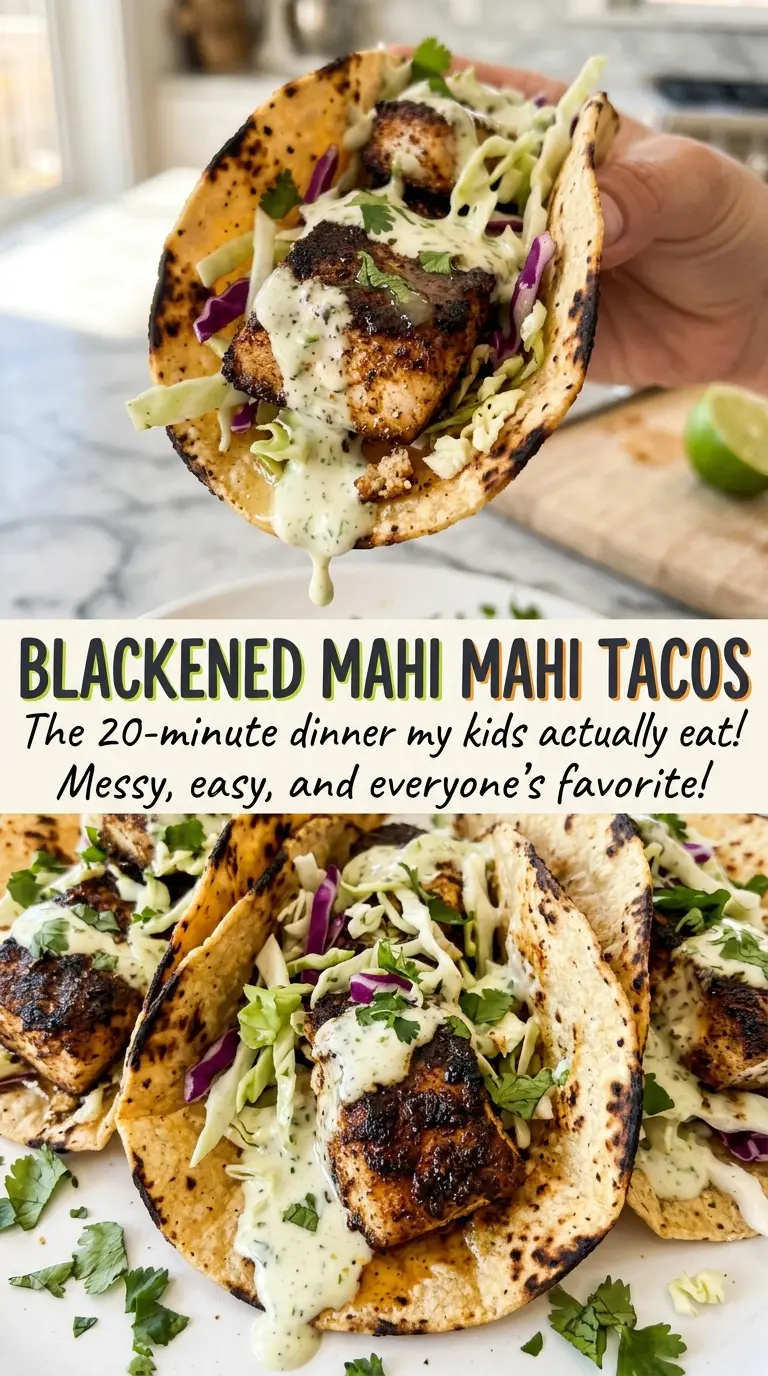
- Mahi mahi — Its firm texture holds together when you turn the pieces, making it a good match for a hot skillet and a bold spice coating. Choose fillets that smell clean and mild, and pat them dry before seasoning so the rub clings instead of sliding around. There isn’t another protein in this ingredient list that can stand in for the fish.
- Blackening spices — Paprika gives the coating its color, while garlic powder, onion powder, thyme, and oregano build a savory, herby base. The dried herbs are practical here because they mix evenly with the powders and cling to the fish. Cayenne supplies the heat; leaving it out makes the blend gentler without changing the way the fish cooks.
- Coleslaw mix, cilantro, and apple cider vinegar — The bagged mix saves you from shredding cabbage and gives every taco a crisp topping. Fresh cilantro brings a bright herbal note, and the vinegar cuts through the seasoned fish and creamy topping. If cilantro isn’t for you, leave it out; the slaw will still have its crunch and tang.
- Sour cream, lime juice, and hot sauce — Sour cream gives the crema a cool, thick base, while lime juice sharpens it and hot sauce adds a little heat. Fresh lime juice has a cleaner taste than bottled juice here, but the hot sauce can be any variety you already enjoy. If you omit the sour cream, skip the crema rather than expecting the lime juice and hot sauce to make a creamy sauce on their own.
- Corn tortillas — Their corn flavor suits the seasoned fish and the soft, pliable texture makes them easy to fold around the filling. Keep the tortillas in a stack when warming so they stay flexible together. There isn’t a like-for-like replacement among the listed ingredients.
- Neutral oil — Its job is to help the fish sear without adding a strong flavor of its own. A neutral-tasting oil is a better fit than one with a pronounced taste that could compete with the spices.
Building the Tacos Without Losing the Sear
Let the Slaw Rest While You Make the Crema
Toss the coleslaw mix with the chopped cilantro, apple cider vinegar, and kosher salt in a medium bowl. Set it aside for at least 10 minutes while you prepare the other components. Stir the sour cream, fresh lime juice, and hot sauce in a small bowl until the crema looks smooth and evenly colored. Keeping these toppings ready before cooking means the fish can go straight from skillet to tortilla.
Coat Every Side of the Fish
Mix the paprika, garlic powder, onion powder, dried thyme, dried oregano, cayenne, kosher salt, and black pepper in a small bowl. Pat the mahi mahi dry, then rub the seasoning over all sides of the eight pieces. Aim for an even coating rather than leaving a thick mound of spices on one face. Set the seasoned pieces close to the stove so you can add them as soon as the pan is hot.
Sear in Two Uncrowded Batches
Heat a 12-inch skillet over medium-high heat until very hot, about 2 minutes. Add 1 1/2 teaspoons of the neutral oil, then arrange half the fish in a single layer. Cook for 2–3 minutes per side, until the seasoning is darkened and the thickest pieces reach 145°F; transfer them to a plate. Add the remaining oil and fish, then cook the second batch the same way.
Warm the Tortillas and Assemble
Stack the corn tortillas between damp paper towels and microwave them for 30–45 seconds, until warm and pliable. If they still feel stiff, keep the stack covered rather than letting the edges dry out while you work. Divide the fish among the tortillas, then add the slaw and lime crema. Serve with lime wedges for squeezing over the top.
Three Ways to Change the Tacos Without Losing Their Balance
Make the Fish Milder
Leave the cayenne out of the seasoning mixture and keep the rest of the spices unchanged. The fish still gets its paprika color and savory herb coating, but without the cayenne’s direct heat.
Make the Tacos Dairy-Free
Leave off the lime crema, which is the only dairy component, and serve the fish with the slaw and lime wedges. You’ll lose the cool, creamy contrast, but the vinegar-dressed cabbage still brings a crisp, tangy topping.
Serve It Without Tortillas
Skip the corn tortillas and plate the fish with the slaw and lime crema instead. This changes the format rather than the seasoning, and keeps the same crisp, creamy, spicy contrasts in a fork-friendly meal.
Storage and Reheating
- Refrigerator: Refrigerate the fish, slaw, and crema in separate airtight containers within 2 hours. Use within 3 days; the slaw will soften as it sits.
- Freezer: Freeze the cooked fish by itself in an airtight freezer-safe container for up to 2 months. The slaw and crema don’t freeze well, so make those fresh.
- Reheating: Warm the fish gently in a covered skillet or microwave until it reaches 165°F. High heat can dry out the pieces, so stop as soon as they’re hot throughout.
Questions That Come Up When Cooking Mahi Mahi Tacos
Blackened Mahi Mahi Tacos
Ingredients
Equipment
Method
- Toss the coleslaw mix, cilantro, apple cider vinegar, and kosher salt in a medium bowl; set aside for at least 10 minutes.
- Stir the sour cream, lime juice, and hot sauce together in a small bowl until smooth.
- Combine the paprika, garlic powder, onion powder, thyme, oregano, cayenne, kosher salt, and black pepper in a small bowl.
- Rub the spice mixture over all sides of the mahi mahi pieces.
- Heat a 12-inch skillet over medium-high heat until very hot, about 2 minutes.
- Add 1 1/2 teaspoons of the oil and half the fish in a single layer.
- Cook the fish for 2–3 minutes per side, until the seasoning is darkened and the thickest pieces reach 145°F; transfer to a plate and repeat with the remaining oil and fish.
- Stack the tortillas between damp paper towels and microwave until warm and pliable, 30–45 seconds.
- Divide the fish among the tortillas, top with the slaw and lime crema, and serve with lime wedges.