Tender baked chicken breasts under a creamy Parmesan sauce are the kind of dinner that disappears fast because every bite gives you something different: juicy chicken, garlicky cream, salty cheese, sweet-tart sun-dried tomatoes, and spinach that melts right into the pan. The sauce clings instead of pooling, which is what makes this version feel finished and satisfying instead of just heavy.
What keeps this dish from turning bland is the quick sear before it goes into the oven and the way the sauce is built in the same skillet. Those browned bits from the chicken add depth, and the Parmesan thickens the cream as it simmers so the sauce settles into a silky coating. Freshly grated Parmesan matters here because pre-shredded cheese often leaves the sauce grainy instead of smooth.
Below, I’ll walk through the small details that make the sauce stay creamy, plus a few smart swaps if you need to work with what’s already in the fridge. If you’ve ever had Tuscan chicken come out watery or split, the process section will help you dodge both problems.
The sauce thickened beautifully and stayed creamy after baking, and the sun-dried tomatoes gave it a little tang that kept it from tasting flat. I served it with rice and my husband went back for seconds before I even sat down.
Baked Tuscan Chicken with creamy Parmesan sauce is the kind of dinner worth tucking into your Pinterest board for a night when you want something elegant without the extra work.
The Sear Is What Keeps the Chicken from Tasting Boiled
Chicken breasts can go dry in the oven long before the sauce has any chance to help them. That first sear fixes a lot of that because it starts building color and flavor on the surface before the chicken finishes cooking gently in the sauce. Without it, the dish can taste soft but flat.
The other thing that matters is not crowding the skillet. If the chicken sits too close together, it steams instead of browning, and those pale juices at the bottom never become the savory base you want. Give each piece room, and stop the sear when the outside turns lightly golden, not deeply crusted.
What Each Ingredient Is Actually Doing in This Dish
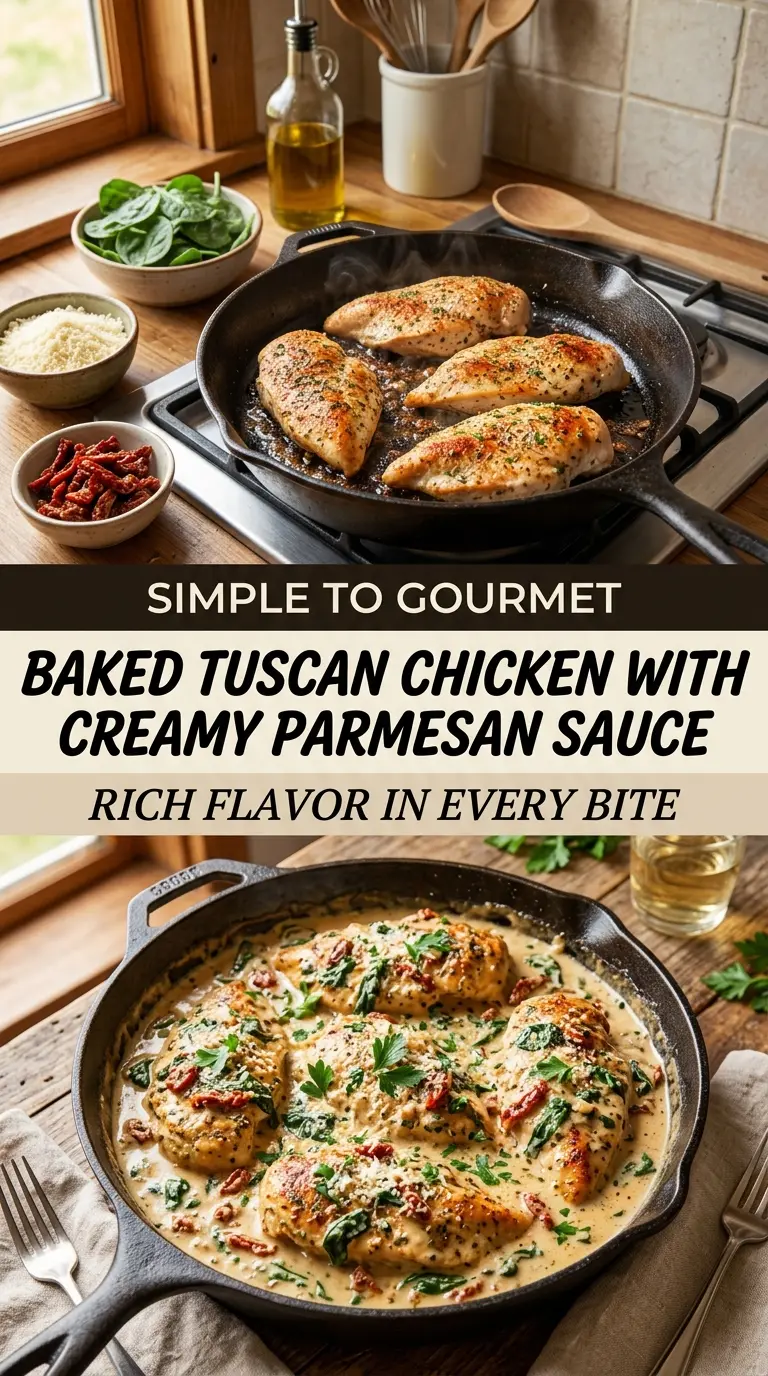
- Chicken breasts — Boneless, skinless breasts keep this weeknight-friendly, but they need even thickness to cook at the same rate. If one side is much thicker, pound it lightly or slice it horizontally so the thinner piece doesn’t dry out before the center is done.
- Heavy cream — This gives the sauce its body and helps it stay smooth in the oven. Half-and-half can work in a pinch, but the sauce will be thinner and a little more likely to separate if it boils hard.
- Freshly grated Parmesan — This is the main thickener and the main source of saltiness. Pre-grated Parmesan often contains anti-caking agents that make the sauce gritty, so grate it yourself if you want that silky finish.
- Sun-dried tomatoes — These bring the sweet, tangy hit that keeps the sauce from tasting one-note. If yours are packed in oil, drain them well so the sauce doesn’t turn greasy.
- Baby spinach — It wilts fast and adds color without changing the texture of the sauce much. Bigger spinach leaves work too, but chop them first so they blend in cleanly.
- Garlic — Fresh minced garlic matters more here than garlic powder because it perfumes the cream and gives the sauce its backbone. Cook it just until fragrant; if it browns, the whole sauce picks up a bitter edge.
How to Build the Sauce So It Stays Silky
Season and Sear the Chicken
Coat the chicken with the seasoning first so the surface is already flavorful before it hits the pan. Sear it in hot oil for just a few minutes per side until you get a pale golden crust. You’re not cooking it through here. If the pan is smoking hard, the heat is too high and the outside will darken before the inside gets a head start.
Start the Sauce in the Same Skillet
After the chicken comes out, the skillet should still have those browned bits on the bottom. Add the butter and garlic and stir until the garlic smells sweet, not sharp, then pour in the cream. Scrape the pan as the cream heats so the fond dissolves into the sauce instead of sticking behind. That layer of flavor is what makes the dish taste like it came from one pan instead of a few separate parts.
Let the Parmesan Melt Without Boiling Hard
Turn the heat down before the cheese goes in. Parmesan needs gentle heat to melt smoothly; if the sauce boils hard, the fat can separate and the texture turns grainy. Whisk until the sauce looks glossy and slightly thicker, then fold in the tomatoes and spinach. The spinach should wilt in the residual heat without turning dull or mushy.
Finish in the Oven
Return the chicken to the skillet, spoon sauce over the top, and bake until the thickest part reaches 165°F. The oven finishes the chicken evenly while the sauce settles around it. Let it rest for a few minutes before serving so the juices stay in the meat instead of running into the pan.
Three Ways to Adapt It Without Losing the Point
Make It Dairy-Free
Use full-fat coconut cream instead of heavy cream and swap in a dairy-free Parmesan-style cheese that melts well. The sauce will taste a little richer and less sharp, but the coconut flavor usually stays in the background once the garlic and tomatoes go in. Keep the heat gentle so the sauce doesn’t split.
Use Chicken Thighs for a Juicier Result
Boneless thighs work well if you want a more forgiving cut. They take a few minutes longer to finish, but they stay tender and the sauce tastes a little deeper because thighs bring more richness. Watch the pan temp closely because they release more fat while searing.
Make It Gluten-Free and Still Serve It with Comfort Food Sides
This recipe is already naturally gluten-free as written, so the main job is keeping the sides gluten-free too. Serve it with mashed potatoes, rice, or roasted vegetables so the sauce has something absorbent underneath it. If you thicken it further, use more Parmesan rather than flour so the texture stays smooth.
Stretch It for More People
Double the sauce before you double the chicken if you’re serving a crowd. The sauce is what people usually go back for, and extra chicken without extra sauce can leave the dish looking sparse. Use a larger skillet or move the chicken to a baking dish so everything sits in one even layer.
Storage and Reheating
- Refrigerator: Store leftovers in an airtight container for up to 3 days. The sauce thickens as it chills, so it may look denser the next day.
- Freezer: This freezes, but cream sauces can change texture a bit after thawing. If you do freeze it, cool it completely, wrap it well, and thaw overnight in the fridge before reheating gently.
- Reheating: Warm it low and slow in a covered skillet with a splash of cream or broth. High heat is the mistake here; it can break the sauce and dry out the chicken before the center is hot.
Questions I Get Asked About This Recipe
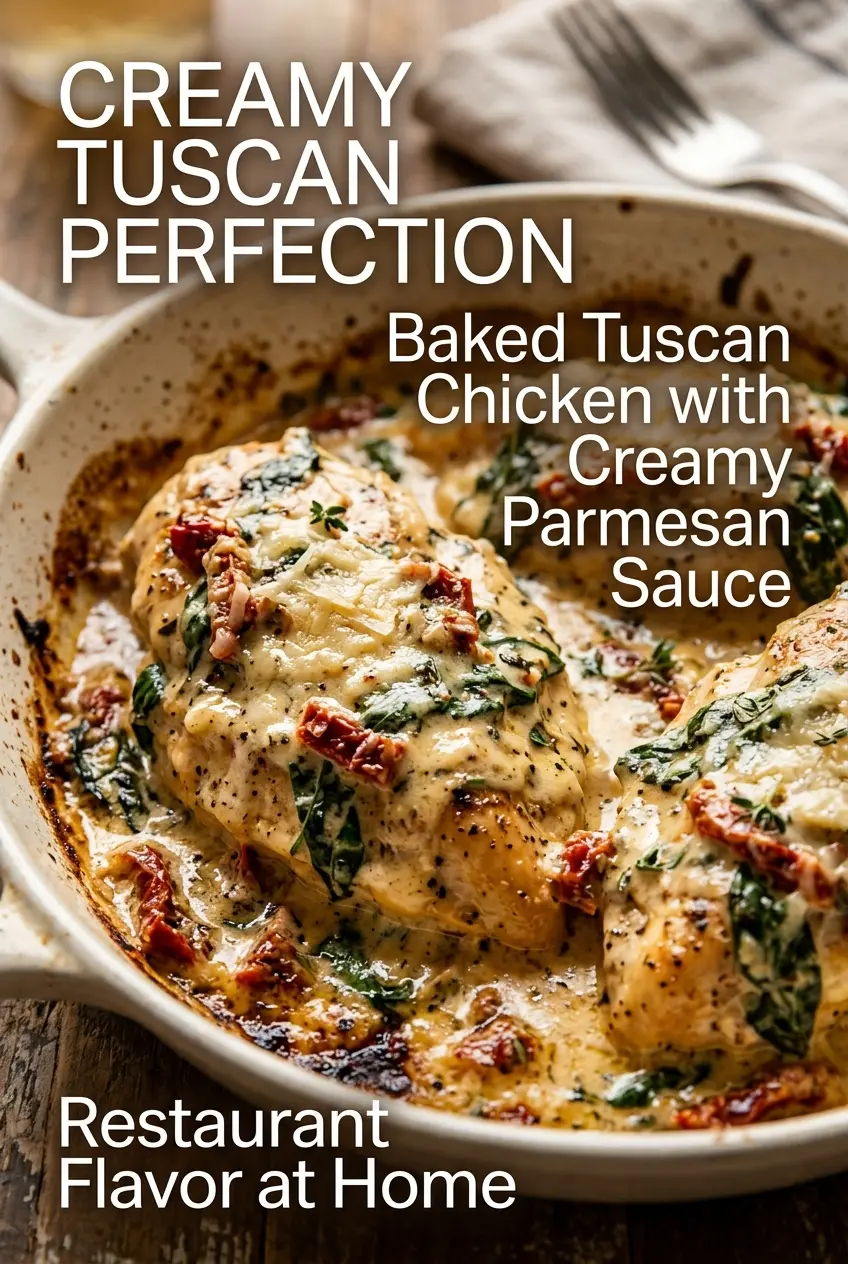
Baked Tuscan Chicken with Creamy Parmesan Sauce
Ingredients
Equipment
Method
- Preheat the oven to 400°F (200°C).
- Season the chicken breasts with Italian seasoning, garlic powder, salt, and black pepper.
- Heat the olive oil in an oven-safe skillet over medium-high heat.
- Sear the chicken for 3 minutes per side until lightly golden.
- Remove the chicken and set it aside.
- Melt the butter in the same skillet.
- Add the garlic and cook for 30 seconds.
- Stir in the heavy cream and Italian seasoning.
- Add the Parmesan cheese and whisk until smooth.
- Stir in the sun-dried tomatoes and baby spinach.
- Simmer for 2 minutes until the spinach wilts.
- Return the chicken to the skillet and spoon the sauce over the chicken.
- Bake for 15–18 minutes until the chicken reaches 165°F.
- Let the chicken rest for 5 minutes before serving.