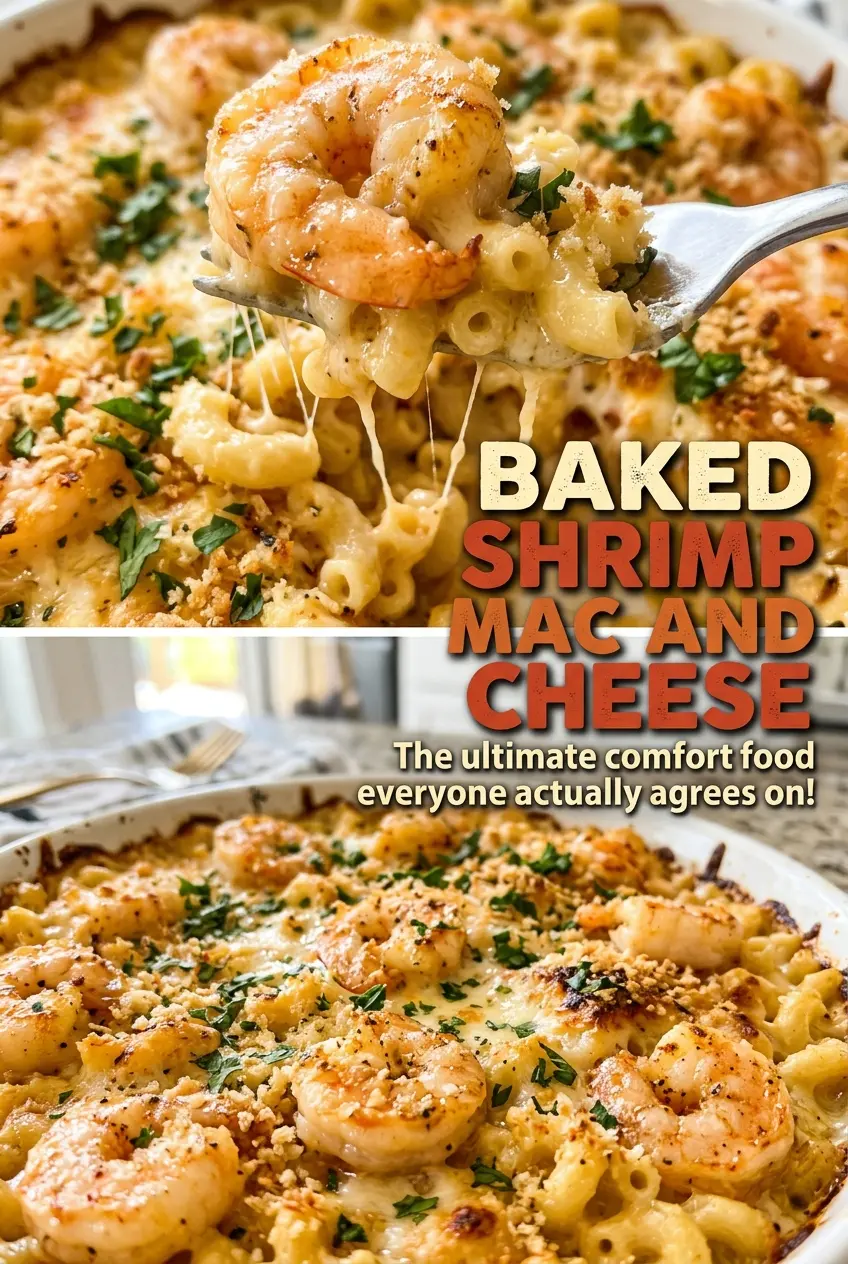
The panko is the first thing to change color in the oven: it goes from pale crumbs to a golden, crisp blanket while the cheese sauce starts bubbling around the edges. That’s the point I watch for with baked shrimp mac and cheese, because the shrimp and pasta are already cooked before the dish goes in. The oven’s job is to bring everything together and toast the top, not to cook the whole dish from scratch.
I cook the macaroni a little short of al dente, then fold it into a sauce made with sharp cheddar and Monterey Jack. The cheddar brings a pronounced cheese flavor, while the Jack softens the sauce and keeps it from tasting too sharp. Large raw shrimp go in after a quick turn in a hot skillet, so they stay tender through the final bake. Each scoop has creamy pasta, a piece of shrimp, and a buttery crunch on top.
Kitchen Note
Stir the panko with the melted butter until the crumbs look evenly damp, rather than leaving dry patches. That little coating helps the topping brown all over instead of turning golden only in a few spots.
Save this baked shrimp mac and cheese for a bubbling cheddar sauce, tender shrimp, and a crisp panko top.
Why This Macaroni Goes Into the Oven Before It’s Fully Tender
Macaroni that’s perfectly tender before baking can turn soft by the time the topping browns. The noodles keep cooking in the hot cheese sauce, and the oven gives them another stretch of time to absorb moisture. Starting with pasta that still has a little firmness leaves room for that second round of cooking.
Cook the elbows until they’re two minutes shy of the package’s al dente time, then drain them. That small difference matters more than trying to compensate later with a thicker sauce or a shorter bake. The macaroni should be cooked through after baking, but it shouldn’t collapse when you scoop it from the dish. This approach also gives the noodles time to take on the cheddar and Monterey Jack sauce without losing their shape.
The sauce should coat the pasta before it goes into the oven; it doesn’t need to look unusually thick in the pot. Once the dish is baking, the edges will bubble and the crumbs will brown. Those visual cues tell you the casserole is ready without leaving it in long enough to dry out the shrimp.
What the Cheddar, Monterey Jack, and Shrimp Each Bring
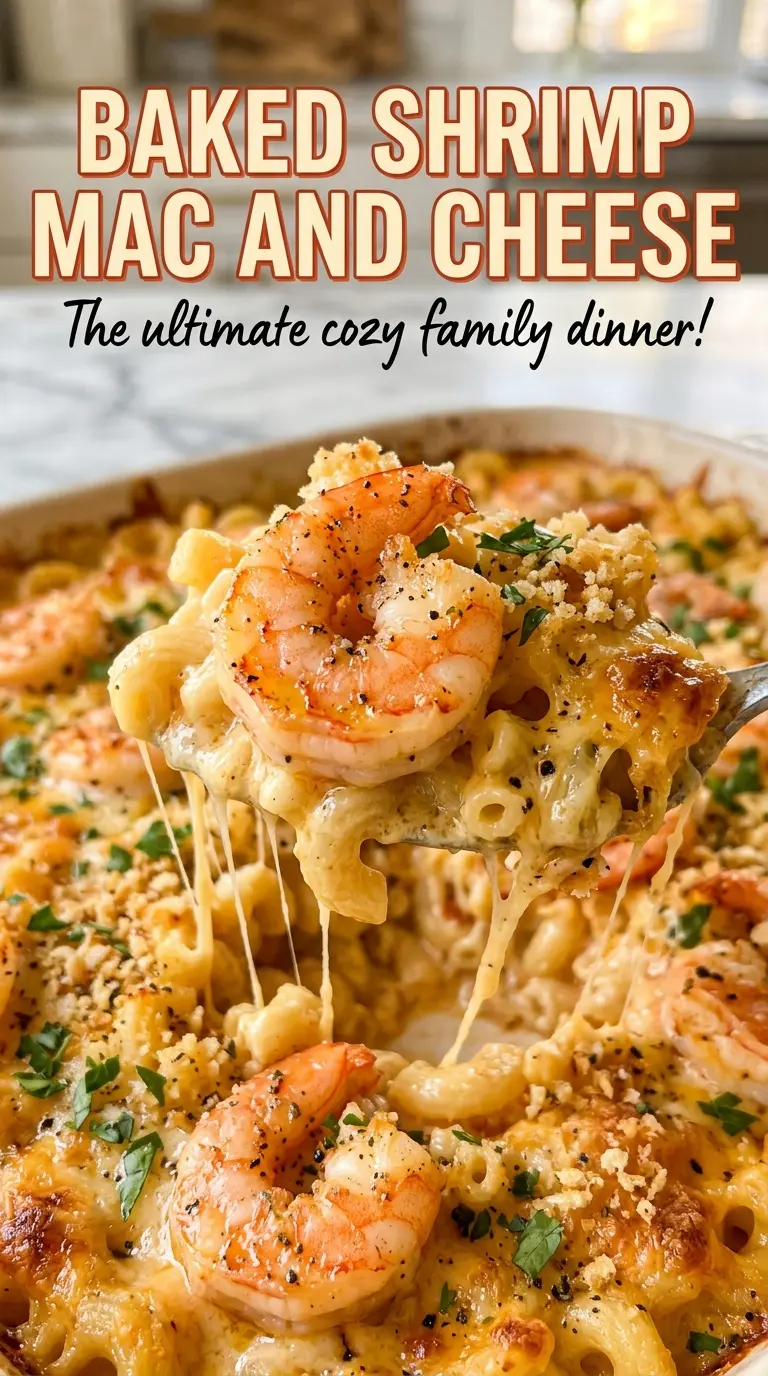
- Sharp cheddar and Monterey Jack — The cheddar gives the sauce its bold, familiar cheese flavor; Monterey Jack rounds it out with a milder taste and a smooth melt. Shred the cheese before starting so it’s ready to stir in once the sauce comes off the heat. For the best balance, keep both cheeses in the mix; pre-shredded cheese is convenient, but its coating can make the sauce less smooth.
- Large raw shrimp — Raw shrimp are the right choice here because they cook briefly in the skillet and then warm through in the oven. The 21–25 count size gives you substantial bites without crowding each spoonful with tiny pieces. Peeled and deveined shrimp save prep time; don’t substitute cooked shrimp, which can turn tough during the second cook.
- Elbow macaroni — The short, curved shape catches sauce and fits neatly around the shrimp. A standard dried elbow macaroni is a practical choice; there’s no need for a specialty pasta. If you use another shape, choose a sturdy short pasta and follow its package timing rather than assuming every shape cooks at the same rate.
- All-purpose flour and whole milk — Together they form the base that thickens the cheese sauce. Whisking the milk in gradually helps the flour disperse instead of leaving lumps. Whole milk gives the sauce body; a lower-fat milk will make it less rich.
- Dry mustard and paprika — Dry mustard sharpens the cheese flavor without making the sauce taste like mustard, while paprika seasons the shrimp. Both add something distinct, so I wouldn’t leave them out if you want the dish to taste balanced.
- Panko breadcrumbs — Panko makes a lighter, crunchier top than fine breadcrumbs. Choose a package that looks dry and loose, not crushed into powder; regular breadcrumbs can work, but the topping will be denser.
From Undercooked Elbows to a Golden, Bubbling Top
Get the pasta ready for its second cook
Heat the oven to 375°F and lightly grease a 9×13-inch baking dish with olive oil. Bring a large pot of water to a boil, add the kosher salt and elbow macaroni, and cook until two minutes shy of the package’s al dente time. Drain the pasta and set it aside. Don’t wait for the noodles to feel fully soft; they’ll finish in the oven.
Cook the shrimp just until opaque
Heat the olive oil in a 12-inch skillet over medium-high heat. Sprinkle the raw shrimp with paprika and cook them in batches for 1–2 minutes per side, until opaque and 145°F. Transfer each batch to a plate as it’s ready. If the skillet is crowded, the shrimp won’t cook as evenly, which is why I work in batches.
Build a smooth cheddar sauce
In the pot used for the pasta, melt the butter over medium heat. Whisk in the flour and keep whisking for one minute, then gradually whisk in the whole milk, dry mustard, and black pepper. Cook, whisking often, for 6–8 minutes, until the sauce thickens and bubbles gently. Take the pot off the heat before stirring in the cheddar and Monterey Jack, and stir until the cheese has melted.
Top and bake until the edges bubble
Fold the macaroni and cooked shrimp into the cheese sauce, then transfer everything to the prepared baking dish. Stir the panko with the melted butter and scatter it evenly over the surface. Bake for 15–18 minutes, until you see bubbling at the edges and the topping is golden brown. Rest the dish for 5 minutes before serving so the sauce can settle around the pasta.
Three Useful Ways to Adapt Baked Shrimp Mac and Cheese
Make it gluten-free without losing the crunchy top
Use gluten-free elbow macaroni, a 1:1 gluten-free flour blend in place of the all-purpose flour, and gluten-free panko. Keep the pasta slightly short of tender before baking, since gluten-free noodles can soften quickly. The sauce may be a little less silky, but the cheddar and Monterey Jack still make it creamy.
Make a shrimp-free baked macaroni and cheese
Leave out the shrimp and make the macaroni, cheese sauce, and panko topping as usual. The result is a straightforward baked mac and cheese with the same creamy center and crisp top, just without the seafood. Because there’s no shrimp to cook, skip that skillet stage.
Go sharper with an all-cheddar sauce
Replace the Monterey Jack with the same amount of sharp cheddar. The cheese flavor will be more pronounced and less mellow, and the sauce may feel a touch firmer than the cheddar-and-Jack version. Stir the cheese in after removing the pot from the heat for the smoothest result.
Storage and Reheating
- Refrigerator: Refrigerate leftovers within 2 hours and keep them for 3–4 days. The macaroni will soften as it sits.
- Freezer: Freeze cooled portions in airtight containers for up to 2 months. The pasta will be softer after thawing, but the cheese sauce and shrimp hold up well.
- Reheating: For the best texture, warm portions covered in a 350°F oven with a small splash of whole milk, then uncover near the end to crisp the top. Heat the center to 165°F; prolonged uncovered reheating can dry the pasta.
Questions That Come Up While Making This Shrimp Mac and Cheese
Baked Shrimp Mac and Cheese
Ingredients
Equipment
Method
- Heat the oven to 375°F.
- Lightly grease a 9x13-inch baking dish with 1 teaspoon olive oil.
- Bring a large pot of water to a boil, add the kosher salt and macaroni, and cook until 2 minutes shy of the package’s al dente time.
- Drain the pasta and set aside.
- Heat 1 tablespoon olive oil in a 12-inch skillet over medium-high heat.
- Sprinkle the shrimp with paprika.
- Cook the shrimp in batches for 1–2 minutes per side, until opaque and 145°F, then transfer to a plate.
- In the pot used for the pasta, melt the unsalted butter over medium heat.
- Whisk in the flour and cook for 1 minute, whisking constantly.
- Gradually whisk in the milk, dry mustard, and black pepper.
- Cook, whisking often, for 6–8 minutes, until the sauce thickens and bubbles gently.
- Remove the sauce from the heat and stir in both cheeses until melted.
- Fold the macaroni and cooked shrimp into the cheese sauce.
- Transfer the mixture to the prepared baking dish.
- Stir the panko with the melted butter.
- Sprinkle the panko mixture evenly over the macaroni and cheese.
- Bake for 15–18 minutes, until the edges are bubbling and the topping is golden brown.
- Rest for 5 minutes before serving.