Juicy chicken, crisp-tender broccoli, and a glossy garlic-ginger sauce come together in a skillet dinner that tastes like it took far longer than half an hour. The chicken stays tender because it’s cooked in bite-sized pieces and pulled out before the broccoli goes in, so nothing gets overdone while the sauce finishes. The broccoli keeps a little bite, which matters here — soft broccoli disappears into the sauce, and that’s not what makes this dish satisfying.
The sauce leans on a classic stir-fry balance: soy sauce for salt, honey for roundness, rice vinegar for brightness, and a little cornstarch to turn everything silky instead of watery. A lot of home versions go wrong when the sauce is added too early or the pan is too cool, which leaves you with steamed chicken and thin sauce. This method keeps the skillet hot enough to build flavor, then thickens the sauce at the end so it clings to every piece.
Below, I’ll walk through the exact order that keeps the chicken juicy, the broccoli crisp, and the sauce glossy. There’s also a simple way to swap ingredients if you’re working with what’s already in the kitchen.
The sauce thickened up fast and coated everything without turning gloopy. I liked that the broccoli stayed crisp-tender instead of getting mushy, and my husband went back for seconds before I even sat down.
Save this 30-Minute Chicken and Broccoli for nights when you want takeout-style sauce, crisp broccoli, and a fast skillet dinner.
The Secret to Keeping the Chicken Juicy While the Broccoli Stays Crisp
The biggest mistake in chicken-and-broccoli skillet dinners is crowding everything into the pan at once. Chicken needs direct contact with the hot surface to brown, and broccoli needs enough heat to blister a little before it softens. If you dump them together, the pan cools down and you end up steaming instead of searing.
This recipe separates the work into two short cooking windows. The chicken cooks first and comes out once it’s just done, then the broccoli goes into the same pan so it picks up the browned bits left behind. That’s where the savory depth comes from. The sauce goes in only after the chicken returns, which keeps it from reducing too soon or burning on the bottom of the skillet.
What Each Ingredient Is Actually Doing in This Dish
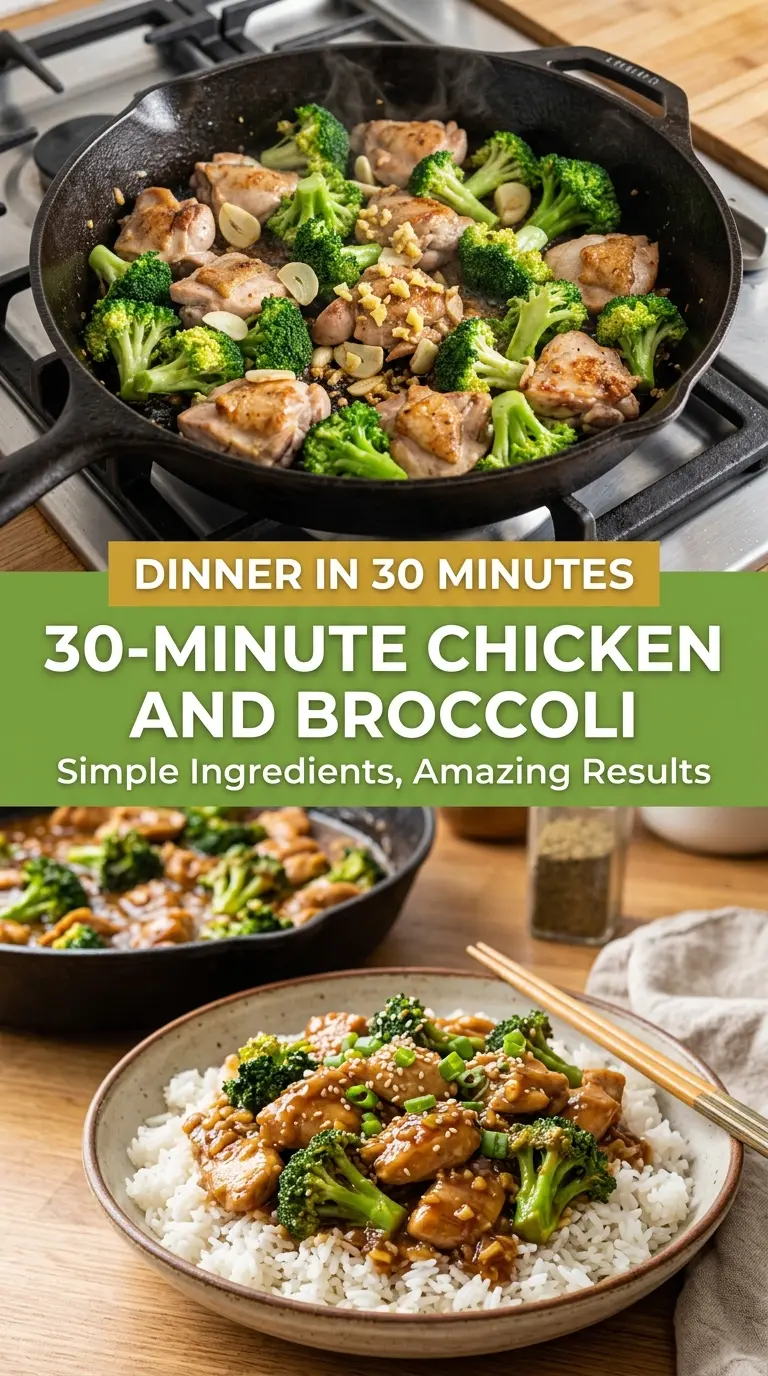
- Chicken breast — Bite-sized pieces cook fast and evenly. Cut them into similar-sized pieces so some don’t dry out while others finish.
- Broccoli florets — Fresh broccoli gives the best texture here. Frozen works in a pinch, but it releases more water, so you’ll lose some of the crisp edge and may need an extra minute or two to evaporate the moisture.
- Soy sauce, honey, rice vinegar, and sesame oil — This is the backbone of the sauce. Low-sodium soy sauce keeps the salt level in check, honey gives body, vinegar brightens the finish, and sesame oil adds the nutty note that makes the dish taste more complete.
- Cornstarch — This is what turns the sauce glossy and clingy. Whisk it fully into the liquid before it hits the pan; if it goes in clumpy, you’ll get streaks instead of a smooth coating.
- Garlic and ginger — Add them at the end of the vegetable cook time so they stay fragrant instead of burning. Garlic turns bitter fast in a hot skillet, and burnt garlic will overpower the whole dish.
Building the Sauce in the Pan Without Losing the Glaze
Whisk the Sauce Before the Heat Goes On
Mix the soy sauce, honey, sesame oil, cornstarch, chicken broth, and rice vinegar in a small bowl before you turn back to the skillet. The cornstarch needs to dissolve completely while the liquid is cold or room temperature; if it hits the pan dry, it can clump on contact and stay grainy. The sauce should look smooth and thin at this point. It thickens in the pan, not in the bowl.
Brown the Chicken First
Heat the oil until it shimmers, then add the chicken in a single layer. Let it sit long enough to pick up color before you stir, or you’ll only get pale, steamed pieces. When the chicken is cooked through and the edges are lightly browned, move it to a plate. If your pan is crowded, cook in two batches so the meat sears instead of releasing water.
Cook the Broccoli Just to Crisp-Tender
Add the remaining oil and the broccoli to the same skillet. It should brighten in color and take on a few browned spots, but it shouldn’t go soft. After about 3 to 4 minutes, stir in the garlic and ginger for just 30 seconds. That short burst wakes up the aromatics without giving them time to scorch.
Thicken the Sauce at the End
Return the chicken to the pan, pour in the sauce, and stir constantly as it comes up to a simmer. In a couple of minutes, it should go from watery to glossy and coat the back of a spoon. If it still looks thin, let it bubble for another 30 seconds; if it gets too thick, splash in a tablespoon of broth to loosen it. Serve it right away while the sauce is still silky.
Three Practical Ways to Change It Without Losing the Point
Make It Gluten-Free
Swap the soy sauce for tamari or a certified gluten-free soy sauce. The sauce still thickens the same way, and the flavor stays balanced. Check your broth too, because that’s the other place gluten can sneak in.
Use Chicken Thighs for a Richer Result
Boneless skinless thighs stay juicier and give you a little more cushion if you cook them a minute longer than planned. They add a richer flavor and a softer bite, which works well if you like a more takeout-style finish.
Make It Dairy-Free and Still Keep the Sauce Glossy
This recipe is already dairy-free as written, so there’s nothing to replace. That’s useful if you’re cooking for mixed diets, because the texture and finish stay the same without any special swaps.
Stretch It Into More Servings
Add extra broccoli or serve it over rice to turn the skillet into a bigger meal without changing the sauce. The key is keeping the pan hot enough that the added vegetables don’t just dilute everything; if you double the broccoli, use a larger skillet so it still cooks in a single layer.
Storage and Reheating
- Refrigerator: Store leftovers in an airtight container for up to 4 days. The broccoli softens a little, but the sauce holds up well.
- Freezer: It freezes better than many quick skillet dinners, though the broccoli will lose some bite. Freeze in portions for up to 2 months and thaw overnight in the fridge.
- Reheating: Warm it gently in a skillet over medium-low heat with a splash of broth or water. Microwaving on high can make the chicken tough and the sauce separate at the edges.
Answers to the Questions Worth Asking
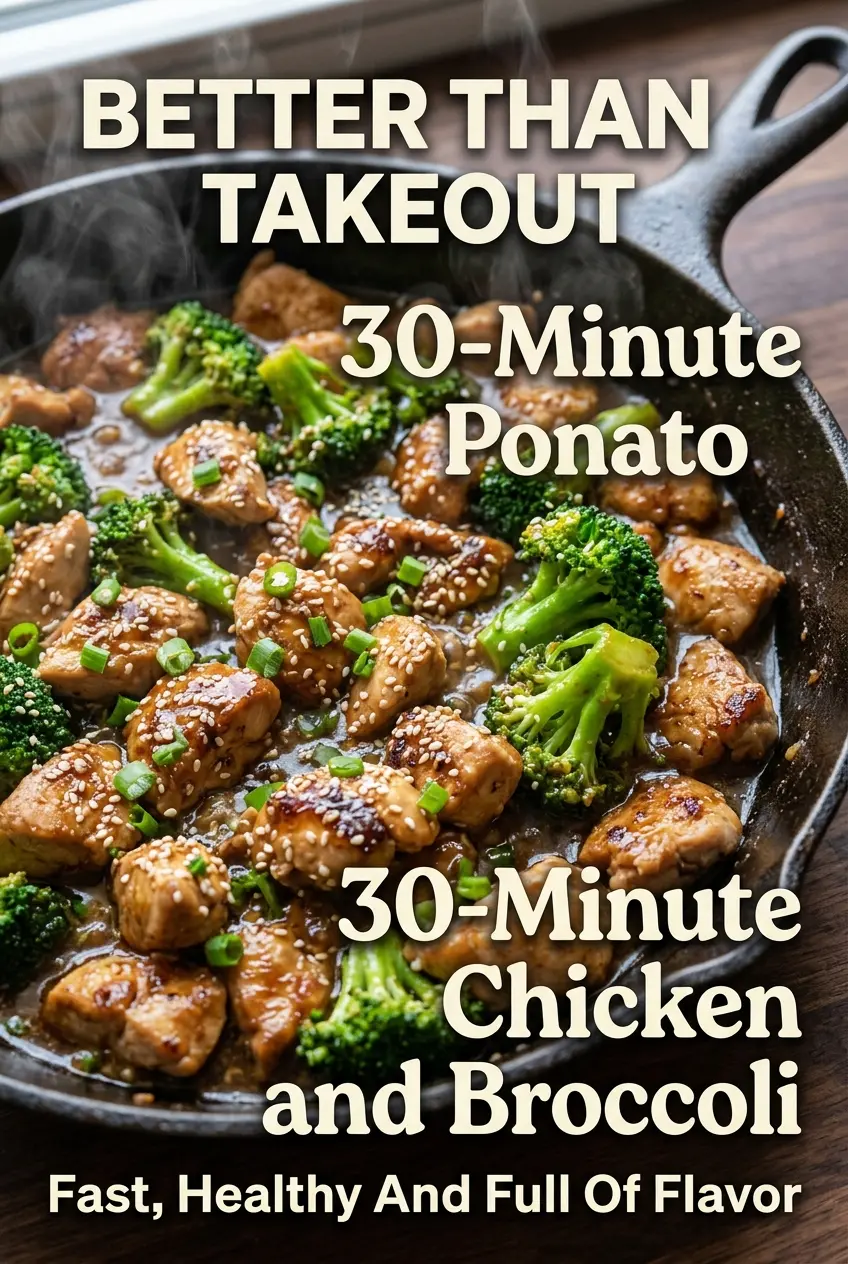
30-Minute Chicken and Broccoli
Ingredients
Equipment
Method
- In a small bowl, whisk together low-sodium soy sauce, honey, sesame oil, cornstarch, chicken broth, and rice vinegar until smooth and no lumps of cornstarch remain.
- Keep the sauce nearby while you cook so it thickens right when the chicken and broccoli are ready.
- Heat 1 tablespoon olive oil in a large skillet over medium-high heat until shimmering.
- Add boneless skinless chicken breast pieces and cook for 5–6 minutes until browned and cooked through, stirring occasionally for even color.
- Transfer the cooked chicken to a plate.
- Add the remaining olive oil to the skillet, then add broccoli florets and cook for 3–4 minutes until crisp-tender.
- Stir in garlic cloves and fresh ginger and cook for 30 seconds until fragrant.
- Return the chicken to the skillet.
- Pour in the prepared sauce and stir well, then cook for 2–3 minutes until the sauce thickens and coats the chicken and broccoli.
- Garnish with sesame seeds and sliced green onions, then serve immediately.