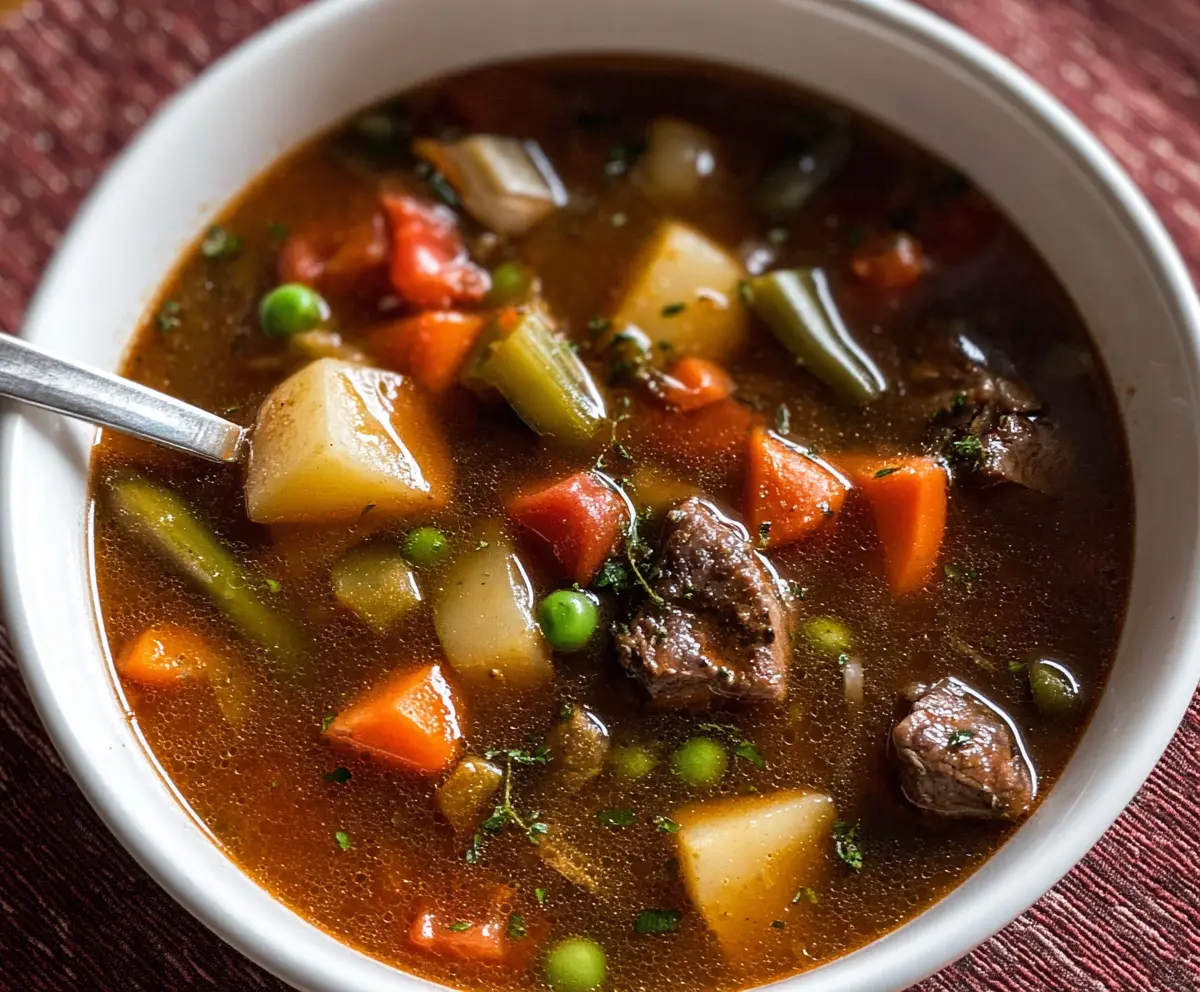
Vegetable beef soup is a hearty and comforting dish filled with tender chunks of beef and a colorful mix of fresh vegetables like carrots, potatoes, celery, and tomatoes. The rich broth pulls everything together, making it feel like a warm hug on a chilly day. It’s the kind of soup that feels homemade and makes you want to cozy up with a bowl and a good book.
I love making vegetable beef soup when I want something simple but still packed with flavor. What I really appreciate about it is how easily it comes together and then lets you relax while it simmers, filling the kitchen with that wonderful smell of home cooking. I usually add a little extra seasoning or a pinch of herbs to make it taste just right for my family.
One of my favorite ways to serve this soup is with a slice of crusty bread or some simple crackers on the side. It’s perfect for lunch or dinner and always feels like a meal that’s both satisfying and nourishing. Whenever I make it, it’s a guaranteed crowd-pleaser that keeps everyone coming back for seconds.
Key Ingredients & Substitutions
Beef Stew Meat: Browning beef adds great flavor and texture. Choose chuck for tenderness. If you want a leaner option, try stew beef labeled as sirloin or substitute with cubed pork for a different taste.
Vegetables: Classic choices are carrot, celery, potatoes, green beans, and peas. Swap potatoes for sweet potatoes or add turnips for variety. Use fresh or frozen veggies based on what you have on hand.
Diced Tomatoes: Canned tomatoes give the broth a nice tang and body. If you prefer, fresh tomatoes can work well, especially in summer. Tomato paste can boost richness if you want a deeper flavor.
Beef Broth & Worcestershire Sauce: Broth provides the base, so use a good quality one or homemade if possible. Worcestershire sauce adds umami; soy sauce can be a good substitute if you don’t have it.
How Can You Make Sure the Beef Is Tender and Flavorful?
Getting tender beef takes time and the right method:
- Start by browning the meat in hot oil. This develops color and flavor through the Maillard reaction.
- Don’t rush the simmering process. Cooking the soup slowly at low heat for at least an hour softens the beef while letting flavors meld.
- Keep the pot covered to trap moisture, which helps tenderize the meat.
- Check for doneness by piercing meat with a fork; it should feel soft and easy to bite.
Patience here pays off with juicy, tender beef that complements the vegetables perfectly.
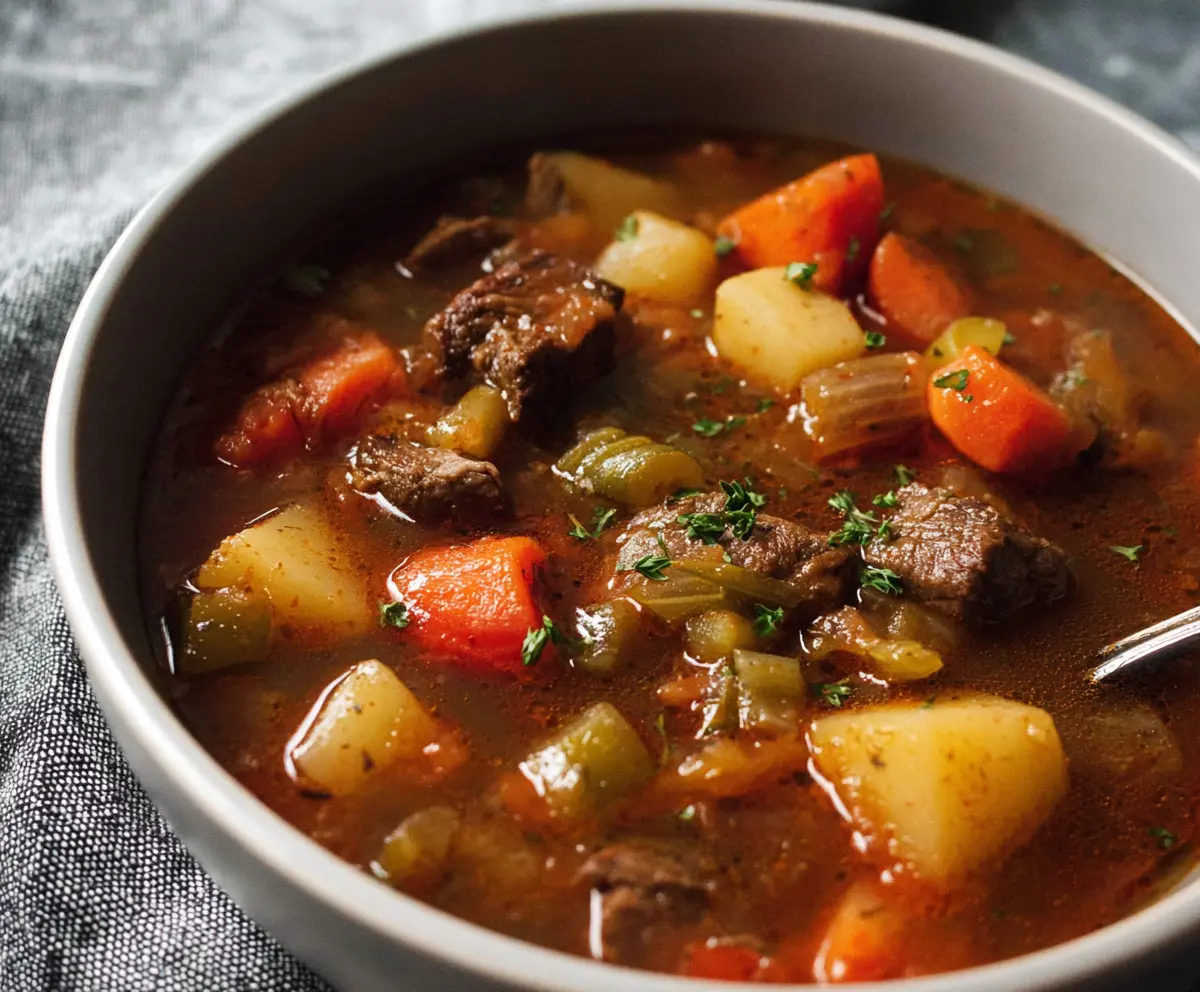
Equipment You’ll Need
- Large heavy-bottomed pot or Dutch oven – perfect for browning beef and simmering the soup evenly without scorching.
- Sharp chef’s knife – helps you chop vegetables quickly and safely into even pieces for consistent cooking.
- Cutting board – provides a sturdy surface for prepping all your ingredients.
- Ladle – makes serving the hot soup easier and mess-free.
- Wooden spoon – great for stirring without damaging your pot’s surface.
Flavor Variations & Add-Ins
- Add diced turnips or parsnips for a slightly sweet, earthy twist that pairs nicely with the beef flavor.
- Use barley or small pasta like orzo instead of potatoes for a heartier, chewy texture.
- Swap beef with cubed chicken or turkey for a lighter soup that’s still filling and tasty.
- Include a bay leaf and a splash of red wine during simmering for an extra depth of flavor.
How to Make Vegetable Beef Soup?
Ingredients You’ll Need:
- 1 lb (450 g) beef stew meat, cut into bite-sized cubes
- 2 tbsp vegetable oil
- 1 medium onion, chopped
- 3 cloves garlic, minced
- 3 medium carrots, peeled and chopped
- 2 celery stalks, chopped
- 3 medium potatoes, peeled and diced
- 1 cup frozen peas
- 1 cup green beans, chopped
- 1 can (14 oz) diced tomatoes, undrained
- 6 cups beef broth
- 2 tsp Worcestershire sauce
- 1 tsp dried thyme
- 1 tsp dried parsley
- Salt and freshly ground black pepper, to taste
How Much Time Will You Need?
This recipe takes about 15 minutes of prep time and then 1 to 1.5 hours of simmering time. That slow simmer helps the beef get tender and lets all the flavors come together. You’ll spend a little time chopping veggies, then let the soup cook on its own – easy and rewarding!
Step-by-Step Instructions:
1. Brown the Beef:
Heat the vegetable oil in a large pot over medium-high heat. Add the beef cubes and cook them until nicely browned on all sides, about 5 to 7 minutes. Take the beef out and set it aside for now.
2. Cook the Aromatics:
In the same pot, add the chopped onion and cook until softened, around 3 to 4 minutes. Then stir in the minced garlic and cook for about 30 seconds until it smells wonderful.
3. Add Vegetables and Beef:
Put the browned beef back into the pot along with the carrots, celery, potatoes, and green beans. Give it a good stir to combine everything.
4. Pour Liquids and Seasonings:
Pour in the beef broth and the canned diced tomatoes with their juice. Add Worcestershire sauce, thyme, parsley, salt, and pepper. Stir it all together.
5. Simmer the Soup:
Bring the soup to a boil, then lower the heat and cover the pot. Let it simmer gently for 1 to 1.5 hours, or until the beef and vegetables are tender and delicious.
6. Add Peas and Finish Cooking:
About 10 minutes before serving, stir in the frozen peas. Let them cook until warmed through.
7. Season and Serve:
Taste the soup and add more salt or pepper if you like. Serve the soup hot in bowls, ready to enjoy!
Can I Use Frozen Beef Instead of Fresh Stew Meat?
Yes! Just be sure to fully thaw the beef in the refrigerator overnight before cooking. Pat it dry with paper towels to avoid excess moisture that can prevent proper browning.
Can I Prepare This Soup in a Slow Cooker?
Absolutely! Brown the beef and sauté the onions and garlic first, then add all ingredients to the slow cooker. Cook on low for 6-8 hours or on high for 3-4 hours until beef is tender.
How Should I Store Leftover Vegetable Beef Soup?
Store leftover soup in an airtight container in the refrigerator for up to 3-4 days. Reheat gently on the stovetop or in the microwave until warmed through.
Can I Substitute Other Vegetables?
Definitely! Feel free to add or swap veggies like zucchini, corn, or bell peppers based on your preference. Just adjust the cooking time if using softer vegetables so they don’t overcook.