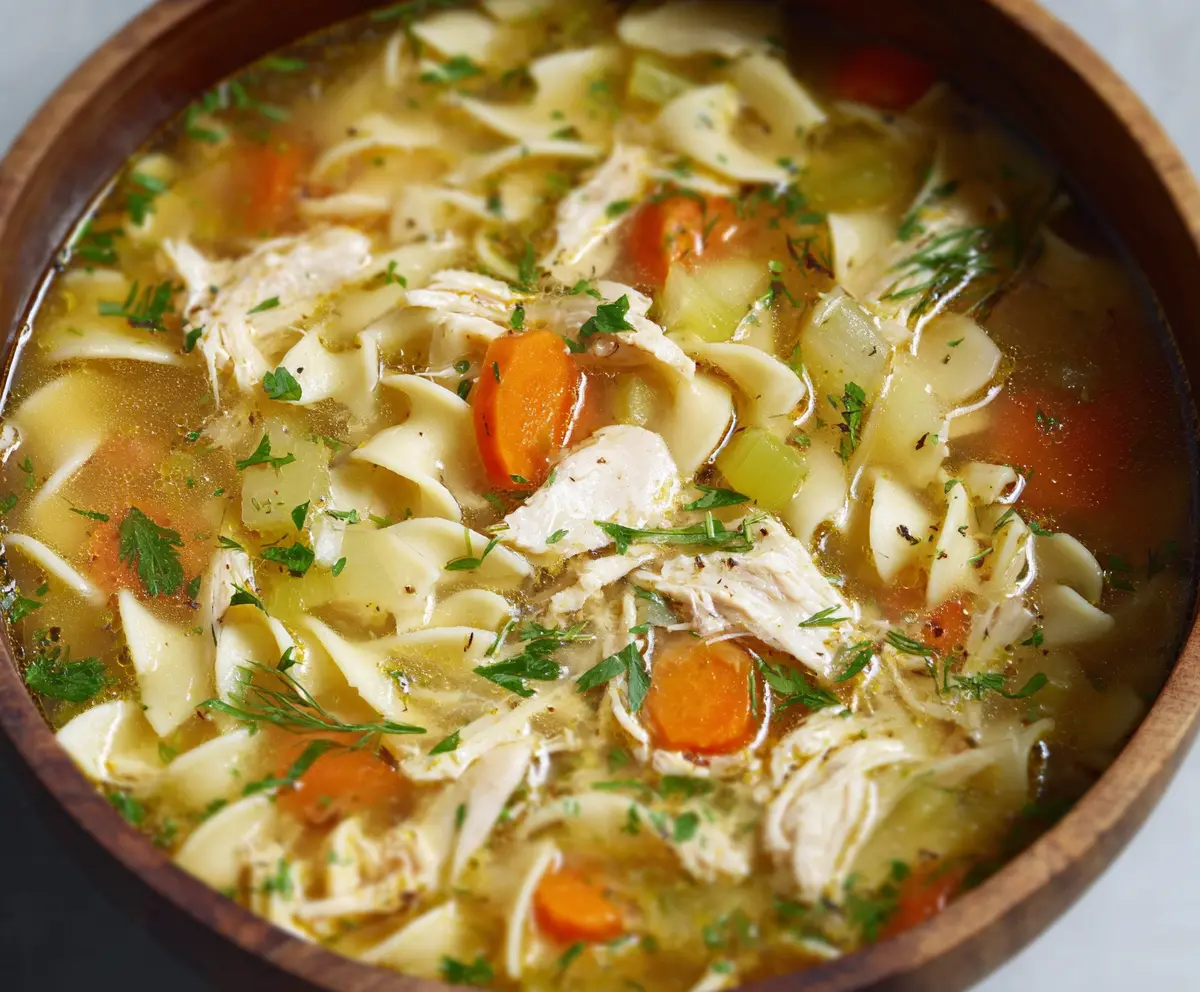
Traditional Chicken Noodle Soup is a timeless comfort food classic that’s warm, soothing, and loaded with tender chicken, soft noodles, and a flavorful broth. This soup brings together simple ingredients like carrots, celery, and onions to create a hearty meal that feels like a big, cozy hug in a bowl.
I love making this soup when I need a little pick-me-up or when the weather turns chilly. There’s something about the smell of simmering chicken and fresh herbs filling the kitchen that just feels right. I usually simmer the broth low and slow to make sure every bite is packed with flavor, and it’s so simple that it really feels like a homemade treasure.
One of my favorite ways to serve this soup is with a side of crusty bread or saltine crackers to soak up all that tasty broth. It’s perfect for when someone’s feeling under the weather or when friends come over for an easy, satisfying meal. Every spoonful reminds me of family dinners and feeling cared for, which is why this soup will always have a special place on my table.
Key Ingredients & Substitutions
Whole Chicken: Cooking the whole chicken builds a rich, flavorful broth. If short on time, use bone-in chicken thighs or breasts. They add great taste and cook faster.
Egg Noodles: Classic wide egg noodles hold soup well. You can swap them for any pasta shape you like, or even use rice or quinoa for a gluten-free option.
Fresh Herbs: Parsley and dill brighten the soup’s flavor. If fresh herbs aren’t available, dried herbs work too but add them earlier while simmering for a better taste.
How Can I Make Rich, Clear Chicken Broth Without Cloudiness?
Clear broth is key for a good chicken noodle soup. Here’s what I do to get it right:
- Start with cold water when adding the chicken to help extract maximum flavor slowly.
- Simmer gently—avoid boiling to keep the broth clear and prevent tough chicken.
- Skim off foam and impurities that rise to the top during cooking to keep the broth clean.
- Strain the broth through a fine sieve or cheesecloth to remove tiny bits for clarity.
These simple steps take a little extra time, but they make a big difference in the taste and appearance of your soup.

Equipment You’ll Need
- Large stockpot – perfect for simmering the whole chicken and making plenty of broth.
- Fine mesh strainer or cheesecloth – helps remove solids for a clear broth.
- Sharp knife – makes chopping veggies and shredding chicken easier and safer.
- Wooden spoon – great for stirring the sautéed veggies without scratching your pot.
- Cutting board – a sturdy surface for prepping your ingredients.
Flavor Variations & Add-Ins
- Use shredded rotisserie chicken for a quicker version without losing flavor.
- Add fresh ginger or turmeric for a warm, earthy twist that’s great when you’re feeling under the weather.
- Swap egg noodles for rice noodles or spiralized zucchini for a gluten-free or lighter option.
- Toss in chopped kale or spinach near the end for extra greens and nutrients.
Traditional Chicken Noodle Soup
Ingredients You’ll Need:
For the Soup:
- 1 whole chicken (about 3-4 lbs), rinsed
- 10 cups water
- 3 large carrots, peeled and sliced
- 3 celery stalks, sliced
- 1 medium onion, chopped
- 3 cloves garlic, minced
- 2 bay leaves
- 1 tsp dried thyme (or 2 sprigs fresh thyme)
- Salt and freshly ground black pepper, to taste
- 8 oz egg noodles or wide egg noodles
- 1/4 cup fresh parsley, chopped
- 1 tbsp fresh dill, chopped (optional)
- 2 tbsp olive oil or butter
How Much Time Will You Need?
This soup requires about 15 minutes of prep and roughly 1 to 1.5 hours of simmering time to cook the chicken and build a rich broth. Adding in the veggies, noodles, and finishing up will take another 15-20 minutes, so plan for around 1 hour 30 minutes total to enjoy a delicious homemade chicken noodle soup.
Step-by-Step Instructions:
1. Cook the Chicken and Make Broth:
Put the whole chicken in a large stockpot and cover with 10 cups of water. Bring it to a boil over medium-high heat, then turn the heat down to low and let it simmer. Skim off any foam that rises to keep the broth clear. Add bay leaves, thyme, and a pinch of salt and pepper. Let it cook gently for about 1 to 1.5 hours, until the chicken is tender and cooked through.
2. Remove Chicken and Strain Broth:
Take out the chicken carefully and set it aside to cool a little. Strain the broth through a fine sieve or cheesecloth into another pot or large bowl. This removes any bits and vegetables, leaving you with clear broth. Toss the bay leaves and any thyme stems.
3. Prepare Vegetables and Finish Soup:
In your original pot, heat olive oil or butter over medium heat. Add chopped onion, carrots, and celery. Cook and stir for about 5-7 minutes until vegetables soften. Stir in minced garlic and cook for another minute.
Pour the strained broth back into the pot with the vegetables and bring to a simmer. Add the egg noodles and cook them until tender but still firm (about 6-8 minutes).
Shred the cooled chicken, removing skin and bones, then add it back to the pot. Heat everything together for 2-3 minutes. Taste and season with salt and pepper.
4. Add Fresh Herbs and Serve:
Turn off the heat and stir in chopped fresh parsley and dill if you like. Ladle the soup into bowls and enjoy hot—perfect with crusty bread or crackers on the side for a cozy meal.
Can I Use Store-Bought Broth Instead of Making My Own?
Yes, using store-bought chicken broth is a great shortcut! Just reduce the added salt since pre-made broths can be salty. Add cooked or rotisserie chicken to keep the soup hearty and flavorful.
How Can I Store and Reheat Leftover Soup?
Store leftovers in an airtight container in the fridge for up to 3 days. Reheat gently on the stove over low heat, stirring occasionally. If the noodles absorb too much broth, add a splash of water or broth when reheating.
Can I Freeze Chicken Noodle Soup?
Absolutely! Freeze soup without the noodles to prevent them from becoming mushy. When ready to eat, thaw in the fridge overnight and cook fresh noodles separately to mix in before serving.
What If I Don’t Have Fresh Herbs?
Dry herbs work well too! Add dried parsley and dill during the simmering stage to bring out their flavors. Use about one-third the amount of dried herbs compared to fresh.