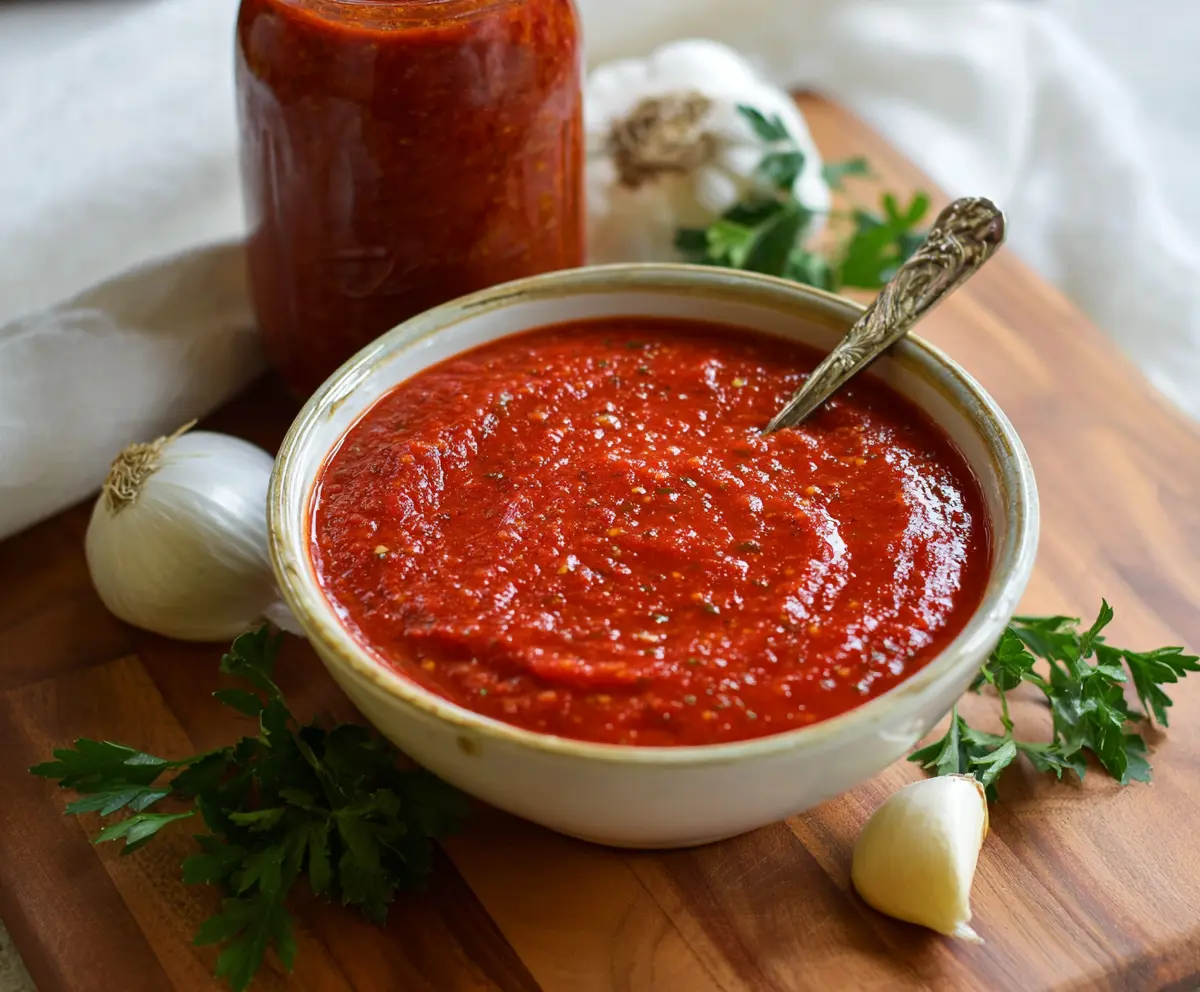
Homemade pizza sauce is all about capturing that perfect balance of tangy tomatoes, garlic, herbs, and just a touch of sweetness. It’s thick enough to cozy up under gooey melted cheese and crispy crust, making every slice taste like a pizzeria classic but from your own kitchen. Using fresh ingredients or simple pantry staples means you can whip it up anytime, and it always feels a little extra special.
I love making my own sauce because it’s so easy to customize—whether you like it spicy, rich, or with more herbs, you get to control the flavors. Plus, it smells amazing while it simmers, which makes the whole house feel like it’s ready for a pizza party. My secret tip is to let it cook low and slow so all the flavors really blend together without losing that fresh tomato brightness.
When I’m ready to build a pizza, spreading this sauce generously gives such a satisfying base. I often double the recipe and keep some in the fridge for a quick sauce fix next time I’m craving pizza or even for dipping breadsticks. It’s a little thing that makes homemade pizza nights feel extra cozy and homemade, and honestly, once you try it, it’s hard to go back to store-bought.
Key Ingredients & Substitutions
Crushed Tomatoes: San Marzano tomatoes are the best for a balanced, sweet flavor. If you can’t find them, any good-quality crushed tomato will do. For a fresher taste, try using fresh peeled tomatoes blended smooth.
Garlic: Fresh garlic gives a strong, aromatic flavor. If you’re short on time, garlic powder can be used but add less to avoid overpowering the sauce.
Olive Oil: Extra virgin olive oil adds richness and depth. If needed, a neutral oil like canola works, but the flavor won’t be as vibrant.
Herbs: Dried oregano and basil bring classic Italian flavors. Fresh herbs can be swapped in but add them at the end of cooking to keep their brightness.
Tomato Paste: This step is optional but helps thicken the sauce and intensify the tomato flavor when simmered.
How Do You Make the Sauce Thick and Flavorful Without Overcooking?
Simmering the sauce gently is key. Too high heat can break down the fresh flavors and make the sauce taste flat. Follow these tips:
- Start by sautéing garlic just until fragrant, about 1 minute, so it doesn’t taste bitter.
- Add tomatoes and seasonings, then bring the sauce to a gentle simmer over medium heat.
- Once simmering, lower the heat to low and cook for 20-30 minutes. This lets the sauce thicken without burning.
- Stir occasionally to prevent sticking and help flavors mix.
- Adjust seasoning at the end to keep the balance of salty, sweet, and herb notes fresh and tasty.
Equipment You’ll Need
- Medium saucepan – perfect size for simmering your sauce evenly without burning.
- Wooden spoon or silicone spatula – lets you stir gently and scrape the pan without scratching.
- Measuring spoons – help you add herbs and spices accurately for the best flavor balance.
- Garlic press or sharp knife – for mincing garlic easily and releasing its fresh aroma.
- Blender or immersion blender (optional) – use this if you prefer a super smooth sauce texture.
Flavor Variations & Add-Ins
- Add red pepper flakes for a subtle kick of heat that brightens the sauce.
- Mix in fresh chopped basil at the end for a fresh, vibrant herb flavor.
- Use sun-dried tomatoes blended in for a deeper, richer tomato taste.
- Stir in a splash of balsamic vinegar or a pinch of sugar to balance acidity depending on your tomato choice.
How to Make Homemade Pizza Sauce
Ingredients You’ll Need:
- 1 (28 oz) can crushed tomatoes (preferably San Marzano)
- 2 tablespoons extra virgin olive oil
- 3 cloves garlic, minced
- 1 teaspoon dried oregano
- 1 teaspoon dried basil
- ½ teaspoon onion powder
- ½ teaspoon sugar
- ½ teaspoon salt (adjust to taste)
- ¼ teaspoon black pepper
- 1 tablespoon tomato paste (optional, for deeper flavor and thickness)
- Fresh parsley for garnish (optional)
How Much Time Will You Need?
This sauce takes about 5 minutes to prep and about 20-30 minutes to simmer, so plan for roughly 30-35 minutes total. It’s pretty hands-off while simmering, giving you some time to prepare your pizza dough or toppings.
Step-by-Step Instructions:
1. Sauté the Garlic:
Heat the olive oil in a medium saucepan over medium heat. Add the minced garlic and cook it for about 1 minute, just until you can smell its aroma but before it starts to brown.
2. Add Tomatoes and Seasonings:
Pour in the crushed tomatoes and stir. Add the dried oregano, dried basil, onion powder, sugar, salt, and black pepper. Stir everything together to combine well. If you’re using tomato paste, mix it in now.
3. Simmer the Sauce:
Bring the mixture to a gentle simmer, then reduce the heat to low. Let it simmer quietly for 20–30 minutes, stirring now and then. This helps the sauce thicken slightly and lets the flavors blend nicely.
4. Adjust and Cool:
Taste your sauce and adjust the salt or other seasonings as needed. Remove the pan from heat and allow the sauce to cool a bit before spreading it over your pizza dough.
5. Serve and Store:
If you like, sprinkle fresh parsley on top before using. Use the sauce right away or store it in an airtight container in your fridge for up to a week. It freezes well too, so you can save some for your next pizza night!
Can I Use Fresh Tomatoes Instead of Canned?
Yes! If using fresh tomatoes, peel and seed about 2 pounds of ripe tomatoes, then blend or crush them. You might need to simmer the sauce a bit longer to thicken it since fresh tomatoes contain more water.
Can I Make the Sauce Ahead of Time?
Absolutely! This sauce tastes even better after sitting for a day because the flavors meld. Store it in an airtight container in the fridge for up to 5-7 days or freeze for up to 3 months.
What Can I Substitute for Dried Herbs?
If you prefer fresh herbs, use about 1 tablespoon of fresh oregano and basil instead of dried. Add them toward the end of cooking to preserve their bright flavor.
How Do I Store Leftover Pizza Sauce?
Keep leftover sauce in a sealed container in the refrigerator for up to a week. For longer storage, freeze it in freezer-safe containers or bags for up to 3 months. Thaw overnight in the fridge before reheating.