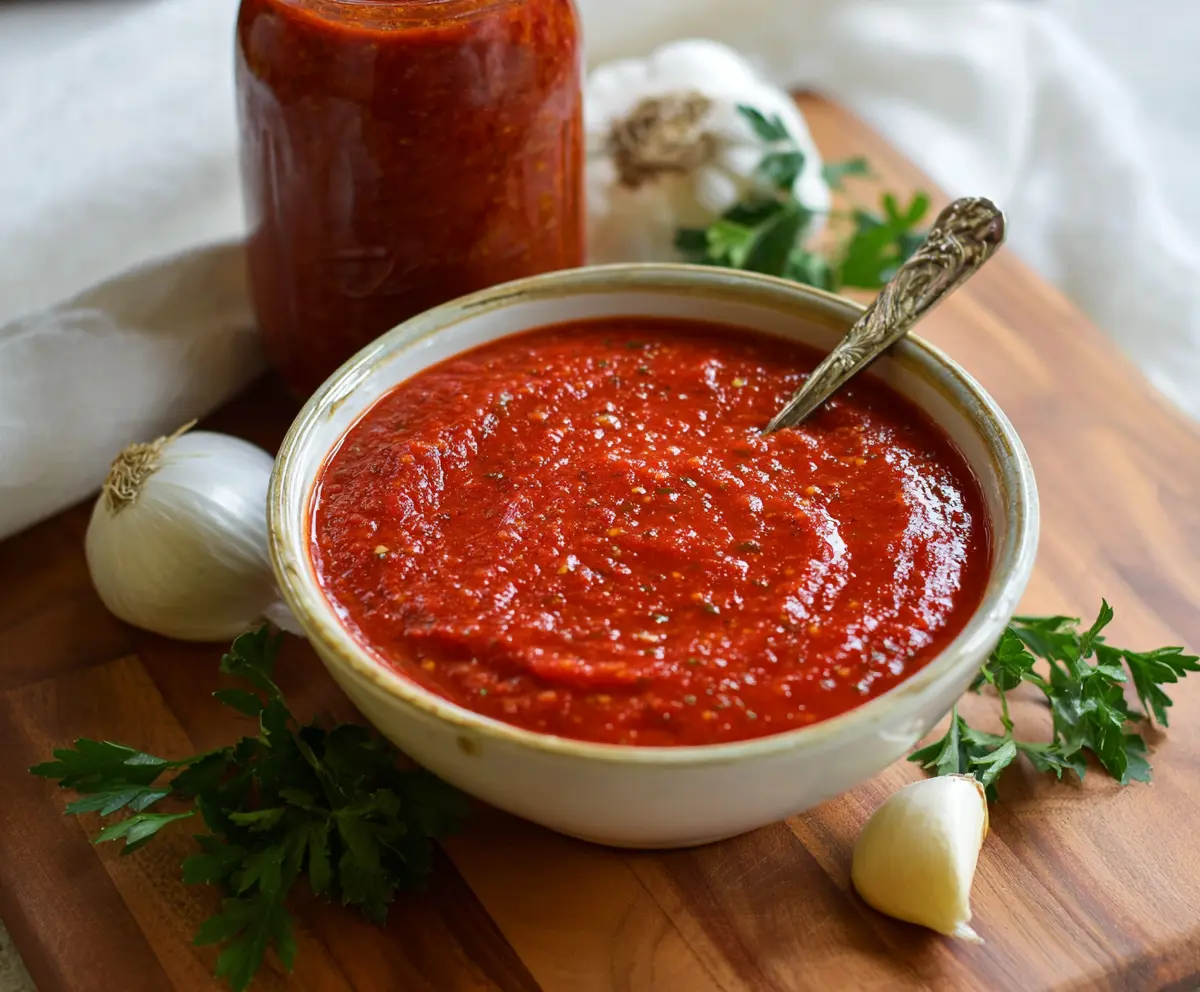
Homemade pizza sauce is a simple, delicious way to add fresh flavor to your favorite pizza. Made with ripe tomatoes, garlic, a touch of olive oil, and a sprinkle of herbs like basil and oregano, this sauce brings that classic pizza taste right to your kitchen. It’s smooth, vibrant, and ready to spread on your dough before adding all your favorite toppings.
I love making this sauce because it tastes way better than store-bought, and it’s super easy to whip up with just a few ingredients. I usually let it simmer for a bit to bring out the best flavors, and sometimes I’ll add a pinch of sugar to balance the acidity. It’s one of those recipes that feels both comforting and fresh every time I make it.
My favorite way to use this homemade pizza sauce is on a classic Margherita pizza with fresh mozzarella and basil leaves. But it’s also perfect for dipping breadsticks or mixing into pasta. Plus, it keeps well in the fridge, so you can have it ready whenever you’re craving a homemade pizza night. I find it really fun to experiment with the herbs and spices to make it just right for my taste.
Key Ingredients & Substitutions
Crushed Tomatoes: Use canned crushed tomatoes for convenience and consistent flavor. If fresh tomatoes are in season, blend ripe Roma or plum tomatoes for a fresher taste.
Olive Oil: Adds a smooth richness. If you don’t have olive oil, any neutral oil like avocado or vegetable oil works fine.
Garlic: Fresh garlic gives a bright, pungent flavor. Garlic powder can be used as a quick substitute but won’t be as vibrant.
Dried Herbs: Oregano and basil are classic for pizza sauce. If fresh herbs are available, use about three times the amount for a fresher touch.
Onion Powder: Adds subtle depth without pieces of onion. If you prefer, finely minced onion sautéed with garlic is a good swap.
Sugar: Helps balance tomato acidity but can be skipped or replaced with a pinch of honey or maple syrup for subtle sweetness.
How Do You Make a Smooth, Flavorful Pizza Sauce Without Overcooking?
Cooking pizza sauce brings out rich flavors, but overcooking can make it taste bitter or too thick.
- Heat olive oil first, then sauté garlic just until fragrant (about 1 minute). Don’t rush this step or garlic might burn.
- Add your tomatoes and herbs, bring to a low simmer gently. Keep the heat low so the sauce thickens slowly without burning or sticking.
- Simmer uncovered for 20-30 minutes, stirring occasionally to prevent burning at the bottom.
- Check seasoning toward the end, add salt, pepper, or a pinch of sugar to balance acidity.
- Let the sauce cool before spreading it on your pizza dough to avoid sogginess. It also helps flavor settle.
Following these tips makes the sauce smooth, balanced, and ready to enhance your pizza perfectly every time.
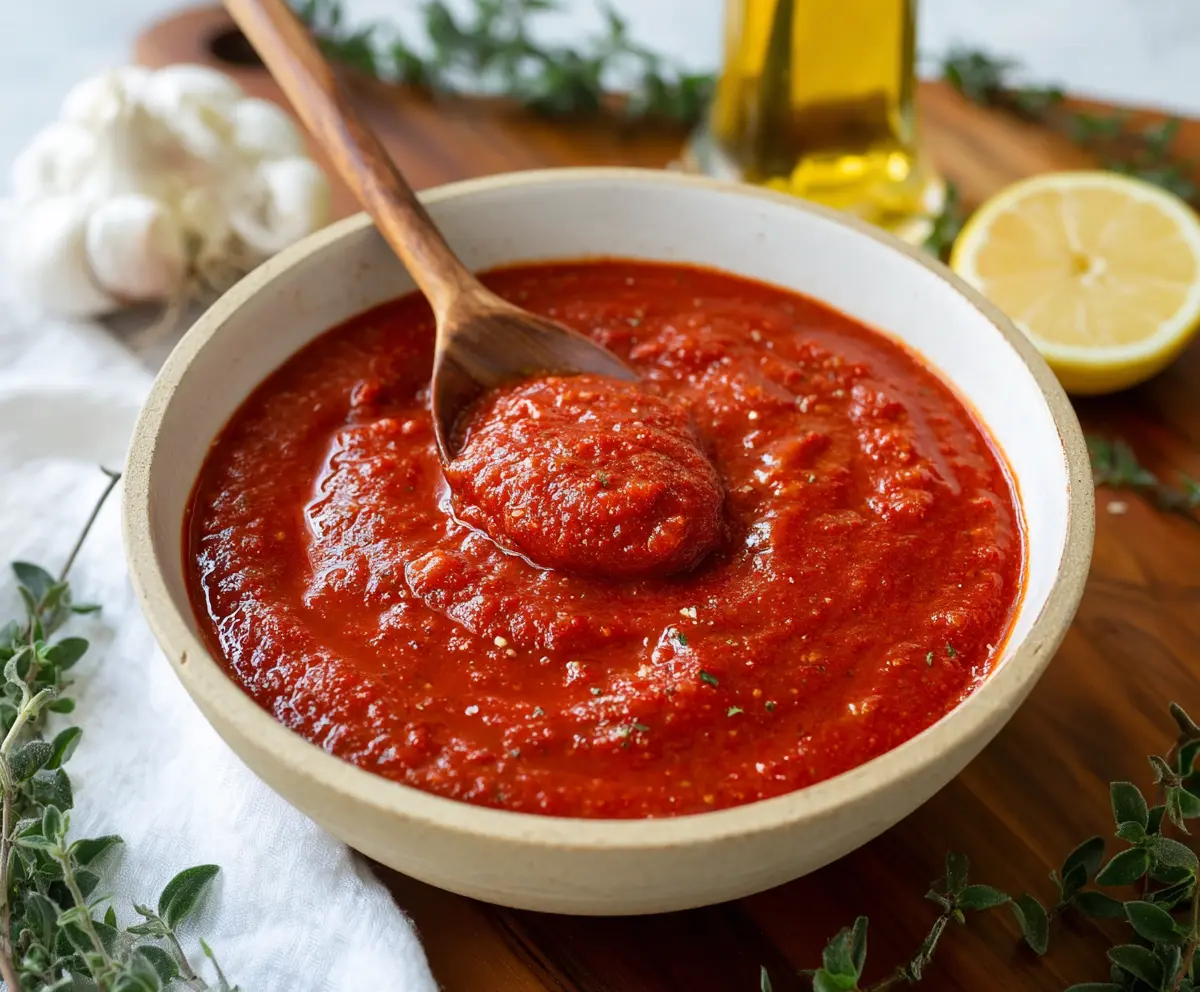
Equipment You’ll Need
- Medium saucepan – perfect size for simmering your sauce evenly without splattering.
- Wooden spoon or heatproof spatula – great for stirring gently without scratching your pan.
- Garlic press or knife – to mince garlic finely and release its flavor.
- Measuring spoons – helps you get the right balance of herbs and seasonings every time.
- Blender or immersion blender (optional) – if you like an extra smooth sauce, this makes blending easy and quick.
Flavor Variations & Add-Ins
- Add red pepper flakes for a little heat if you like your pizza sauce with a kick.
- Stir in chopped fresh basil or parsley at the end for a bright, fresh flavor boost.
- Use caramelized onions instead of onion powder for a sweeter, richer taste.
- Mix in a teaspoon of balsamic vinegar to add mild tang and depth to the sauce.
Homemade Pizza Sauce
Ingredients You’ll Need:
For The Sauce:
- 1 can (28 ounces) crushed tomatoes or 2 cups fresh pureed tomatoes
- 2 tablespoons olive oil
- 3 garlic cloves, minced
- 1 teaspoon dried oregano
- 1 teaspoon dried basil
- ½ teaspoon onion powder
- ½ teaspoon sugar (optional, to balance acidity)
- Salt and freshly ground black pepper, to taste
- Fresh parsley or basil for garnish (optional)
How Much Time Will You Need?
This pizza sauce recipe takes about 5 minutes to prepare and roughly 20 to 30 minutes to simmer, letting flavors blend together and the sauce thicken nicely.
Step-by-Step Instructions:
1. Heat the Olive Oil and Cook Garlic:
Start by warming 2 tablespoons of olive oil in a medium saucepan over medium heat. Add 3 minced garlic cloves and sauté them for about 1 minute until fragrant—but be careful not to let the garlic burn.
2. Add Tomatoes and Herbs:
Pour in your crushed tomatoes or fresh pureed tomatoes. Stir in 1 teaspoon each of dried oregano and dried basil, along with ½ teaspoon onion powder. If you like, add ½ teaspoon of sugar to help balance the tomato’s acidity.
3. Simmer the Sauce:
Bring the sauce to a gentle simmer, then reduce heat to low. Let it simmer uncovered for 20 to 30 minutes, stirring occasionally, until the sauce thickens a bit and the flavors meld together beautifully.
4. Season and Cool:
Taste your sauce and add salt and freshly ground black pepper to your liking. Remove from heat and allow it to cool before spreading on your pizza dough.
5. Garnish and Store:
If you want, garnish with fresh parsley or basil before serving. Use the sauce right away or pour it into a clean jar and refrigerate for up to 1 week.
This homemade pizza sauce is simple to make and gives your pizza a rich, fresh, and classic flavor that everyone will love!
Can I Use Fresh Tomatoes Instead of Canned?
Yes! Use about 2 cups of ripe tomatoes, pureed until smooth. It’s best to use Roma or plum tomatoes for a balanced acidity and rich flavor. If fresh tomatoes are watery, simmer the sauce a bit longer to thicken.
How Long Can I Store Homemade Pizza Sauce?
You can keep the sauce in an airtight container in the fridge for up to 1 week. For longer storage, freeze it in small portions for up to 3 months and thaw in the fridge before use.
Can I Make This Sauce Ahead of Time?
Absolutely! This sauce often tastes even better the next day after the flavors meld. Make it a day or two ahead, chill, and bring to room temperature before spreading on your dough.
What If I Don’t Have Dried Herbs?
Fresh herbs work great—use about three times the amount of dried herbs called for. If you don’t have oregano or basil, Italian seasoning or just garlic and onion powder will still make a tasty sauce!