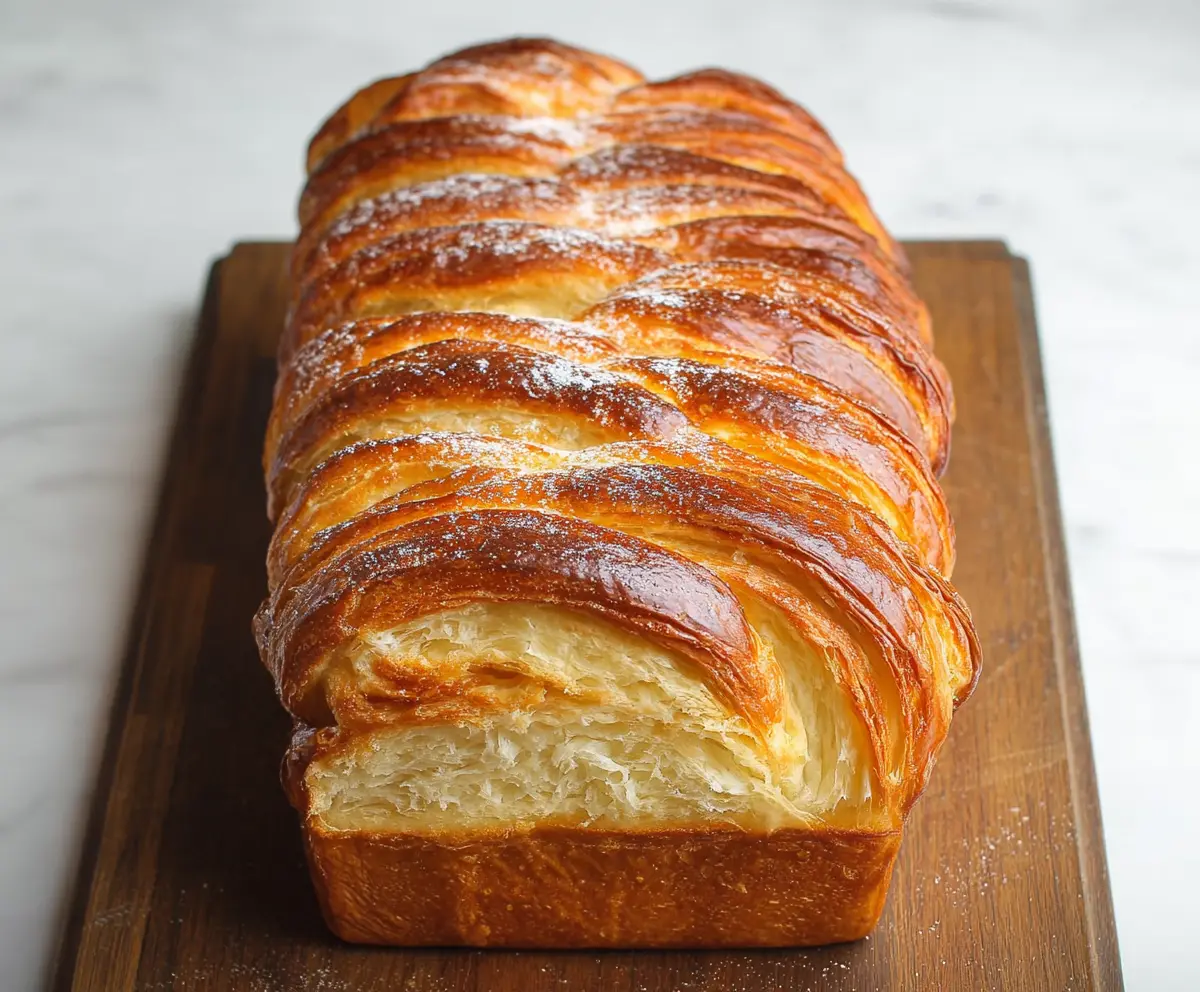
Imagine the buttery, flaky layers of a croissant shaped into a big, soft loaf that you can slice and share—that’s what a Croissant Bread Loaf is all about. It’s golden on the outside with that classic croissant crisp, and inside it’s tender, rich, and full of those delightful airy pockets that croissant lovers crave.
I love this loaf because it feels fancy without any fuss. It’s perfect for mornings when you want something special but don’t have time to make individual croissants. The smell of it baking is irresistible, filling the kitchen with a warm, buttery hug that makes me smile every time.
My favorite way to enjoy this bread is toasted with a little bit of butter or jam—simple and delicious. It also makes great sandwiches or can be part of a brunch spread. Whenever I serve it to friends or family, it’s always a hit, and I often end up slicing a little extra for everyone to take home because no one wants the day to end without a piece of that croissant magic.
Key Ingredients & Substitutions
Flour: All-purpose flour works great here for structure. If you want a slightly lighter texture, you can mix some bread flour in, but it’s not required.
Yeast: Active dry yeast is used to get the dough to rise nicely. Instant yeast can be swapped 1:1 and mixed directly with the flour to save time.
Butter for Laminating: This is the star ingredient for that flaky croissant texture. Use cold, unsalted butter for best results. If you only have salted butter, reduce added salt slightly.
Milk and Water: Warm liquids activate the yeast. Whole milk adds richness, but you can use 2% or even a milk alternative like oat or almond milk if needed.
Egg: Used in the dough and as an egg wash to give a shiny crust. If you’re avoiding eggs, an alternative wash can be milk or a mix of milk and a little maple syrup for color.
How Can I Successfully Laminate Butter in the Dough?
Laminating means folding butter into the dough to create layers. Keep your butter cold but pliable. If butter melts or is too hard, it won’t layer right.
- Roll out dough gently and evenly to avoid tearing.
- Encase the butter completely so it doesn’t leak out during rolling.
- Make folds (turns) carefully and chill the dough between each turn to keep layers distinct.
- Use a light dusting of flour to keep dough from sticking without adding too much flour, which can toughen dough.
- Take your time—rushing the process can cause butter to melt or break through.
Patience with laminating is key to that beautiful layered, flaky loaf you see. I always find chilling between turns is worth the wait for best texture!
Equipment You’ll Need
- Mixing bowls – for combining ingredients and letting dough rise comfortably.
- Rolling pin – helps roll out dough evenly for perfect layering.
- Parchment paper – makes rolling and handling the butter block easier and less messy.
- 9×5-inch loaf pan – shapes your croissant loaf nicely and keeps layers tidy while baking.
- Baking sheet and wire rack – for cooling the loaf evenly after baking.
- Pastry brush – to apply the egg wash for that shiny golden crust.
Flavor Variations & Add-Ins
- Add cinnamon and sugar between layers for a sweet, spiced twist that feels like a croissant cinnamon roll.
- Include shredded cheese like Gruyère or cheddar in folds for a savory, melty surprise inside.
- Mix in finely chopped herbs such as rosemary or thyme to add an earthy aroma perfect for sandwiches.
- For a richer bite, fold in thin slices of ham or smoked salmon between some layers before baking.
Croissant Bread Loaf
Ingredients You’ll Need:
- 3 1/4 cups (400 g) all-purpose flour
- 1/4 cup (50 g) granulated sugar
- 2 tsp (7 g) active dry yeast
- 1 1/4 tsp salt
- 1/2 cup (120 ml) whole milk, warm (about 110°F/43°C)
- 1/4 cup (60 ml) warm water (about 110°F/43°C)
- 2 tbsp unsalted butter, softened
- 1 large egg
- 1 cup (225 g) unsalted butter, cold (for laminating)
- 1 egg (for egg wash)
- Powdered sugar (optional, for dusting)
How Much Time Will You Need?
This recipe needs about 4 to 5 hours total, including preparation, rising, chilling, and baking time. Most of this is waiting for the dough to rise and chilling it between folding steps, so you can use that time for other things!
Step-by-Step Instructions:
1. Prepare the Dough:
Mix warm milk, water, and yeast in a bowl. Let it sit 5-10 minutes until it gets foamy. Then add sugar, salt, softened butter, and egg, and stir lightly. Slowly add flour as you mix until dough forms. Knead on a floured surface for 6-8 minutes until smooth and elastic. Put the dough in a greased bowl, cover, and let it rise warm for about 1 to 1.5 hours until doubled.
2. Prepare the Butter Block:
While the dough rises, put cold butter between parchment papers. Pound and roll it to a 7×9 inch rectangle, about 1/2-inch thick. Refrigerate until firm but still soft enough to roll.
3. Laminate the Dough:
Once dough has doubled, punch it down and roll it out into a 10×16 inch rectangle. Put the butter block in the center. Fold dough edges over butter to fully cover, sealing the edges. Roll this out gently to 10×24 inches. Fold into thirds like a letter—this is one turn. Wrap and chill for 30 minutes. Repeat rolling and folding 2 more times, chilling between each. This creates the flaky layers.
4. Shape the Loaf:
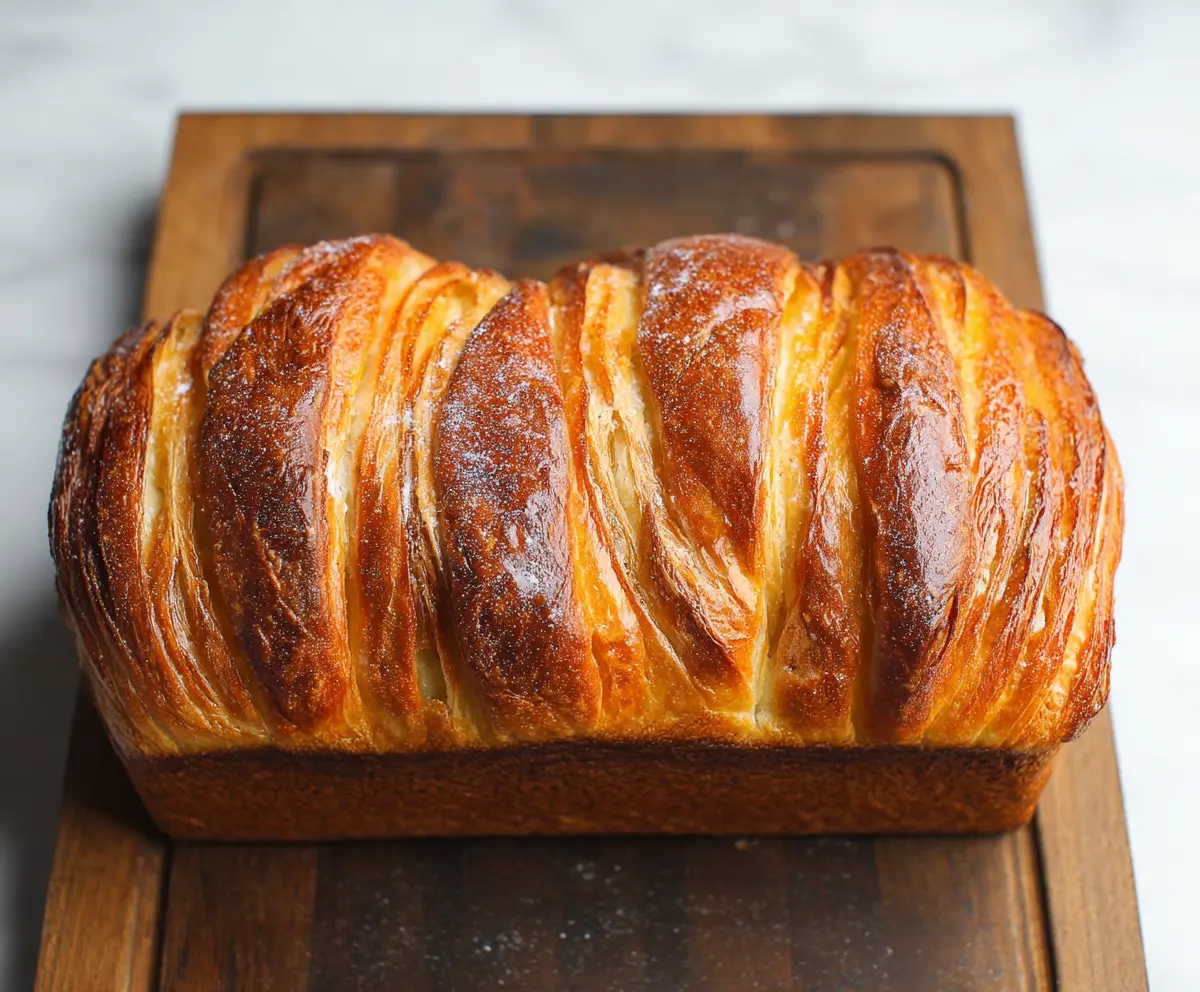
After the last chill, roll dough to 10×24 inches again. Cut into strips about 2 inches wide. Stack or loosely braid these strips and place them in a greased 9×5-inch loaf pan, letting layers fan out a bit. Cover loosely and let rise 1 to 1.5 hours until nearly doubled.
5. Bake:
Preheat oven to 375°F (190°C). Beat the last egg and brush over the dough for a shiny, golden crust. Bake 35-40 minutes until deep golden brown. If the crust darkens too fast, cover with foil halfway through baking.
6. Cool and Serve:
Let the loaf cool in the pan for 10 minutes, then move to a wire rack. Optionally, dust with powdered sugar before slicing. Serve warm with butter, jam, or alone to enjoy the layers and buttery flavor!
Can I Use Frozen Butter for Laminating?
It’s best to use cold, but not frozen, butter that’s pliable enough to roll out without cracking. If your butter is frozen, let it thaw slightly at room temperature until you can press it gently before rolling.
How Should I Store Leftover Croissant Bread Loaf?
Store leftovers in an airtight container or wrapped tightly in plastic wrap at room temperature for up to 2 days. For longer storage, freeze slices in a sealed bag for up to 1 month and toast or warm before serving.
Can I Make the Dough or Butter Block Ahead of Time?
Yes! You can prepare the dough and butter block separately and refrigerate them overnight. Assemble and laminate the next day for fresh croissant layers and best texture.
What If I Don’t Have a Loaf Pan?
No worries! You can shape the dough into a freeform loaf on a baking sheet, but keep an eye on the rise and baking time as it may vary slightly without the pan’s shape.